Indonesia palm oil industry eyes circular economy to boost value, competitiveness
Palm residues are moving from byproducts to policy targets as Indonesia limits waste exports and prepares B40.
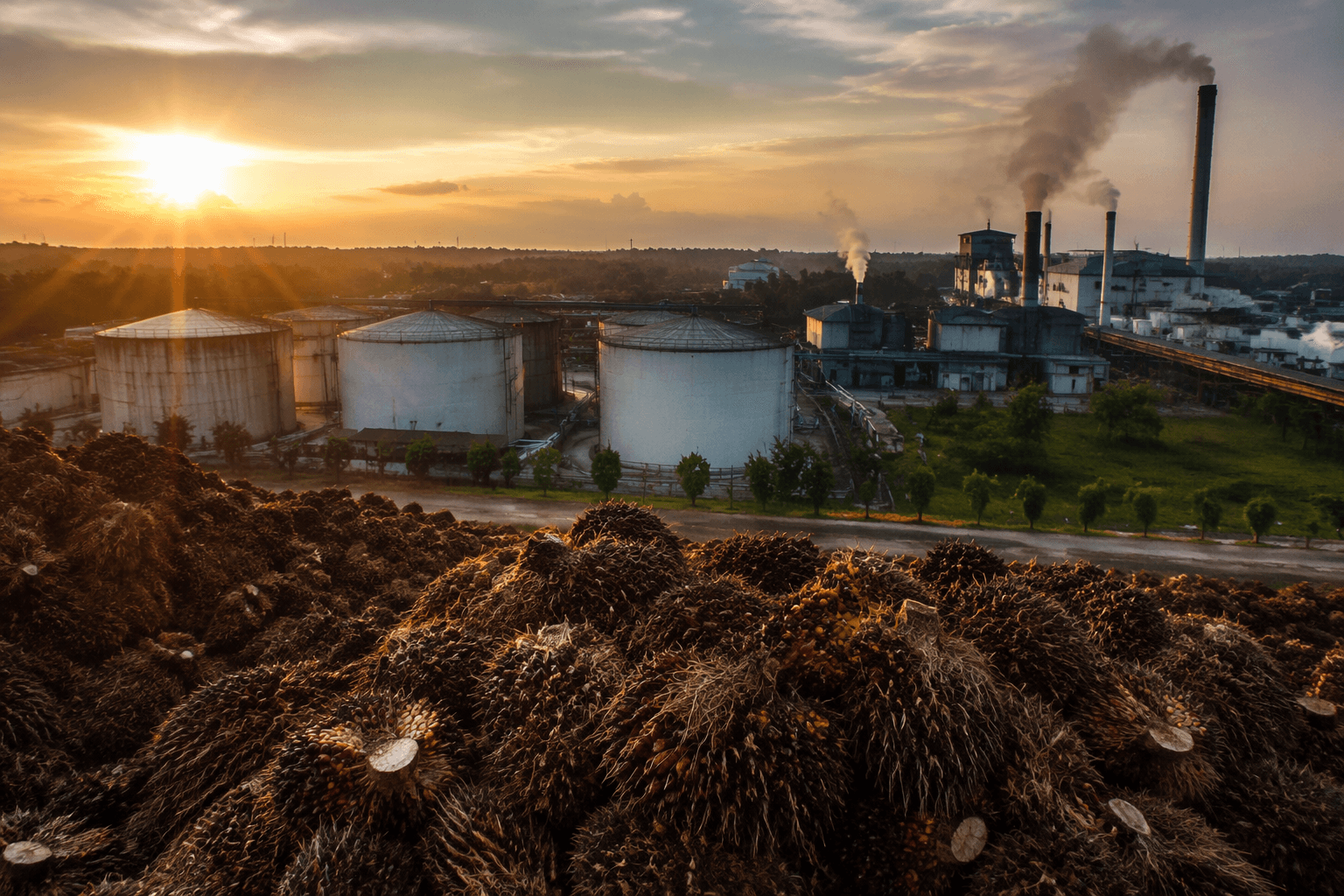
Indonesia tightened exports of palm waste products in January 2025 as the country’s palm oil sector weighs a circular economy model that could turn residues into higher-value goods and better margins. Siti Nikmatin, a lecturer at IPB University’s Palm Oil Study Center, said the approach has to work across both upstream and downstream operations if it is to improve competitiveness rather than simply rebrand existing output.
Why the value-add push is intensifying
GAPKI recorded Indonesia’s palm oil exports at 33.72 million tons in 2017, with crude palm oil accounting for 7.08 million tons, or 20.99% of exports. That mix left room for downstream processing even before the current wave of policy changes, and GAPKI later put the industry’s foreign-exchange earnings at US$39.28 billion, or Rp600.98 trillion, in 2022. Local consumption also climbed from 32.3% of total production in 2019 to 42.8% in February 2024, narrowing the share available for straightforward export growth.
If more of the crop stays home for refining, blending and industrial use, the next gains have to come from residues, waste products and conversion steps that lift value per tonne. In practical terms, the sector is being asked to squeeze more income from the same plantation base without leaning only on crude shipments.
What circularity means in the palm oil chain
Nikmatin said the model cannot stop at collection or waste handling. It needs scientific support and coordination across the industry to work effectively, which puts research institutions, mill operators, traders and processors in the same value chain rather than separate lanes. Without that coordination, circularity risks becoming a slogan attached to ordinary byproducts instead of a system that consistently moves material into marketable outputs.
A UN PAGE policy brief on green and inclusive recovery through circular economy in the palm oil industry and an ICCT white paper on palm residues both argue that palm waste and residues can be channeled into higher-value products and advanced biofuels.
Biofuels are pulling the system in the same direction
The domestic biodiesel mandate is tightening the market for palm oil at the fuel end. In November 2024, Indonesia planned to expand its mandatory biodiesel blend to B40 in 2025 from B35, which would absorb more palm-derived feedstock into the domestic fuel pool. For processors, that means the competition for oil is no longer only about export contracts, but also about who can secure feedstock for FAME production and who can keep residue-based streams from being stranded.
In January 2025, the government also curbed exports of palm waste products. Jakarta said those exports had already exceeded “reasonable capacity,” a signal that authorities want more of those streams available for domestic users rather than leaving the country in bulk.
The test for real circularity
That means proving that residues can be captured, processed and sold into higher-value markets, while the industry still meets growing domestic demand for blended fuel and processed palm products. It also means keeping scientific backing in the loop, because a circular model that cannot be measured or replicated across the supply chain will not hold up in a market already shaped by B40 and tighter feedstock controls.
This article was produced by Prism’s automated news system from verified source data, official records, and press releases, then run through automated quality and moderation checks before publishing. The system is built and supervised by the people who set the standards it runs under. Read our full AI policy.
Did this article answer your question?