Louisiana poised to lead US RD and SAF growth on carbon capture advantage
Louisiana has 3.2 billion gallons a year of planned RD and SAF capacity, and its Class VI carbon-storage regime could push it past California.
Louisiana is lining up the biggest U.S. buildout of renewable diesel and sustainable aviation fuel with a carbon-storage system that can lower the emissions profile of new plants. Industrial Info Resources is tracking 3.2 billion gallons a year of planned RD and SAF capacity in the state, while Louisiana already has 1.3 billion gallons a year of operational RD and SAF capacity, second only to California.
Carbon capture is the state’s edge
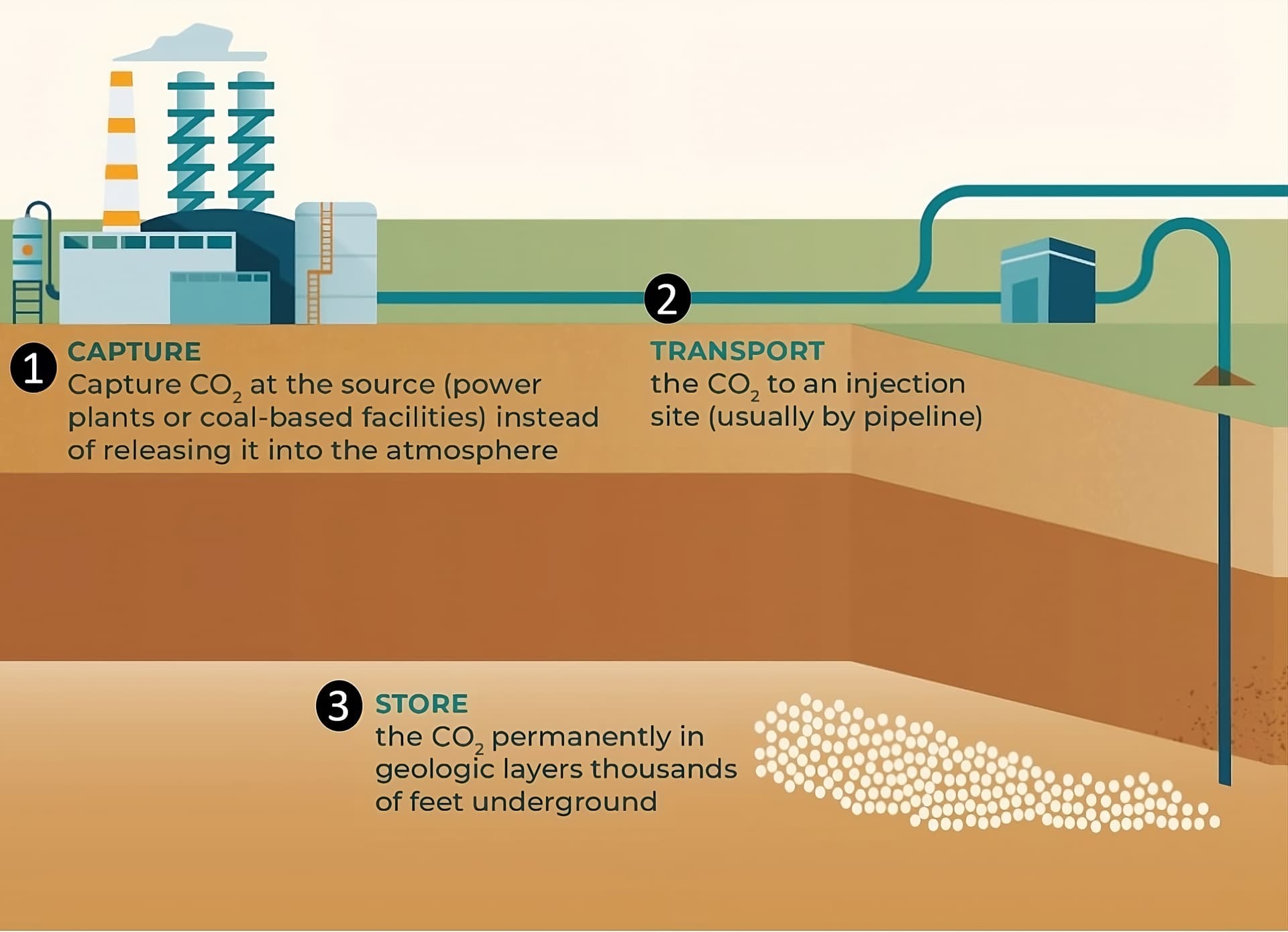
The advantage starts with Class VI wells, the federal category used to permit underground carbon dioxide storage. The U.S. Environmental Protection Agency granted Louisiana primary enforcement authority over Class VI wells on Dec. 28, 2023, making it the third state to receive that authority. Louisiana’s Department of Energy and Natural Resources then issued the state’s first Class VI carbon capture permit in September 2025 for a Hackberry project in Cameron Parish.
Governor Jeff Landry reinforced the policy push on Oct. 15, 2025, when he issued an executive order revising state criteria for Class VI carbon sequestration permitting. Louisiana Economic Development says the state’s longstanding energy expertise, extensive industrial infrastructure, and proximity to major carbon emitters position it for large-scale carbon capture, utilization and storage deployment. That combination matters for RD and SAF developers because carbon storage can be paired with low-carbon fuel production on the same industrial footprint.
The permitting progress gives Louisiana a practical advantage over states that have the geology but not the regulatory pipeline. For project developers, the difference is not abstract: a fuel plant with a carbon storage path can compete for the same feedstock and offtake as one without it, while carrying a lower carbon intensity profile into markets that value LCFS compliance and other emissions-linked demand.
Louisiana Green Fuels anchors the wood-waste buildout
Louisiana Green Fuels in Columbia, Caldwell Parish, shows how that model is supposed to work. Louisiana Economic Development describes the project as a $700 million development on a 171-acre site at the Port of Columbia that would produce up to 32 million gallons a year of renewable diesel and naphtha using wood waste as feedstock. Carbon storage is planned a mile underground, which ties the fuel plant directly to the state’s carbon-management push.
Strategic Biofuels said in July 2023 that SLB would support sequestration efforts for the project. The company said the project could avoid the yearly equivalent emissions of 274,000 cars, a claim that underscores how carbon capture is being used not only as a compliance tool but also as a core part of project positioning. The fuel slate is narrower than a full SAF complex, but the site’s carbon plan makes it a template for how Louisiana intends to link biomass conversion with storage.
The project also illustrates the feedstock logic behind Louisiana’s biofuels pitch. Wood waste is not tied to soybean crush cycles, used cooking oil collection volumes or tallow availability, which can make it an attractive local input when a developer wants to build around a more controllable supply chain. In Louisiana, that feedstock choice fits a state that is trying to couple biomass conversion with underground storage rather than rely only on imported waste oils.
Grön Fuels brings scale and product diversity
If Louisiana Green Fuels shows the model, Grön Fuels shows the scale. Louisiana Economic Development describes Grön Fuels in Port Allen, West Baton Rouge Parish, as a $9.2 billion project with 5,585 new jobs and a daily production capacity of 65,000 barrels per day, or nearly 1 billion gallons per year, of sustainable aviation fuel, renewable diesel, green hydrogen and naphtha.
That mix matters because it goes beyond a single fuel. SAF and renewable diesel share much of the same hydroprocessing and hydrogen backbone, while green hydrogen and naphtha add additional revenue streams and product flexibility. A project at that scale can influence feedstock procurement, hydrogen infrastructure and export logistics across the Capital Region, especially if carbon management remains central to the development plan.
The headline capacity also helps explain why Louisiana keeps surfacing in conversations about future U.S. SAF leadership. A nearly 1 billion gallon-a-year project would be large enough to reshape regional demand for low-carbon feedstocks and carbon-storage services, even before it reaches full run-rate output. If it advances, the state’s role would extend well beyond a collection of stand-alone plants.
Why Louisiana is building a durable base
The key question is whether Louisiana’s advantage is structural or subsidy-dependent. The evidence points to a structural base, but one that still depends on execution. The state has regulatory primacy for Class VI wells, its first carbon storage permit is already on the books, and its industrial footprint is concentrated around ports, emitters and established energy corridors.
At the same time, much of the growth remains in the project pipeline. Industrial Info Resources is tracking 3.2 billion gallons a year of RD and SAF capacity, but that number includes planned volumes, not just barrels already flowing. The state’s 1.3 billion gallons a year of operational capacity shows a real base, yet the leap to market leadership still hinges on permits, financing, offtake and the timing of final investment decisions.
That is why Louisiana’s carbon-capture advantage is best read as an infrastructure story, not just a policy story. The state has turned underground storage into a site-selection tool for RD and SAF, and the next phase will show whether that edge survives project slippage, policy shifts and the hard economics of building at scale.
This article was produced by Prism’s automated news system from verified source data, official records, and press releases, then run through automated quality and moderation checks before publishing. The system is built and supervised by the people who set the standards it runs under. Read our full AI policy.
Did this article answer your question?