Malaysian palm oil inventories rise as exports slump to one-year low
Malaysia's palm oil stocks jumped 5.2% in May to 2.43 million tons as exports sank 14% to a one-year low, pressuring prices and lifting Indonesian supply.
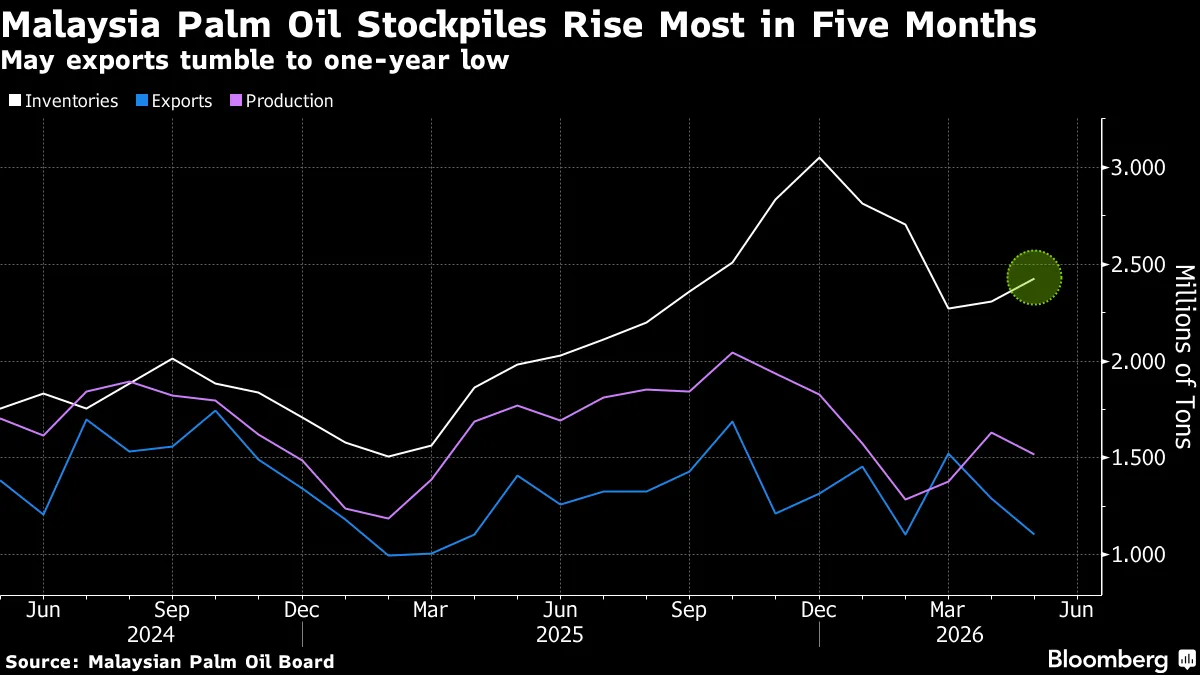
Malaysia’s palm oil inventories climbed at the fastest pace in five months in May, rising 5.2% from April to 2.43 million tons as exports fell sharply and buyers shifted to cheaper Indonesian cargoes. The buildup was more than double the 2.2% increase expected in a Bloomberg survey, a sign that supply was outrunning demand even as Malaysian production softened.
Exports dropped about 14% to 1.11 million tons, the lowest in a year, while crude palm oil output fell 7% to 1.52 million tons from 1.63 million tons in April. Even with lower production, stockpiles rose because overseas shipments slowed so much, with Malaysian palm oil losing share as traders chased discounted Indonesian supplies after Jakarta overhauled its commodity export system.
The Malaysian Palm Oil Board’s data showed crude palm oil stocks at about 1.28 million tons and processed palm oil stockpiles at about 1.14 million tons in May. Kenanga Research said domestic inventories climbed close to a 10-year high and kept its “Overweight” call on the plantation sector, arguing that firmer crude palm oil prices still supported the group. That call will be tested if exports remain weak into June.
Pricing has already started to reflect the softer trade flow. MPOB said crude palm oil averaged RM4,499 a tonne in May, down 1.5% from April, though still 15.9% higher than a year earlier. For biodiesel producers, the move matters because a weaker palm complex can narrow the spread against soybean oil and other vegetable oils, while also shifting demand toward lower-cost feedstocks in Asia and beyond.
Indonesia’s tighter grip on exports, which began June 1, has become a key variable for the next leg of the market. Traders said Malaysian exports could slide for a third straight month if buyers continue favoring Indonesian cargoes, leaving the main question whether May’s inventory jump was a temporary bulge or an early signal that global biofuel and edible oil demand is softening.
This article was produced by Prism’s automated news system from verified source data, official records, and press releases, then run through automated quality and moderation checks before publishing. The system is built and supervised by the people who set the standards it runs under. Read our full AI policy.
Know something we missed? Have a correction or additional information?
Submit a Tip