Portland mandates 50% renewable diesel for all diesel sold citywide
Portland’s diesel pool shifted to 50% renewable content on July 1, creating a new citywide demand pocket for renewable diesel and biodiesel.
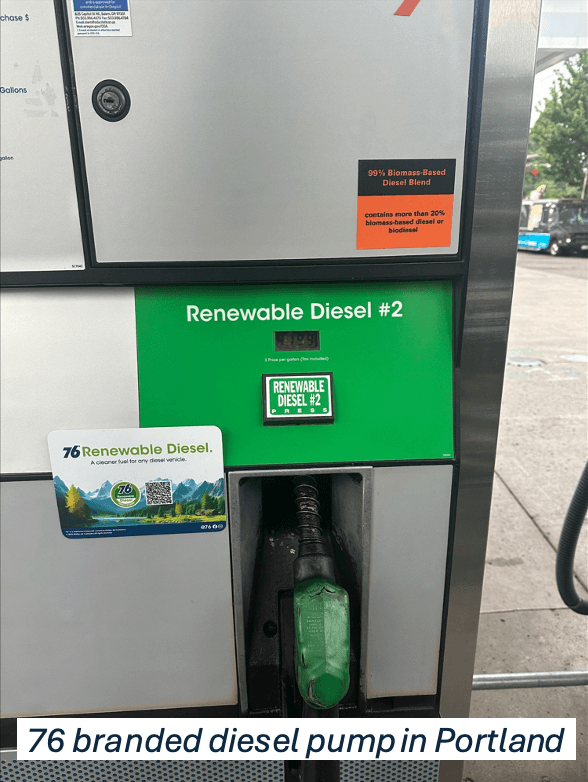
Portland’s Renewable Fuel Standard took effect July 1, requiring every gallon of diesel sold within the city to contain at least 50% renewable diesel or biodiesel. The step lifted the city’s minimum renewable content above its prior 5% biodiesel blend rule, setting up a sharper pull on West Coast low-carbon diesel supply.
The requirement sits under Portland City Code Chapter 16.60 and carries the city’s current carbon-intensity rules alongside the new blend floor. Portland first adopted its Renewable Fuel Standard in 2006, and the city says it remains the only North American city with a diesel biofuel mandate of this kind. Portland updated the program in 2022 with a path toward phasing out petroleum diesel by 2030, turning the local market into a compliance lane for renewable diesel and biodiesel rather than a niche blend target.
Portland established its Renewable Fuel Standard Technical Advisory Committee on July 31, 2023 to advise on technical and economic issues tied to renewable fuel supply and implementation. A committee memo dated October 8, 2025 showed the city was already working through the practical limits of supply, storage and delivery before the new requirement landed. OPIS has said the minimum renewable diesel blend in Portland was set to rise from 15% to 50% in 2026, a jump that will force wholesalers and terminal operators to secure more product and more schedule certainty for city deliveries.
For fleets and fuel buyers, the shift turns procurement into a tighter scheduling problem. Diesel sold in Portland now has to clear both the 50% biofuel threshold and the city’s carbon-intensity test, which leaves less room for discretionary barrels and more dependence on contracted renewable diesel and biodiesel volumes. Any shortfall will show up first in rack pricing, terminal allocation or hauling costs as suppliers push compliant product into the city.
The wider regional backdrop is just as tight. Oregon’s 2026 Clean Fuels Forecast said state officials were assessing whether fuel supply would be sufficient to generate the carbon reduction credits needed for clean fuels obligations, a sign that renewable molecule availability remains a live issue across Oregon and California-linked markets. That makes Portland’s mandate more than a local rule change. It creates a new demand pocket inside an already constrained West Coast system, where feedstock access, refinery output and transport logistics will determine who pays up and who can keep trucks moving.
This article was produced by Prism’s automated news system from verified source data, official records, and press releases, then run through automated quality and moderation checks before publishing. The system is built and supervised by the people who set the standards it runs under. Read our full AI policy.
Did this article answer your question?