Sustainable aviation fuel market seen growing to $10.27 billion by 2032
The SAF market is projected to grow from $2.37 billion to $10.27 billion by 2032, while 2026 output still covers just 0.8% of aviation fuel use.
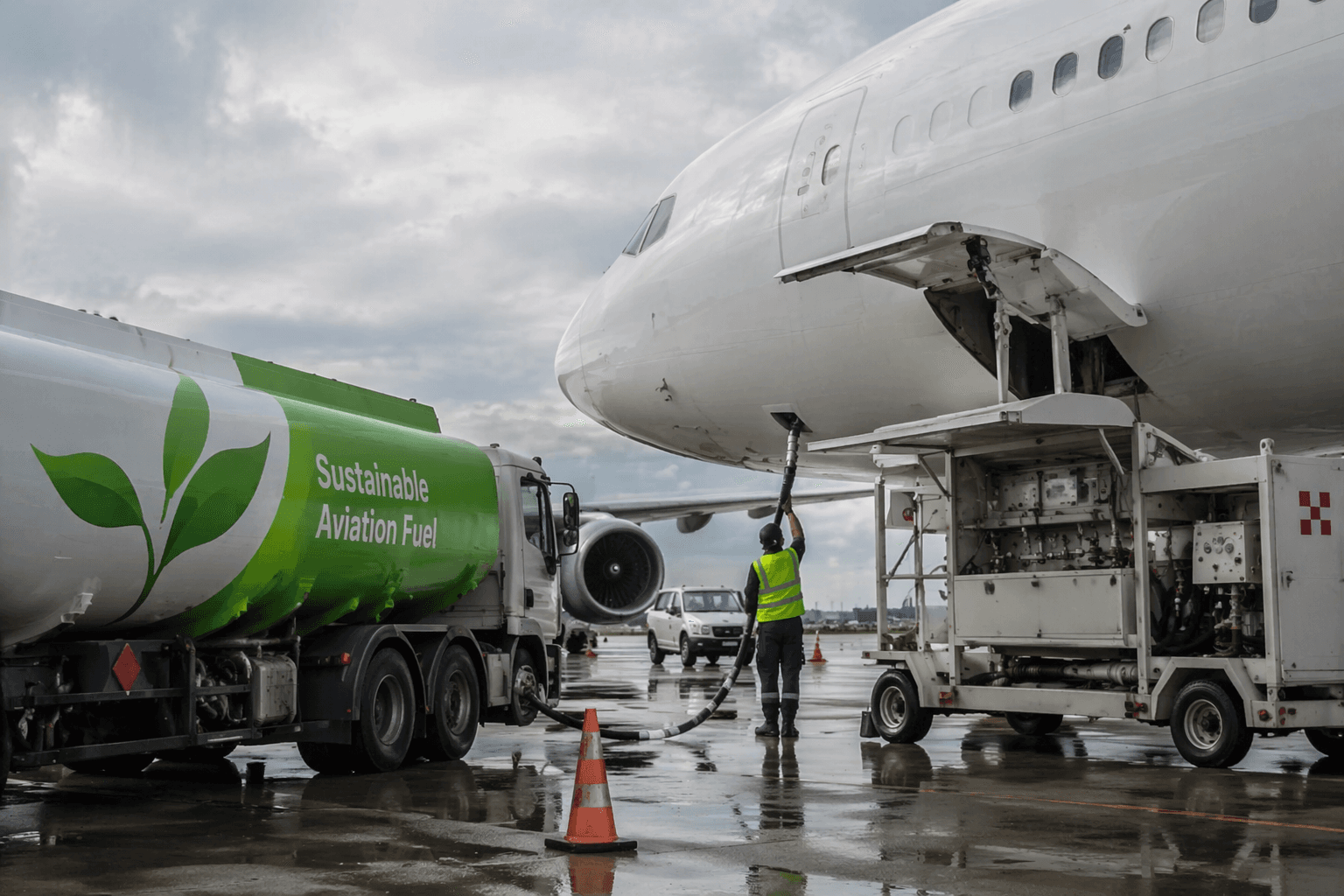
A sustainable aviation fuel market worth $2.37 billion in 2026 will reach $10.27 billion by 2032 under Research and Markets' July 17 forecast. The forecast ties that expansion to diverse feedstocks, advanced SAF and e-fuel production, airport infrastructure, long-term offtake, AI optimization, digital traceability and carbon verification. IATA estimates SAF is the main lever for aviation’s decarbonization and will provide around 65% of the emission reductions needed for net zero CO2 emissions by 2050.
What the forecast is counting
The market model prices in the buildout of supply, logistics and verification around SAF, with the biggest named opportunity areas running from feedstock access to carbon accounting.
Long-term offtake, airport infrastructure and digital traceability now sit beside production capacity, which means the companies that can move product, prove emissions claims and finance plants have more leverage than those selling molecules in isolation.
Supply still trails demand
IATA said on Dec. 9, 2025 that SAF accounted for about 0.3% of the world’s jet fuel use and was projected to reach only 0.7% by 2025. IATA expects 2.4 million metric tons of SAF to be available in 2026, covering just 0.8% of total fuel consumption, while IATAtv put the additional cost to airlines at $4.3 billion.
RMI’s SAF Outlook projects global aviation in 2024 will consume approximately 107 billion gallons of jet fuel and emit 1.24 billion tons of CO2e. It projects global SAF production will rise to approximately 6.1 billion to 8.2 billion gallons per year by 2030, still far short of full-fleet substitution.
The policy case is still intact
The first test flight of sustainable aviation fuel on a commercial aircraft took place in 2008, and SAF was approved for use in aircraft operations in 2011.
ISS STOXX put aviation at about 2.5% of global energy-related carbon emissions in 2023, citing the IEA, which classifies aviation as a hard-to-abate sector and relies heavily on low-emissions fuels in its net-zero pathway. IATA’s Fly Net Zero commitment targets net zero carbon by 2050.
Who is best placed to turn targets into barrels
Research and Markets profiles Shell, BP, TotalEnergies, Neste and 49 other key players in the sustainable aviation fuel market.
Diverse feedstocks and advanced SAF and e-fuel production are the supply side, while airport infrastructure, long-term offtake, AI optimization, digital traceability and carbon verification are the commercial and compliance layers that convert nameplate capacity into deliverable volumes.
What has to happen by 2032
Reaching that 2032 market size requires feedstock streams that can support repeated production runs, not one-off batches; project finance that can survive construction and startup risk; and airline contracts that lock in demand long enough to justify new capacity.
The global airline industry is likely to miss its green jet fuel targets because supply is falling short, and European airlines will miss green jet fuel targets because green fuel costs too much and output is too low. The 2032 forecast depends on the same variables the forecast highlights: verified supply, secure offtake, airport handling and the systems to prove what was delivered.
This article was produced by Prism’s automated news system from verified source data, official records, and press releases, then run through automated quality and moderation checks before publishing. The system is built and supervised by the people who set the standards it runs under. Read our full AI policy.
Did this article answer your question?