Taiwan SAF ambitions hinge on building ethanol market first
Taiwan's SAF buildout is starting with ethanol, where E3 pilot fuel, E10 standards and imports will determine whether ATJ can scale.
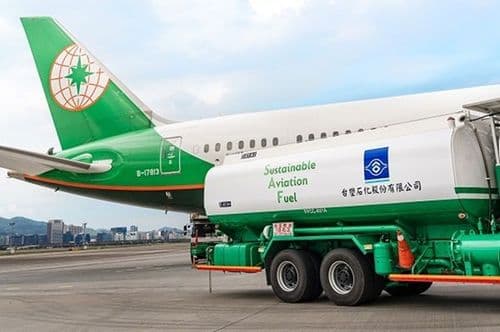
Taiwan started sustainable aviation fuel supply for domestic carriers on April 23, 2025. On April 24, 2025, about 6,000 tonnes of SAF would be available at airports across Taiwan in 2025 for domestic and international airlines, with the fuel potentially reducing about 15,000 tonnes of carbon emissions. On July 17, S&P Global Commodity Insights identified a domestic fuel ethanol market as a prerequisite for scaling Taiwan’s alcohol-to-jet sustainable aviation fuel buildout. The bottleneck is not the jet fuel itself, but the liquid fuel system underneath it, from blending and imports to storage, distribution and standards.
Ethanol is the upstream constraint
Taiwan’s challenge is structural. As a constrained island economy with limited domestic feedstock flexibility, it cannot assume the kind of surplus biomass base that has supported SAF pathways elsewhere. If alcohol-to-jet is the chosen route, ethanol has to be available in steady volumes and at workable logistics cost, whether that supply comes from domestic production or imports.
In the U.S. Department of Agriculture Foreign Agricultural Service’s Taiwan Biofuels Report 2026, Taiwan’s ethanol-blended gasoline program remains limited to a small-scale E3 pilot, and the government is reviewing standards that could allow E10. Road-fuel blending is one of the clearest ways to create a durable ethanol market before aviation conversion plants try to lock in feedstock supply.
The near-term choices are familiar to anyone following fuel policy in Asia: expand blending mandates, build import terminals and distribution systems, and give suppliers a long enough demand signal to justify storage and handling investments. Without that middle layer, ATJ remains a concept rather than a bankable project chain.
Taiwan already has a small SAF footprint
Taiwan is not starting from zero. State-owned CPC Corp imported 400 metric tons of SAF, and Formosa Petrochemical had produced 5,500 metric tons of renewable fuel so far in 2025 for carriers. Airport supply is already being assembled, but the market remains limited compared with the scale needed for a full national aviation decarbonization plan.
The first test flight on a commercial aircraft took place in 2008, and SAF was approved for use in aircraft operations in 2011 on ATAG’s timeline.
Why alcohol-to-jet keeps coming back
Alcohol-to-jet is attractive for Taiwan because it can work with imported ethanol if domestic output stays thin. That gives policymakers a pathway to aviation decarbonization without waiting for large domestic biomass growth, and it leaves room for a local conversion industry even if the feedstock is sourced offshore.
The tradeoff is that imported ethanol adds cost, logistics complexity and supply risk. Any ATJ strategy therefore depends on a policy structure that can keep ethanol flows reliable enough for long-term offtake agreements. If Taiwan can create steady ethanol demand in gasoline, the same import, storage and compliance systems can support SAF feedstock later.
Pilot programs are building the market signal
Public and private actors have already begun testing that ethanol base. The U.S. Grains & BioProducts Council and the American Institute in Taiwan jointly organized a conference in 2024 on the sustainability benefits of ethanol. The conference put the fuel into the policy conversation as more than a theoretical option.
In May 2026, the U.S. Grains & BioProducts Council and Taiwan Sugar Corp signed a memorandum of understanding to increase the development and use of ethanol in Taiwan. The agreement links a market-development effort to a domestic industrial player rather than leaving ethanol policy entirely in the abstract.
An E10 trial program is serving indigenous communities in Taiwan. The trial tests the logistics of blending, distribution and end-user acceptance before any national-scale rollout.
This article was produced by Prism’s automated news system from verified source data, official records, and press releases, then run through automated quality and moderation checks before publishing. The system is built and supervised by the people who set the standards it runs under. Read our full AI policy.
Did this article answer your question?