ACORD standards streamline P&C insurance software integration and data flow
ACORD still anchors P&C integration because AL3 batch files and XML real-time transactions sit inside the same operating fabric. Adoption counts show why carriers keep both.
About 7,000 core systems were leveraging ACORD standards in 2016, a sign of how deeply the format sits in P&C insurance integration as carriers, agencies, MGAs, and vendors still need one language for policy, commission, forms, claims, and accounting data. ACORD frames its objective as enabling the efficient and effective flow of data across the insurance value chain and ties that directly to timely, accurate exchange in every insurance transaction. In practice, that means fewer custom interfaces, lower integration cost, and less delay every time a carrier or distributor launches a new product or connects another system.
Why ACORD matters in day-to-day P&C software
The standards are not just technical cleanup. They are the reason quoting platforms, policy admin systems, agency management tools, billing engines, and downstream reporting systems can exchange structured data without every connection becoming a one-off project. ACORD says implementing its standards improves data quality and flow, increases efficiency, and realizes savings.
ACORD’s 2016 annual report put annual ACORD message transactions at about 6 million and said ACORD supported more than 1,200 standardized transaction types. The same report counted 21 of the 25 top P&C carriers, 9 of the 10 top solution providers, 4 of the 5 top brokers, and 20 of the 25 top reinsurers using the standards.
Additional 2016 figures:
- More than 4,000 participating organizations
- 45+ years of industry service
- 80,000 hours devoted annually to standards development
- 300,000 ACORD forms downloaded over five years
- 6,000 ACORD regulatory submissions
A later 2018 annual report put participating organizations above 8,000 and industry service at 50 years.
AL3 and XML solve different operational problems
ACORD’s Property & Casualty standards are available in two formats, AL3 and XML. The split matters because each format reflects a different stage of insurance operations, and many carriers still run both at the same time.
| Dimension | AL3 | XML |
|---|---|---|
| Operating model | One-way, batch communication | Real-time requirements for business transactions |
| Typical data | Policy and commission data | Business transactions across connected systems |
| Delivery support | Access database, data dictionary, supporting documentation | Structured for real-time exchange |
| Best fit | Legacy core systems and scheduled transfers | Faster exchange between modern applications |
| Main trade-off | Easy to keep embedded in older workflows, but slower to adapt | Better for live exchange, but harder to map if the data model is unclear |
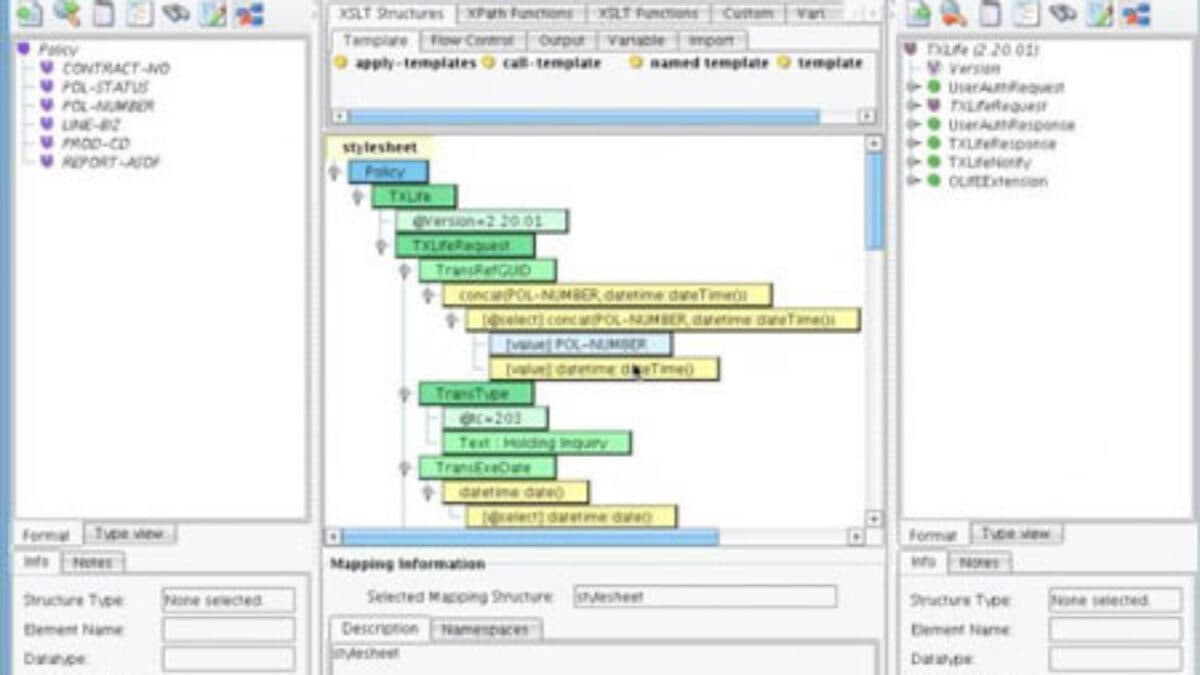
AL3 persists because so much of P&C still runs on batch logic. Older policy admin and agency workflows often depend on scheduled file moves, not event-driven APIs, so AL3 remains the cheapest way to keep those environments connected. XML is the cleaner fit for real-time transactions, but it does not eliminate implementation work. An Embarcadero white paper from November 2010, Deciphering the ACORD XML Standards, identified one of the hardest parts of adoption as finding the underlying data model inside the standard.
That tension is still relevant. XML reduces the friction of real-time exchange, but teams still have to map business objects correctly, validate them, and reconcile them with the structure of the receiving system.
Where the standards show up in actual workflows
The practical value of ACORD is clearest in the handoffs between distribution, operations, and compliance. Policy data needs to move into administration systems, commission data needs to reach agency and brokerage workflows, forms need to be available to the right parties, and regulatory submissions need to be packaged in a consistent way. ACORD’s standards are built for that kind of exchange, which is why they show up in quoting, policy issuance, servicing, and downstream reporting.
That broader implementation footprint is visible in ACORD’s own infrastructure. In a June 1, 2023 presentation to the U.S. Department of the Treasury’s Federal Advisory Committee on Insurance, Bill Pieroni laid out ACORD’s portfolio as 800+ forms, 400,000 elements, 7 reference architecture models and frameworks, 20+ market studies, and 3,000 validations and sessions. ACORD’s implementation resources page lists tools and services to support adoption, many of them complimentary to members.
Why modernization still runs through ACORD
ACORD’s 2023 Next-Generation Digital Standards executive summary states that digital transformation has changed the essential nature of data exchange in formats, quantity, structure, and value. There is more data, it moves faster, and it has to be structured well enough for automation across more systems than before. XML addresses part of that requirement, while AL3 still carries a large share of the legacy traffic that modern platforms inherit.
If a platform only handles greenfield API design, it will still hit a wall when it reaches the agency network, the legacy policy system, or the commission process that depends on batch exchange. If it only speaks AL3, it will struggle with real-time digital workflows.
This article was produced by Prism’s automated news system from verified source data, official records, and press releases, then run through automated quality and moderation checks before publishing. The system is built and supervised by the people who set the standards it runs under. Read our full AI policy.
Did this article answer your question?