From the Great Fire to real-time P&C insurance software evolution
P&C software began with fire-driven recordkeeping and now turns on real-time, API-based cores. The lasting divide is batch-era control versus configurable SaaS speed.
The fire in 1666 lasted four days, destroyed more than 13,000 homes, and left about 100,000 people homeless. After central London burned, property owners needed a way to prove coverage, direct help, and rebuild faster, which is why the first property insurance policies and the earliest fire insurance marks emerged from the same pressure: too many losses, too much paper, and not enough structure.
From ashes to insurance records
London Museum dates the takeoff of modern property insurance to the Great Fire, and by 1680 fire insurance marks were appearing on buildings to show that a property was insured. The industry’s first operational challenge was not underwriting theory; it was knowing what was covered, where it was covered, and how to get help to the right address.
Those early constraints still define P&C software. Carriers have always had to manage distribution complexity, regulatory variation, claims volume, and product changes, but the tools changed as the workload grew from handwritten ledgers to industrial-scale recordkeeping and then to real-time digital exchange.
The batch-processing era solved scale, not speed
For decades, P&C carriers ran on paper files and manual underwriting before moving into mainframe-era back-office systems. Those systems were built to handle policy administration, billing, and claims recordkeeping in bulk, which made them reliable for high volume but slow when products, rates, or forms changed. The result was a technology model that optimized control and auditability, not rapid product iteration.
| Era | Core technology pattern | Operational effect |
|---|---|---|
| Paper and manual workflows | Files, ledgers, clerical review | Slow underwriting and claims handling, but simple to understand |
| Mainframe batch processing | Large back-office systems | Better scale for policy, billing, and claims, but limited flexibility |
| ACORD AL3 exchanges | One-way batch communication for policy and commission data | Standardized data movement, still not real-time |
| ACORD XML and APIs | Structured real-time transaction support | Faster integration with partners and external data sources |
| Cloud SaaS core platforms | Subscription, configurable platforms | More frequent releases, quicker product changes, and easier integration |
AL3 was designed as a one-way, batch communication method for policy and commission data, while XML was built to support real-time requirements for business transactions. ACORD’s Reference Architecture consists of seven interrelated industry models, reflecting the move from isolated systems to a shared enterprise view of data and process.
What a modern P&C stack actually includes
P&C software is not just a customer portal on top of a policy system. A carrier’s operating stack usually spans policy administration systems, billing systems, claims management, rating engines, underwriting workbenches, document generation, and distribution tools. Legacy monolithic systems often tie product rules, rates, forms, and workflows together so tightly that one change creates a chain reaction; modern platforms separate those concerns, expose APIs, and support more frequent releases.
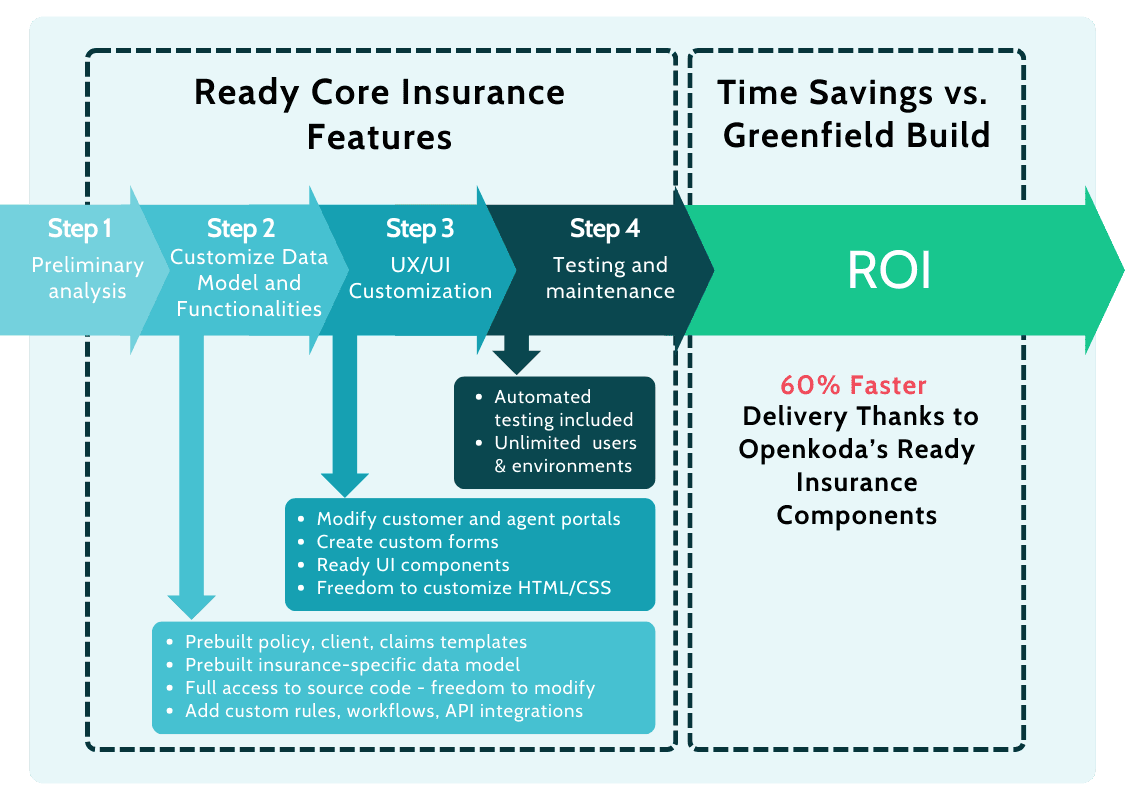
That separation changes implementation timelines and integration work. A carrier that needs to launch a new product, support state-specific or country-specific rules, or connect to broker, MGA, and third-party data sources can move faster when the core is configurable rather than hard-coded. The trade-off is discipline: cloud platforms reduce the burden of maintaining infrastructure, but they do not remove the need for clean data models, strong integration design, and governance around product changes.
- Faster product launch depends on configuration, not custom code.
- Real-time broker and MGA connectivity depends on APIs and structured transaction data.
- Claims and underwriting decisions improve when third-party data can enter the core without batch delays.
- Frequent releases are useful only when policy, billing, and claims logic are separated enough to change safely.
Guidewire set the modern reference point, but it is not the only path
Guidewire Software, founded in 2001 in San Mateo, California, became the best-known enterprise reference point for cloud-era P&C core modernization. In Gartner’s definition, SaaS P&C Insurance Core Platforms are cloud-based, subscription software that provides full product life-cycle support, usually through a single predefined core solution or a suite of preintegrated modules that cover policy administration, billing, and claims.
| Platform set | What it represents | Practical trade-off |
|---|---|---|
| Guidewire Software | Vertical enterprise software focused on P&C insurers | Broad core footprint, but enterprise-scale programs can still be heavy to implement |
| Duck Creek Technologies | SaaS core-platform alternative in policy, billing, and claims | Strong fit when buyers want configurable core processes, with integration still central to the project |
| Majesco | PAS and core-platform option in a crowded market | Useful in comparisons where product breadth and implementation fit matter more than one-size-fits-all claims |
| Sapiens | Another SaaS-era P&C core platform | Competes in the same modernization set, where carriers weigh configurability against program complexity |
| Socotra | Modern core-platform option in the SaaS set | Fits buyers prioritizing cloud-native core replacement and API-led change |
The real buying question is not cloud versus on-premises in isolation. It is whether a platform can support product configuration, distribution change, and integration without destabilizing policy, billing, and claims operations. Majesco’s authorized Celent reprint profiles and evaluates 50 different policy administration system vendors in North America.
Why ACORD and SaaS changed the integration equation
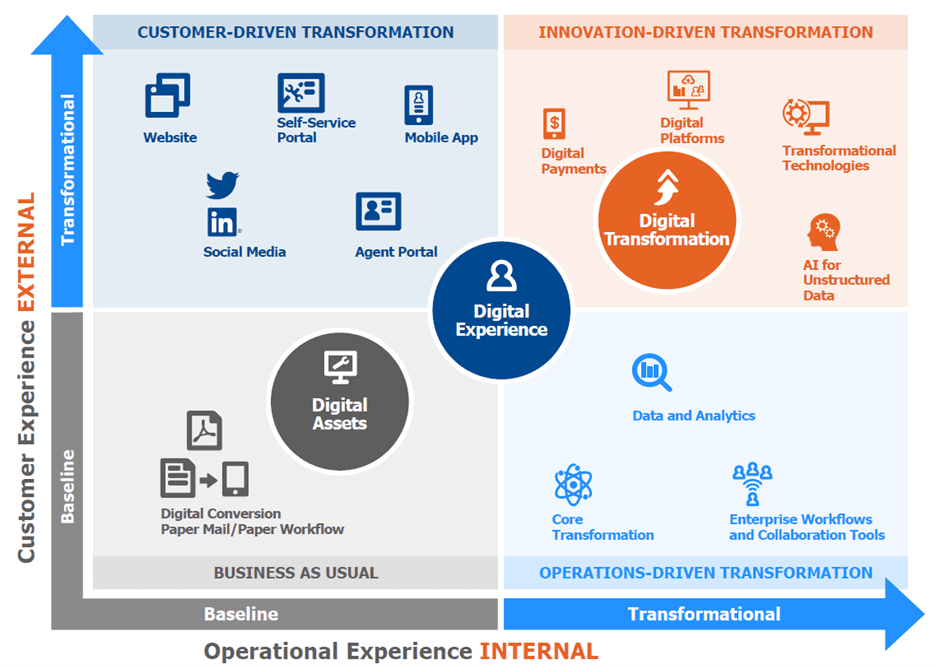
ACORD’s objective is to make data flow efficiently across the insurance value chain, and that objective maps directly to modern core-platform buying. When XML and reference models replace one-way batch transfers, carriers can connect more cleanly to brokers, MGAs, third-party data providers, and downstream finance or analytics systems. The point is not just speed, it is reducing the cost of each interface so the core can support more channels and more product variation.
Cloud platforms are more than hosted versions of old systems. In Gartner’s definition, subscription delivery and full life-cycle support matter because carriers now expect policy, billing, and claims to move together through one operating model.
AI sits on top of the same core discipline
ACORD’s 2026 digital maturity study, which analyzed more than 200 global insurers, found that only 7% emerged as true leaders in digitalization. That finding puts the current AI conversation in context: machine learning cannot compensate for messy policy data, inconsistent claims records, or rating logic scattered across old systems. With a disciplined core, AI can improve underwriting, servicing, and claims triage.
This article was produced by Prism’s automated news system from verified source data, official records, and press releases, then run through automated quality and moderation checks before publishing. The system is built and supervised by the people who set the standards it runs under. Read our full AI policy.
Did this article answer your question?