Resilience launches Arc for portfolio-level cyber risk management
Resilience’s Arc ties continuous cyber exposure monitoring to insurance decisioning, aiming at portfolios with dozens or hundreds of entities. The pitch is underwriting, not just reporting.

Cyber risk software is moving closer to the underwriting desk, and Resilience’s new Arc platform is built for that collision point. The company launched Arc on May 14, 2026, as a portfolio-level cyber risk management tool for multi-entity organizations, with continuous monitoring of exposure and a direct link from aggregate risk insights to insurance decisioning.
That positioning matters because Arc is aimed at the kinds of buyers that make cyber risk messy in the first place: multinational corporations, conglomerates, private equity firms and other parent companies. Rather than forcing insurers or internal risk teams to look at each entity in isolation, Resilience says Arc is meant to show how cyber exposure is distributed across an entire portfolio and where concentration, interdependence and emerging threats could change the loss picture.

Vishaal “V8” Hariprasad, Resilience’s CEO and co-founder, put the problem bluntly: CISOs of complex organizations can feel like they are “running hundreds of organizations instead of just one.” That is the gap Arc is trying to close. Resilience says the platform combines continuous monitoring, quantified exposure and decision support in one workflow, and that it supports risk transfer through its Risk Operations Center.
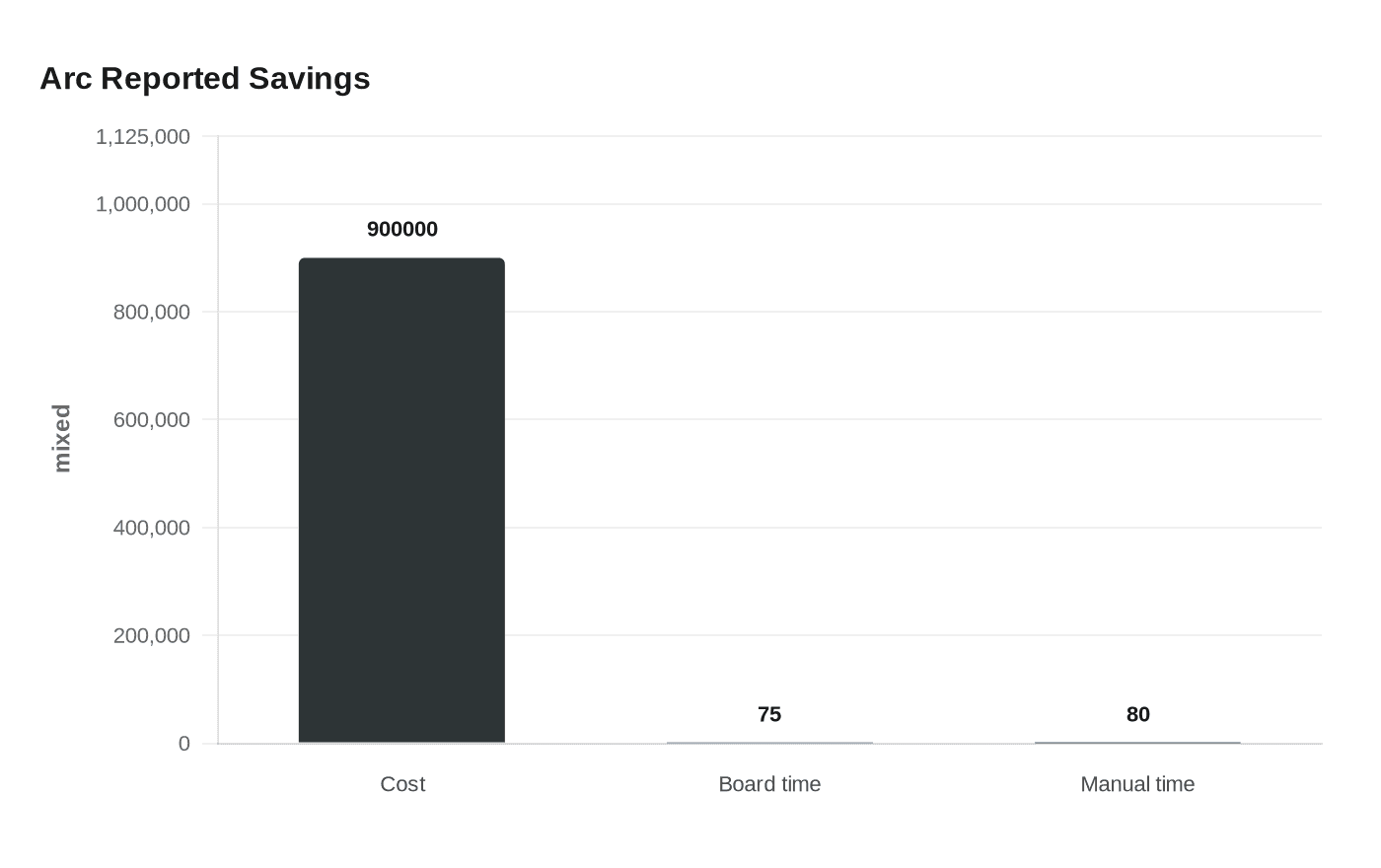
The company is also putting numbers behind the pitch. Resilience says Arc users have cut portfolio risk assessment costs by up to $900,000 a year, reduced the time spent aggregating data for board reporting by 75%, and saved more than 130 hours on assessments per entity. The company says manual assessment time can fall by an average of 80% annually, while also helping teams prioritize risks most likely to drive financial loss or cross insurance thresholds.
For property and casualty carriers, especially those writing cyber or specialty lines, the draw is obvious. A portfolio view can make it easier to spot accumulation, exposure overlap and fast-moving threats before renewal or claims pressure forces the issue. That is part of a broader shift in insurance technology: the line between risk intelligence software and insurance systems is thinning as vendors try to push live data directly into underwriting, renewal and risk transfer decisions.
The timing is also hard to miss. Industry reporting tied to National Association of Insurance Commissioners data says global cyber insurance premiums reached nearly $15 billion in 2024, up 7% from the prior year, while the NAIC’s 2024 Cybersecurity Insurance Report logged 33,561 cyber claims. Allianz Commercial said ransomware accounted for about 60% of the value of large cyber claims in the first half of 2025. Against that backdrop, Resilience’s bet is straightforward: if cyber losses are becoming more frequent, more expensive and more concentrated, carriers and insureds will pay for software that turns exposure data into action.
Resilience, founded in 2016, had raised $124 million by 2021. Arc extends that strategy from cyber insurance into the software layer that now sits between security operations and underwriting.
Know something we missed? Have a correction or additional information?
Submit a Tip