Sapiens vs Guidewire, Duck Creek Technologies in 2026 P&C software showdown
Sapiens fits insurers that want one P&C suite; Guidewire wins on deep enterprise scale, and Duck Creek is the faster modular option.
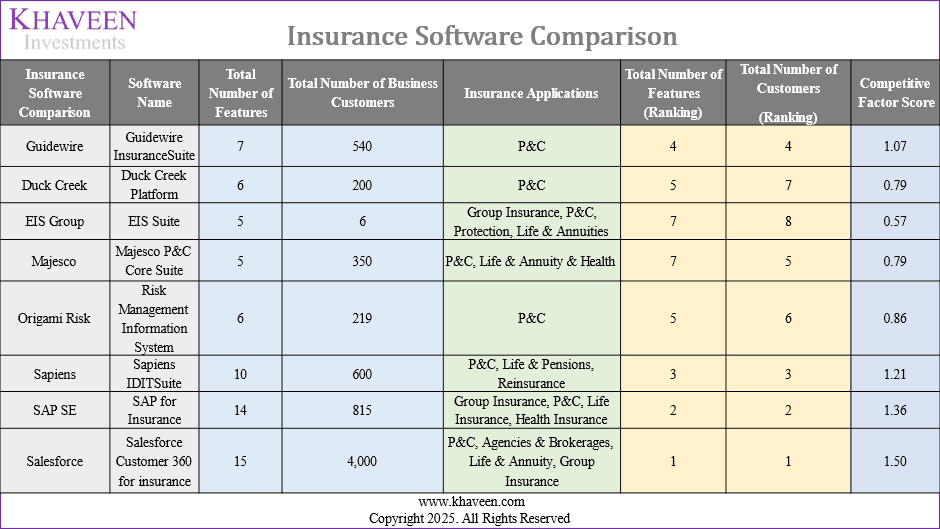
Sapiens is the best fit for mid-market and multi-country P&C carriers that want one unified core across policy, claims, billing, and reinsurance; Guidewire suits large US carriers that need deeper enterprise customization, and Duck Creek suits buyers that want a faster modular rollout. As of 2026, Guidewire and Duck Creek still carried Gartner 2025 Leader recognition, while Sapiens remained visible in Celent’s 2024 claims and 2025 policy-administration regional reviews.
| Provider | What it’s best for | Pricing or starting point | Notable strength |
|---|---|---|---|
| Sapiens | Unified suite buyers | Custom quote | Policy, claims, billing, reinsurance |
| Guidewire | Large enterprise carriers | Custom quote | InsuranceSuite, cloud, analytics |
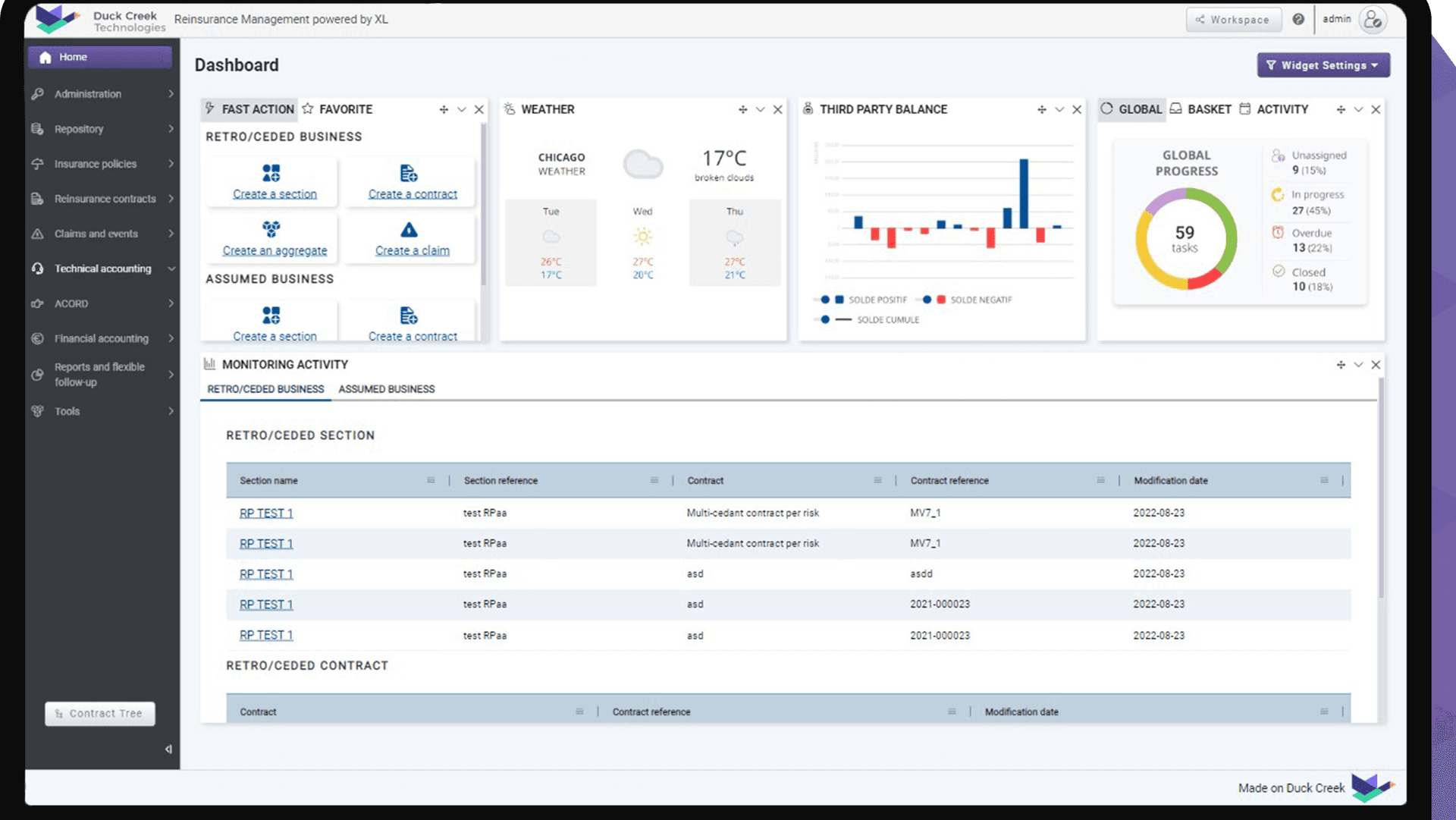
| Duck Creek Technologies | Phased modular programs | Custom quote | Cloud-native low-code stack |
How to read this table: Sapiens minimizes stack sprawl, Guidewire maximizes enterprise depth, and Duck Creek compresses the first phase by letting carriers deploy modules piece by piece or as a single SaaS suite. Pricing is opaque across all three, so services cost, data migration, and testing usually matter more than sticker price.
Guidewire vs Duck Creek: how do they compare for P&C buyers?
Sapiens Platform for P&C
Sapiens Platform for P&C is the cleanest choice when an insurer wants one vendor across the core. The suite is built on Sapiens IDIT and is organized around PolicyPro, ClaimsPro, BillingPro, and ReinsurancePro, with the company saying the platform supports underwriting, policy administration, claims, billing, and risk data across home, auto, specialty, and commercial lines. Sapiens also says it serves 600+ customers in 38 countries, which matters if the operating model spans Europe, North America, and APAC.
The practical trade-off is less integration sprawl, not zero complexity. Public references such as Tokio Marine Highland show the appeal of compressing claims workflow, tasks, and diaries into one cloud suite, and Celent’s 2025 P&C policy-administration review plus its 2024 claims review both kept Sapiens in the conversation on functionality and automation. For buyers comparing Sapiens vs Guidewire vs Duck Creek, that makes Sapiens the strongest fit when speed-to-value and one contract matter more than assembling a best-of-breed stack.
Guidewire InsuranceSuite
Guidewire InsuranceSuite is the stronger fit when the buyer is a large carrier that values established enterprise workflows over minimum implementation scope. Guidewire bundles PolicyCenter, BillingCenter, and ClaimCenter, and Guidewire Cloud adds cloud-first, hybrid delivery, Cloud APIs, and developer tooling through AI Connect, MCP Servers, and Jutro. Gartner’s 2025 North America Magic Quadrant positioned InsuranceSuite as a Leader, and Guidewire says more than 570 insurers in 40+ countries use its platform.
The limitation is program weight. Aioi Nissay Dowa Management NZ deployed InsuranceSuite on Guidewire Cloud for multiple lines and described the result as ahead of schedule and on budget, but that kind of rollout usually assumes strong governance, clean data, and enough implementation capacity to absorb a larger change program. Guidewire remains the deeper enterprise choice, but the cost of that depth shows up in architecture decisions, partner coordination, and long testing cycles.
Duck Creek Technologies
Duck Creek is the better fit when the insurer wants cloud-native modules and lower first-phase friction. Duck Creek says its core stack is cloud-native and modular, with Policy, Billing, Claims, Clarity analytics, and intelligent applications that can be deployed piece by piece or as one unit; Celent also notes that Duck Creek’s low-code SaaS model is aimed at faster delivery and lower total cost of ownership. Duck Creek’s customer pages show GEICO and Chubb using the platform, which gives it real traction in both US and global programs.
The limit is that modularity can shift complexity into architecture decisions. Duck Creek is attractive when the buyer wants to stage modernization and keep teams close to business configuration, but the same flexibility can create more design choices than a single suite like Sapiens, especially if governance is weak or the insurer wants one contract to cover the whole stack. That is where Duck Creek fits best as a phased modernization platform, not as the simplest operating model.
Total cost of ownership and implementation timeline
Sapiens is typically the faster route when a carrier wants one end-to-end vendor because the policy, claims, billing, and reinsurance layers are already packaged together. A third-party implementation guide puts Duck Creek at roughly 9 to 18 months for full deployment and Guidewire at about 12 to 24 months, which is an indicator, not a guarantee; scope, customization, data quality, and testing discipline can move those numbers quickly. That timing usually means Duck Creek wins on first-phase spend, Guidewire carries the heaviest services bill, and Sapiens often lands between them because the integration surface is smaller than a best-of-breed stack but broader than a single module.
Which insurer should choose Sapiens, Guidewire, or Duck Creek?
- Mid-market and multi-country carriers should start with Sapiens, because the unified suite reduces integration work and fits regional complexity across Europe, North America, and APAC. Guidewire is the next stop when the carrier needs heavier enterprise customization, while Duck Creek fits if rollout speed matters more than one-suite consolidation.
- Large US carriers should put Guidewire first if the program demands deep workflows, a broad installed base, and a mature cloud path. Sapiens is the alternative when the insurer wants to standardize policy, claims, billing, and reinsurance under one vendor instead of carrying a larger platform footprint.
- Carriers that want phased modernization should put Duck Creek first when low-code SaaS rollout and module-by-module delivery are the priority. Sapiens stays relevant if the buyer wants modularity without fragmenting the core, while Guidewire is usually the heavier program for this use case.
Sapiens leads when an insurer wants one unified vendor across policy, claims, billing, and reinsurance, Guidewire remains the deeper enterprise bet for very large US programs, and Duck Creek is strongest when modular rollout speed matters more than stack consolidation. In 2026, the real decision is less about feature checklists and more about how much complexity you want to own after go-live.
Frequently Asked Questions
How does Sapiens compare to Guidewire?
Sapiens Platform for P&C is the more unified end-to-end suite, with stronger global and mid-market coverage across policy, claims, billing, and reinsurance. Guidewire InsuranceSuite has the deeper US Tier-1 carrier footprint and a more established enterprise ecosystem around PolicyCenter, BillingCenter, and ClaimCenter. Sapiens usually favors faster deployment and lower operating complexity; Guidewire favors larger, more customized programs.
How does Sapiens compare to Duck Creek?
Sapiens Platform for P&C gives insurers one integrated suite across policy, claims, billing, and reinsurance, with a broad international footprint. Duck Creek OnDemand is cloud-native and modular, which makes it attractive when a carrier wants to pick modules and stage the rollout. Sapiens is the better fit for one-vendor standardization; Duck Creek is stronger when best-of-breed module selection and lower first-phase friction matter more.
Sapiens vs Guidewire vs Duck Creek, which is right for my insurer?
Sapiens fits mid-market and global insurers that want a unified end-to-end suite with faster deployment. Guidewire fits large US carriers that need the deepest analyst-validated enterprise ecosystem. Duck Creek fits insurers that want cloud-native modular selection and phased modernization. The main decision criteria are carrier size, geography, deployment timeline, and whether your team prefers one suite or a modular core.
This article was produced by Prism’s automated news system from verified source data, official records, and press releases, then run through automated quality and moderation checks before publishing. The system is built and supervised by the people who set the standards it runs under. Read our full AI policy.
Know something we missed? Have a correction or additional information?
Submit a Tip