Duck Creek expands global platform for multi-country insurers
Duck Creek pushed its Multi-Country Layer into general availability to help insurers avoid the patchwork of local exceptions that comes with cross-border growth.
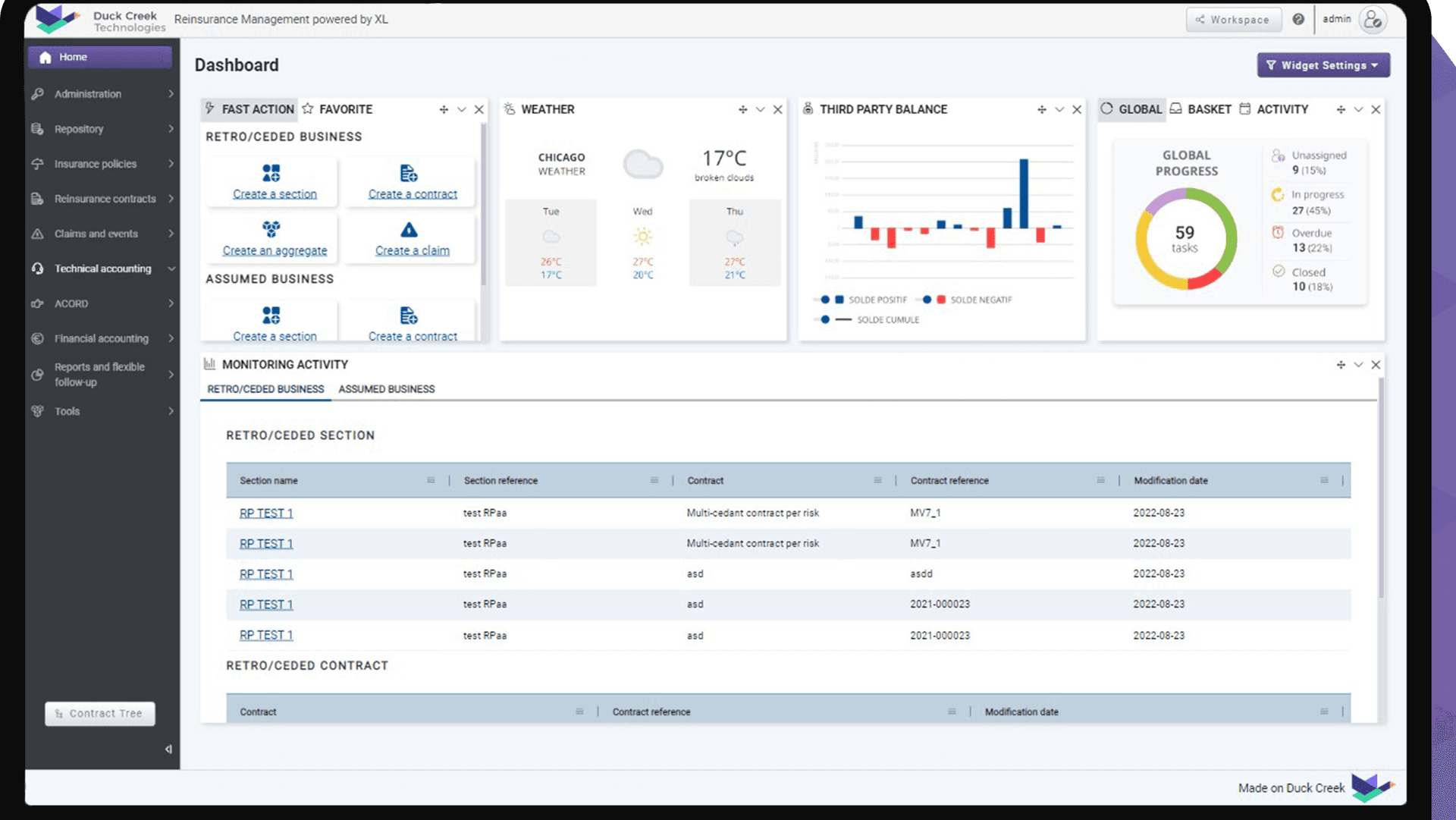
Multi-country growth is where core P&C platforms start to crack. One country wants its own product rules, another needs different compliance treatment, and a third demands local language, data and reporting tweaks, until standardisation turns into a pile of exceptions.
Duck Creek Technologies tried to address that problem in London, where it announced that its Multi-Country Layer is generally available across Duck Creek Policy, Billing, Claims and Clarity, with expansion underway across digital solutions. The company said the layer is built to help carriers enter new markets faster, reuse existing configurations and keep global operations consistent while still meeting local market requirements.

The move also came with a strategic investment in the London Market and a plan to pursue Lloyd’s market certification. Hardeep Gulati, Duck Creek’s chief executive, said the investment extends Duck Creek’s leadership into one of the world’s most sophisticated specialty insurance ecosystems and is intended to improve operational agility and full policy-lifecycle efficiency. That focus makes sense when Lloyd’s says its market serves policyholders in more than 200 countries and territories, with over 50 managing agents and more than 80 syndicates supporting large, specialist risks through heavy collaboration and data exchange.
The timing fits a broader shift in enterprise insurance software. An ISG report dated April 9, 2026 said insurers are accelerating SaaS-based core modernisation because of customer expectations, regulatory demands and competitive pressure, and it pointed to Duck Creek’s OnDemand offering as a way to enable continuous upgrades while reducing operational disruption. Duck Creek has also argued that cloud-native SaaS lowers total cost of ownership over time by removing hardware costs and costly manual upgrade cycles.
Customer examples show why that pitch lands. Suncorp said Duck Creek’s modular architecture was expected to cut product amendment timelines from weeks to days and new-product timelines from months to weeks, while reducing complexity and increasing automation. That is the real promise behind MCL: not that multinational insurers stop needing country-specific variation, but that those variations stop forcing every market into its own brittle stack.
For buyers, the question is no longer whether a core system can handle policy, billing and claims. It is whether that system can support enterprise-wide governance without turning every geography into a one-off build. Duck Creek’s latest push says the battleground has moved to international scale, and the winners will be the platforms that can absorb local complexity without multiplying it.
This article was produced by Prism’s automated news system from verified source data, official records, and press releases, then run through automated quality and moderation checks before publishing. The system is built and supervised by the people who set the standards it runs under. Read our full AI policy.
Know something we missed? Have a correction or additional information?
Submit a Tip