Evident AI index ranks insurers by maturity, not adoption
Evident’s new insurance index shows who is scaling AI into real operating advantage, and who is still stuck in pilot mode.
The big shift in this index is simple: insurers are being judged on whether AI changes the way the business runs, not whether they have a few flashy pilots on the slide deck.
1. Maturity beats adoption

Evident’s 2026 AI Index for Insurance is built to separate real operating progress from simple AI enthusiasm. It ranks the largest insurers in North America and Europe by maturity, which is the right lens if you care about underwriting discipline, claims speed, service quality, and governance instead of demo theater.
2. The benchmark is broad enough to matter
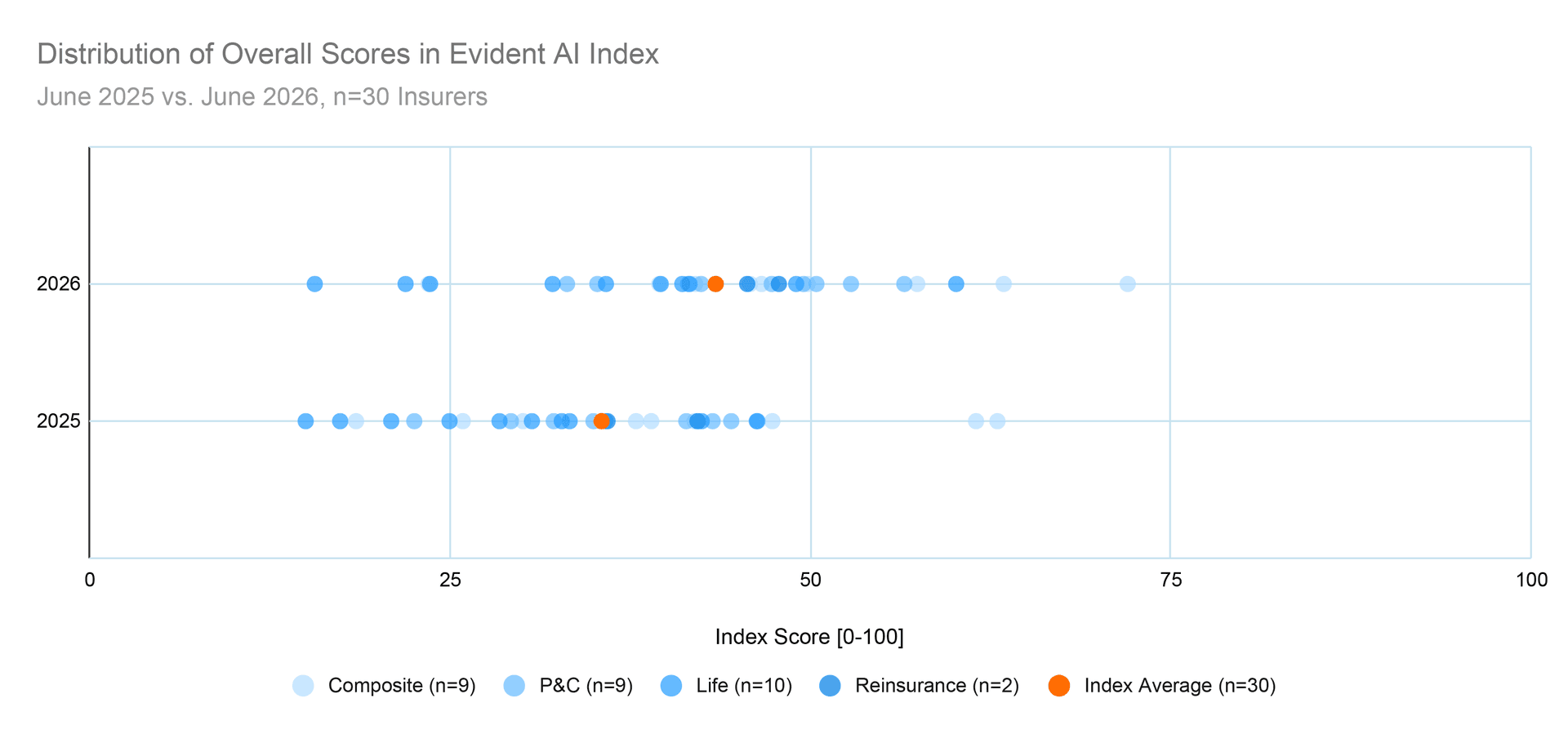
This is the second annual insurance index, and Evident says it is its most comprehensive, independent benchmark in the sector. The study covers 30 of the largest insurers in North America and Europe, using 70+ indicators drawn from millions of publicly available data points, so it has enough weight to expose which carriers are building durable capability and which are still dabbling.
3. The four pillars tell you where the real work is happening
Evident evaluates insurers across Talent, Innovation, Leadership, and Transparency, and that mix is more revealing than a simple count of AI projects. Talent and leadership are the tell here: if those two are weak, the nice-looking AI roadmap usually falls apart when it hits underwriting rules, claims workflows, or compliance reviews.
4. The industry is moving from foundations to scale
The 2026 findings say insurers are shifting from building AI foundations to scaling AI across the enterprise and optimizing it. That is the point P&C buyers should care about, because scale is where AI either starts to improve loss ratio, cycle time, and customer experience, or gets trapped in isolated use cases that never spread beyond one team.
5. Allianz’s No. 1 finish is really a talent story
Allianz said on June 16, 2026 that it ranked No. 1 in the 2026 index, and it tied that result to a 28% larger AI talent pool. That matters because talent is often the hidden bottleneck behind production AI, and the carriers with deeper benches are the ones most likely to operationalize models, govern them properly, and keep improving them after the pilot ends.
6. The 2025 top tier shows the race was already tight
The inaugural 2025 Evident AI Insurance Index found AXA and Allianz leading the pack, while Canadian insurers Intact and Manulife ranked in the top five. That spread says AI maturity in insurance is already competitive across both Europe and Canada, and it also tells you leadership is not locked to one market or one business model.
7. The live roundtable is where the practical questions will surface
Evident is holding a results roundtable on July 7, 2026 at 10:00 EDT and 15:00 BST to unpack the findings from the second annual index. For anyone buying P&C technology, that is the session to watch for the unglamorous questions that matter most: what AI is actually embedded in workflow, where data quality still blocks deployment, and how much governance an insurer needs before a vendor claim becomes a real operating advantage.
8. Evident is turning benchmarking into a broader market signal
The insurance index is part of a wider Evident benchmarking program that also covers banking, payments, and asset management. That makes the rankings more than a one-off report: they are becoming a shorthand for which financial institutions are likely to invest in advanced workflow automation, analytics, and decision intelligence, and which ones are still testing the waters.
The hard lesson for insurers is that AI maturity is now visible enough to compare, and that visibility changes the buying conversation. Vendors can no longer win by promising “AI-enabled” workflows alone; they have to prove they can help carriers move from experimentation to execution, because that is where the gap between leaders and laggards will keep widening.
This article was produced by Prism’s automated news system from verified source data, official records, and press releases, then run through automated quality and moderation checks before publishing. The system is built and supervised by the people who set the standards it runs under. Read our full AI policy.
Know something we missed? Have a correction or additional information?
Submit a Tip