What a modern P&C core suite must do, Sapiens vs Duck Creek
The hardest P&C core suite test is not the demo, it is whether policy, billing, claims, and data still behave as one system after rollout. Sapiens and Duck Creek show the difference between modular branding and operational control.
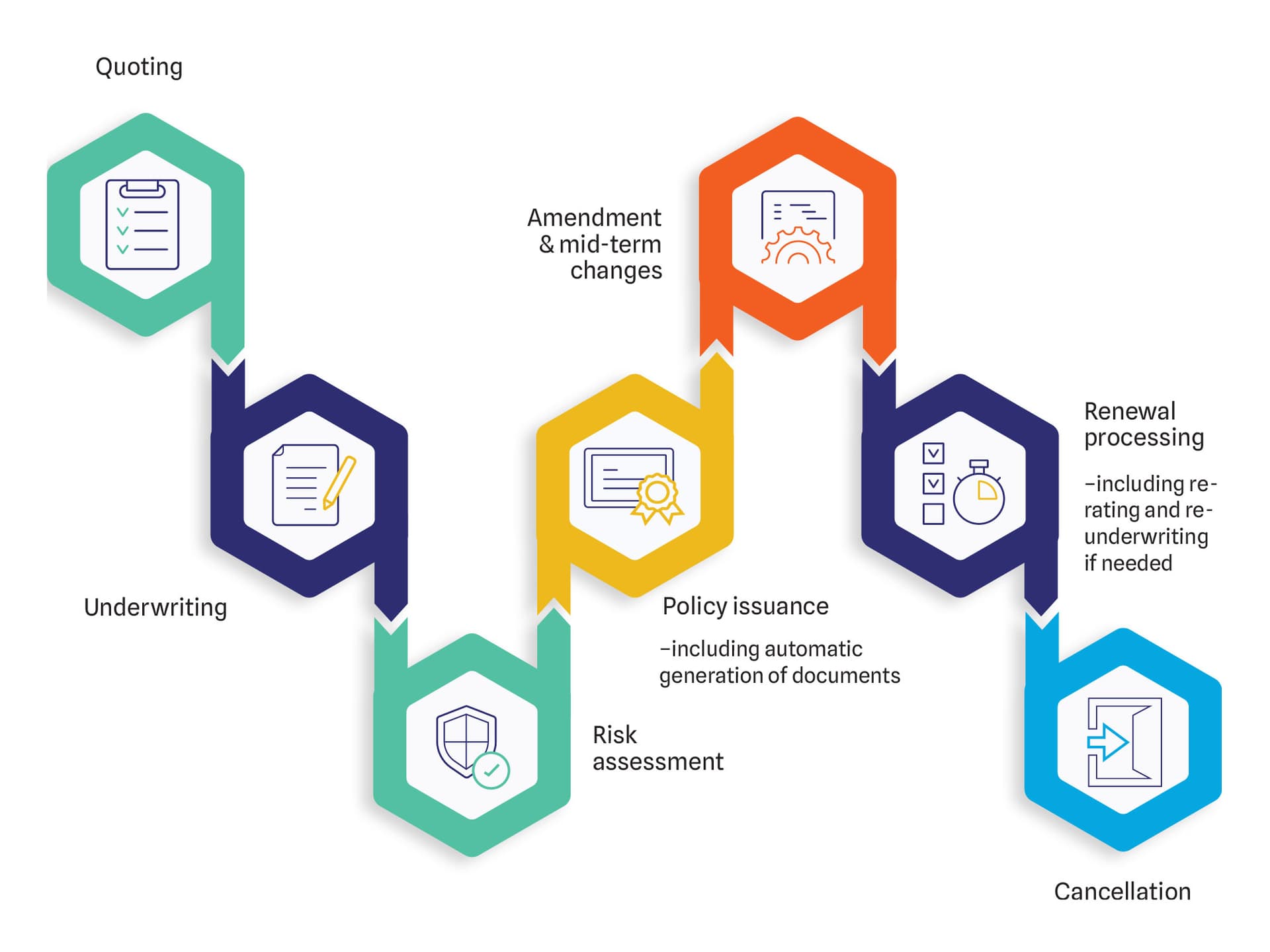
Sapiens’ IDITSuite and Duck Creek’s policy administration platform face the same test under live implementation pressure: policy, billing, claims, and data have to stay synchronized from launch through renewal. Sapiens emphasizes low-code speed and named modules that promise ecosystem orchestration, while Duck Creek stresses coverage depth, workflow control, and auditability at scale.
Policy, billing, claims, and renewal have to move together
The first buyer question is whether a suite really spans the full policy lifecycle or simply stitches together separate products. Sapiens’ IDITSuite is an end-to-end, modular policy administration system for personal and commercial lines, with acquisition, billing, claims, and renewal treated as part of the same operating model. Duck Creek’s policy administration platform is built around product launch speed, pricing confidence, scale across regions and lines, and ecosystem integration.
Modularity only helps if the modules behave like one suite
The word modular appears on many vendor slides, but buyers should look for named components and a believable data model. Sapiens gives more structure here than vague architecture language usually does: ClaimsMaster, PolicyMaster, BillingMaster, DigitalSuite, and DataSuite are all explicitly part of the IDITSuite stack. Those names suggest a suite that is designed to be sold and implemented in pieces, which is useful for carriers rolling out by line of business or by channel.
That same modularity creates the real diligence question: do the modules share a common source of truth, or do they merely sit under one brand? If policy, billing, claims, and data each require custom integration work, the suite starts to behave like a bundle of projects rather than a coherent platform. The buying test is whether a carrier can introduce one business change, such as a product rule or billing plan, without rebuilding the interfaces that connect adjacent modules.
Configuration speed is useful only if it survives production pressure
Sapiens says its low-code product and pricing configuration engine can reduce time to market by 75%. The platform supports both direct-to-consumer and agent-broker distribution.
Duck Creek addresses the same issue with a different emphasis. Its policy stack focuses on launch speed, pricing confidence, and regional scale. For due diligence, the key distinction is between configuration and customization: low-code tools can accelerate setup, but only if the product model remains stable when the insurer moves from a simple launch to complex rating, underwriting, and renewal changes.
Claims is where modular claims can either hold together or unravel
Claims is the clearest place to test whether a suite is genuinely integrated. Duck Creek’s claims platform provides the most concrete implementation detail in the comparison: pre-configured content covering more than 1,200 coverage types, more than 100 tasks, and more than 1,000 business rules. It also emphasizes straight-through processing, automated coverage verification, reserving, and payments, which signals a claims design built for governed automation rather than ad hoc workflow scripts.
A carrier can launch a policy product quickly and still fail operationally if claims adjusters need manual intervention for standard coverage checks or payment steps. Duck Creek emphasizes auditability and governed automation for Tier-1 and complex regional insurers that need control of reserves, approvals, and payment traceability.
The segment view is where the buyer map gets useful
At the segment level, these two platforms help separate different buying priorities. In the global mid-market and cloud-first discussion, Sapiens is the clearer example of a suite that tries to compress product configuration cycles and support multiple distribution models from one modular stack. In the Tier-1 and international discussion, Duck Creek is the clearer example of a platform that foregrounds rules depth, workflow discipline, and auditability across regions and lines.
The segment map breaks down this way:
- Tier-1 carriers: look for governed automation, coverage depth, and control over exceptions. Duck Creek’s claims content and auditability language fits this test well.
- Mid-market carriers: look for low-code configuration, faster launches, and the ability to roll out by product or line. Sapiens’ 75% time-to-market claim and modular component set speak directly to that demand.
- Cloud-first insurers: look for API orchestration and ecosystem design that reduce point-to-point custom work. Sapiens uses API orchestration to connect multiple systems into a single ecosystem.
- International carriers: look for scale across regions and lines, plus enough policy and claims structure to avoid rework in each market. Duck Creek’s regional and line-of-business framing is built for that conversation.
The due-diligence test should be operational, not promotional
The cleanest way to evaluate a modern P&C core suite is to force it through a rollout scenario, not a feature checklist. Start with one line of business, then test whether policy setup, billing logic, claims workflow, and data reporting remain consistent when that line expands into a second channel or region. If the suite requires heavy customization to keep those pieces aligned, the supposed modularity is not doing the work buyers need.
The practical questions are straightforward:
- Can the platform configure a new product and price point without code-heavy rebuilds?
- Can policy, billing, claims, and data share the same operational rules instead of requiring separate local fixes?
- Can the claims process run with straight-through processing where rules are standard, while still preserving auditability when exceptions occur?
- Can the suite support direct-to-consumer and agent-broker distribution without creating duplicate product structures?
This article was produced by Prism’s automated news system from verified source data, official records, and press releases, then run through automated quality and moderation checks before publishing. The system is built and supervised by the people who set the standards it runs under. Read our full AI policy.
Did this article answer your question?