Berkeley laser phase plate sharpens cryo-EM images of tiny proteins
A laser phase plate made cryo-EM sharper on proteins once too faint to see, opening new ground for disease-linked complexes, drug work and structure validation.
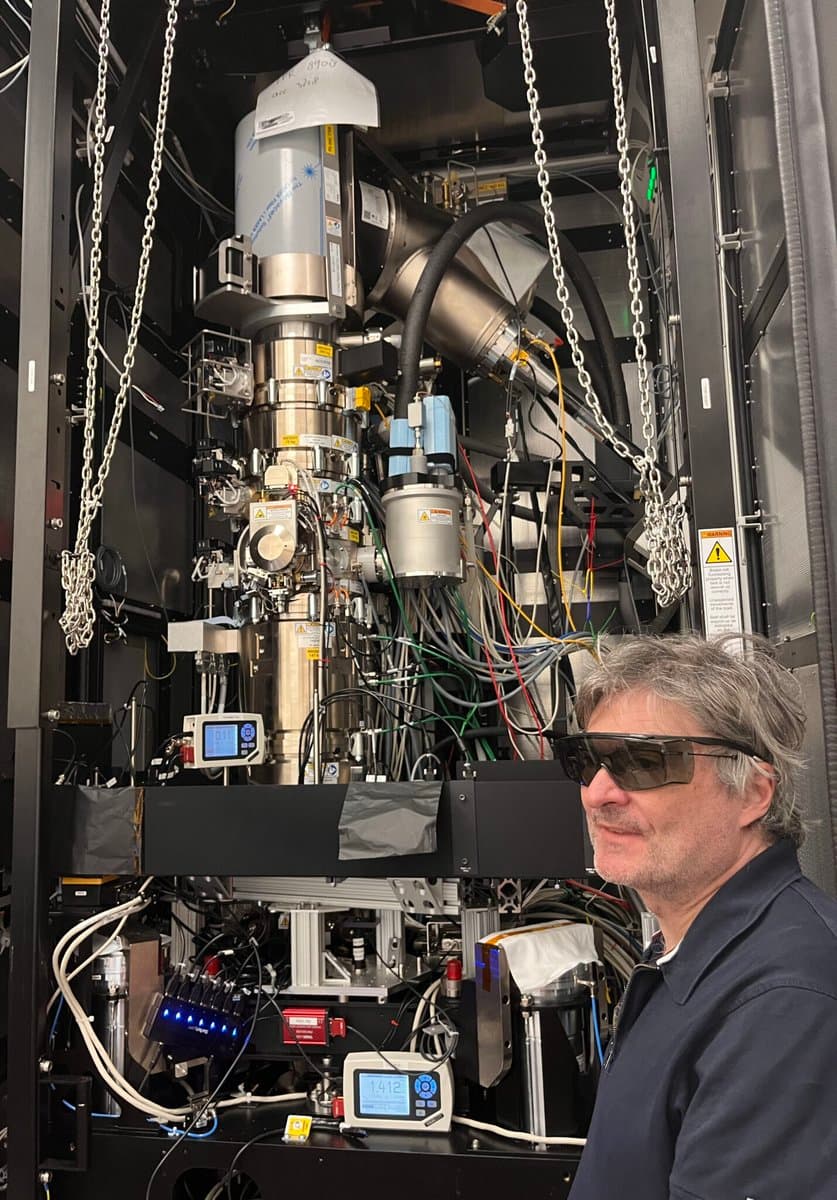
The biggest payoff from Berkeley’s new laser phase plate is not the sharper image itself, but the proteins it may finally bring into focus: tiny enzymes, delicate complexes and disease-linked machinery that have sat below cryo-EM’s practical limit. By adding phase contrast to the electron microscope, UC Berkeley physicists said they have opened a path to proteins about one-third the size of those that challenge today’s machines, with direct implications for drug discovery, enzyme design and faster validation of protein structures.
The advance, reported on June 11, 2026, uses the world’s most intense focused continuous-wave laser to shift the phase of electron waves and boost contrast in cryo-electron microscopy. The technique builds on the phase-contrast breakthrough in light microscopy that won the Nobel Prize in 1953. It also extends a method that already gives cryo-EM about 10,000 times the magnification of optical microscopes, but has long been held back by signal-to-noise problems when researchers try to image very small biomolecules.

Holger Müller, the UC Berkeley physicist who led the development effort and is also a faculty scientist at Lawrence Berkeley National Laboratory, framed the result as a step-change for the field. “Cryo-EM has become the new, fastest-growing method for resolving the structure of biological macromolecules,” he said. In three papers, researchers from UC Berkeley and Biohub said the laser phase plate could make otherwise faint, blurry proteins inside intact cells visible, including many proteins most relevant to human disease.
That in-cell promise may matter even more than the sharper purified samples. Cryoelectron tomography is designed to image proteins in their native cellular environment rather than in isolation, and that is where current methods struggle most. Biohub said existing cryo-EM can image only about 10% of the human proteome in purified form and fewer than 1% of proteins in their native cellular environment. The new approach could make more than 50% of the proteins that carry out cellular functions visible, a shift that would give structural biologists a much broader map of the molecular machinery of life inside cells.

Researchers have spent years pushing cryo-EM forward with better cameras, software and sample preparation, and the Berkeley result suggests the next leap may come from the way electrons are lit, not just how they are recorded. If the method scales as promised, it could speed the hunt for drug targets, sharpen enzyme engineering and let scientists check protein models against real cellular structures far faster than before.
This article was produced by Prism’s automated news system from verified source data, official records, and press releases, then run through automated quality and moderation checks before publishing. The system is built and supervised by the people who set the standards it runs under. Read our full AI policy.
Did this article answer your question?