HMB plus whey protein may extend muscle support in older adults
Adding HMB to whey may keep muscle breakdown suppressed longer in older adults, with a stronger signal in women. It gives aging-focused protein formulas a sharper clinical story.
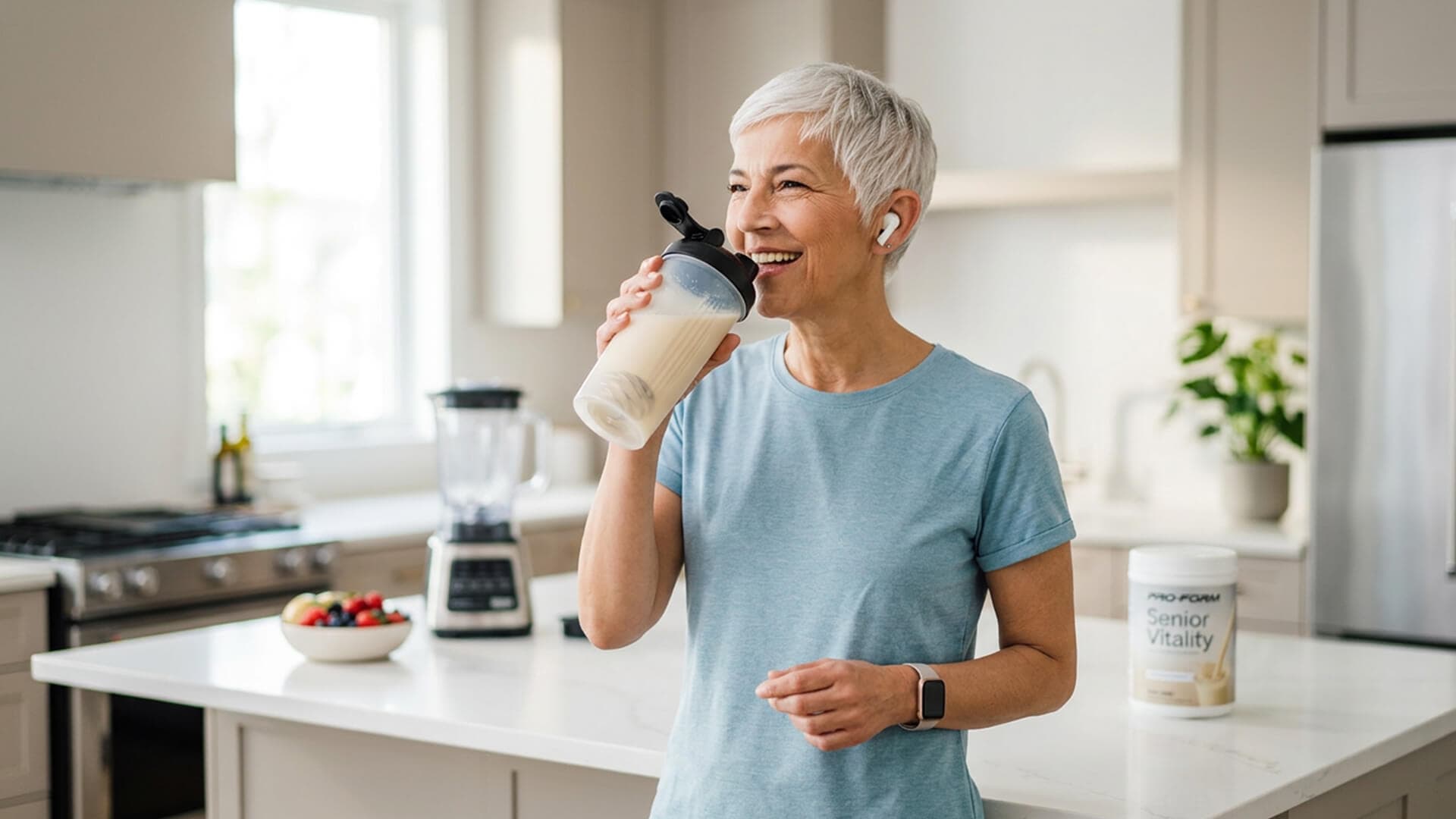
Adding calcium HMB to whey protein kept muscle protein breakdown suppressed longer after feeding in a University of Nottingham trial. The finding gives formulators and practitioners a narrower way to think about protein for healthy aging.
Why this combination is drawing attention
Protein is no longer being sold only as a sports ingredient. In older-adult nutrition, the category is increasingly tied to strength, mobility, and staying independent, which is why it has become one of the more commercially important growth areas in protein. That shift is also changing the language around formulation: instead of asking only how many grams of protein a product delivers, developers are asking what else can help preserve muscle when appetite, aging, and metabolic changes make the margin for error smaller.
HMB has long been discussed as a muscle-preservation ingredient. The new study does not claim that whey plus HMB improves strength or mobility outright. It found a more specific mechanistic effect: HMB extended the anti-catabolic, or breakdown-slowing, effect of whey protein for longer after a meal in older adults.
What the Nottingham trial actually tested
The study was a randomized, double-blind, controlled crossover clinical trial published in Nutrients and conducted by researchers at the University of Nottingham with funding from Abbott Nutrition. It enrolled 24 community-dwelling adults aged 65 to 75. Each participant completed two visits, one with 40 grams of whey protein alone and another with 40 grams of whey protein plus 3 grams of calcium HMB.
The key result was not a sweeping functional endpoint, but a metabolic one: adding HMB extended the later post-feeding suppression of muscle protein breakdown. In plain terms, the blend kept the body in a muscle-preserving state for longer after eating than whey alone.
The study also found a sex-specific response. Older women showed a greater muscle protein synthesis response when HMB was combined with whey protein. The effect was not uniform across older adults.
Why the breakdown side of the equation matters
Most protein conversations stop at synthesis, the build side of the story. Aging muscle, though, is shaped by both construction and demolition, and the demolition side becomes harder to ignore as people get older. A formula that keeps breakdown suppressed longer addresses one of those fronts.

It supports a strategy for muscle support in older adults that pairs whey’s well-known anabolic role with HMB’s reputation for helping preserve muscle tissue. The University of Nottingham’s Health of Older People Research Group and Centre of Metabolism, Ageing, and Physiology focus on nutrition and exercise interventions that reduce the effects of ageing and disease on muscle and function.
What this means for product developers
Older-adult nutrition can now be discussed with more specificity. Brands have already been fragmenting the protein aisle by use case, from recovery and satiety to meal replacement and healthy aging, and this study gives the healthy-aging lane a more clinical vocabulary.
For formulators, the strongest implication is that whey plus HMB is more compelling than whey alone when the target user is an older adult worried about muscle retention. That opens the door to products positioned around muscle support rather than generalized protein intake, especially in formats aimed at adults who want to stay active as they age without crossing into overt sports nutrition.
The work also gives practitioners a more nuanced discussion point. Older women are a subgroup worth watching, especially if future studies continue to show a stronger synthesis response in that population. At the same time, the current data are acute and mechanistic, so they support formulation strategy more readily than they support broad clinical advice about strength gains or mobility outcomes.
How to read the evidence in context
HMB has been studied in older adults for years, and results across the broader literature are mixed. Prior reviews found promise for muscle protein turnover and sarcopenia, but also mixed or inconclusive effects on some muscle outcomes. Other trials have examined HMB alongside resistance training, whey, or different nutrient combinations, including work in older women with reduced muscle mass and studies where adding HMB to whey did not beat leucine plus whey for hypertrophy and strength.
The new crossover data refine that debate. The better question is where HMB adds value, at what dose, in which population, and on which endpoint. In this case, the strongest signal was sustained suppression of muscle breakdown after whey feeding in older adults, particularly older women.
The wider protein category is already moving in that direction. Abbott Nutrition ties higher protein intake to preserving muscle mass, strength, and functionality in aging adults, which aligns with the commercial logic behind functional, life-stage-specific formulas. This trial gives that strategy a sharper edge by showing that one of protein’s best-known companions, HMB, extended the muscle-supporting window rather than simply increasing the size of the serving.
This article was produced by Prism’s automated news system from verified source data, official records, and press releases, then run through automated quality and moderation checks before publishing. The system is built and supervised by the people who set the standards it runs under. Read our full AI policy.
Did this article answer your question?