Dairy firms invest in premium whey capacity as protein demand tightens
Whey is turning into a capacity race: FrieslandCampina is spending more than €90 million while supply stays tight and protein demand keeps climbing.
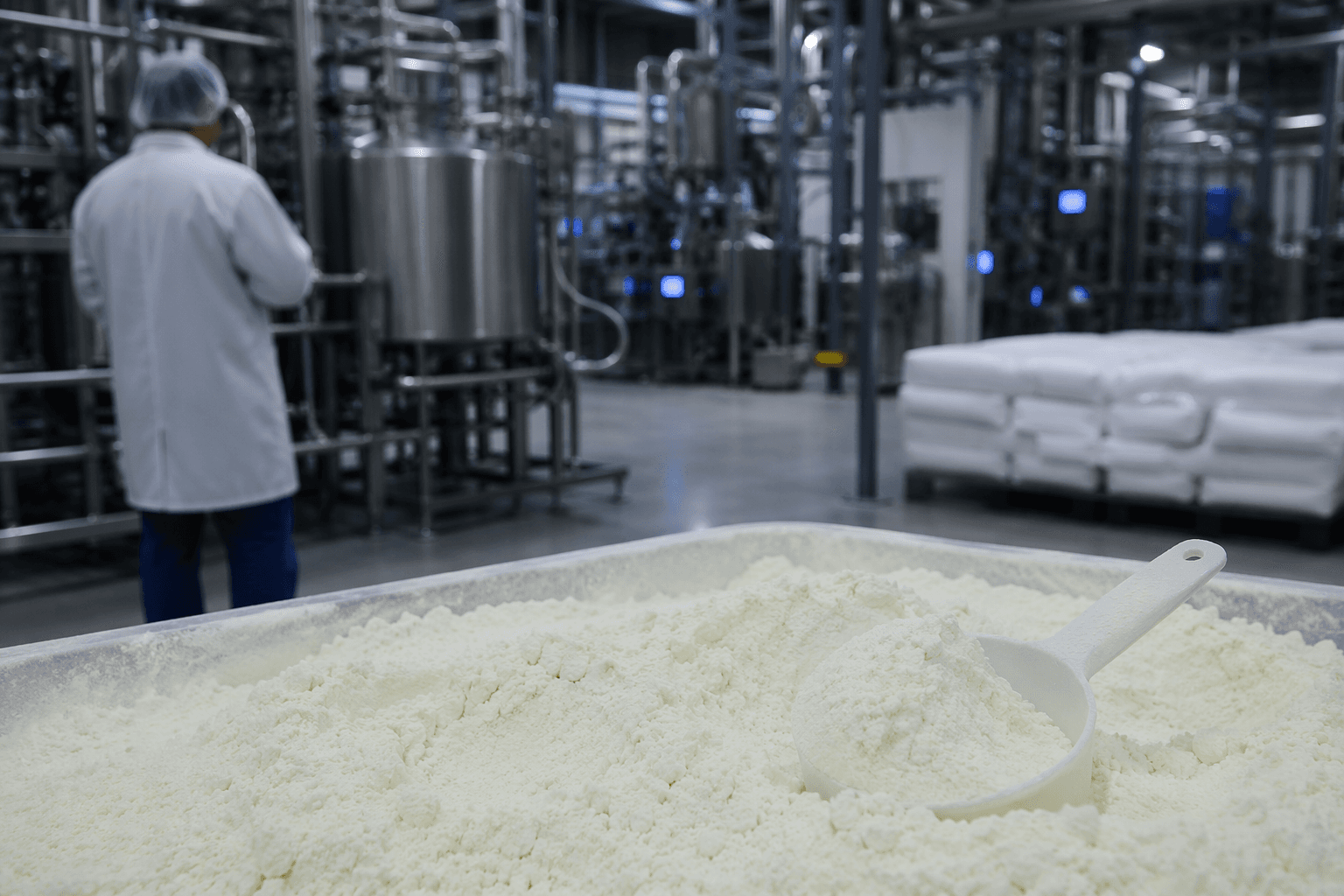
FrieslandCampina is pouring more than €90 million into high-value whey proteins. The company is upgrading plants in Bedum, Veghel and Workum to expand WPC80, instantized whey proteins and Nutri Whey ProHeat. The most valuable part of the market now sits in specialized ingredients for performance, active nutrition, early life nutrition and medical nutrition.
Premium whey is becoming the real battleground
The shift is not about adding more volume for its own sake. It is about controlling the processing steps that turn milk into higher-margin ingredients with better solubility, texture and nutritional performance in finished products like drinks, bars and yoghurts. FrieslandCampina said the program is meant to strengthen its global position in high-value whey proteins and to increase flexibility across its whey valorisation chain, building on earlier investments in Borculo and through the U.S. acquisition of Wisconsin Whey Protein.
Whey supply chains are tightly linked across the Netherlands, the United States, China and Asia. Value is increasingly created in premium fractions that can support better label claims and more demanding applications.
Supply is tight enough to change factory behavior
The other force shaping this race is scarcity. In its June 25 dry whey report, the U.S. Department of Agriculture’s Agricultural Marketing Service said the market remained extremely tight, with product largely unavailable and buyers reporting difficulty securing supply. In the Western region, the agency also noted steady dry whey demand and tighter inventories among some contacts.
By June 28, U.S. whey protein inventories had fallen roughly 50% since 2023, some suppliers were sold out for the remainder of 2026, and whey protein isolate prices had reached as high as $14 per pound. The same pressure is feeding back into plant decisions, with some manufacturers limiting dry whey output as they focus on higher whey protein concentrates instead of lower-value streams.
Demand is broadening beyond sports nutrition
Protein demand is no longer being driven only by gym bags and shaker bottles. The International Food Information Council’s 2025 survey found that 70% of Americans were trying to consume more protein, up from 59% in 2022, and that a high-protein diet was the most followed eating pattern for the third straight year. That shift widens the target market for whey ingredients into everyday foods and beverages, not just dedicated sports nutrition products.
Healthy aging and weight management are also pushing brands toward protein-rich formulations, while GLP-1 use is increasing consumer attention on satiety and protein intake. That gives suppliers a stronger case for investing in ingredients that work across multiple channels, from ready-to-drink nutrition to dairy-based foods and medical nutrition.
Exports show where the value is moving
USDA trade data showed that WPC80+ exports grew 17% year over year in 2024, outpacing lower-protein whey products. Through the first 10 months of 2024, the U.S. accounted for about 47% of global export market volume for high-protein whey, underscoring how much the international trade in whey has shifted toward concentrated, higher-value forms.
That export strength helps explain why processors are chasing more advanced capacity now. If WPC80 and related ingredients are where global demand is concentrating, then the companies with the best fractionation assets, quality control systems and distribution reach will be better positioned to capture premium pricing.
What this means for the next wave of dairy investment
Upstream ingredients are becoming a strategic variable, not a background input for finished-product makers. Better whey systems can improve consistency in high-protein drinks, bars, yoghurts and medical foods, while also giving brands more room to differentiate on texture, mixability and nutrition.
This article was produced by Prism’s automated news system from verified source data, official records, and press releases, then run through automated quality and moderation checks before publishing. The system is built and supervised by the people who set the standards it runs under. Read our full AI policy.
Did this article answer your question?