Protein supplement market set to double by 2031, report finds
Protein supplements are moving out of the gym bag as the category heads from $23.9 billion to $50.7 billion by 2031.
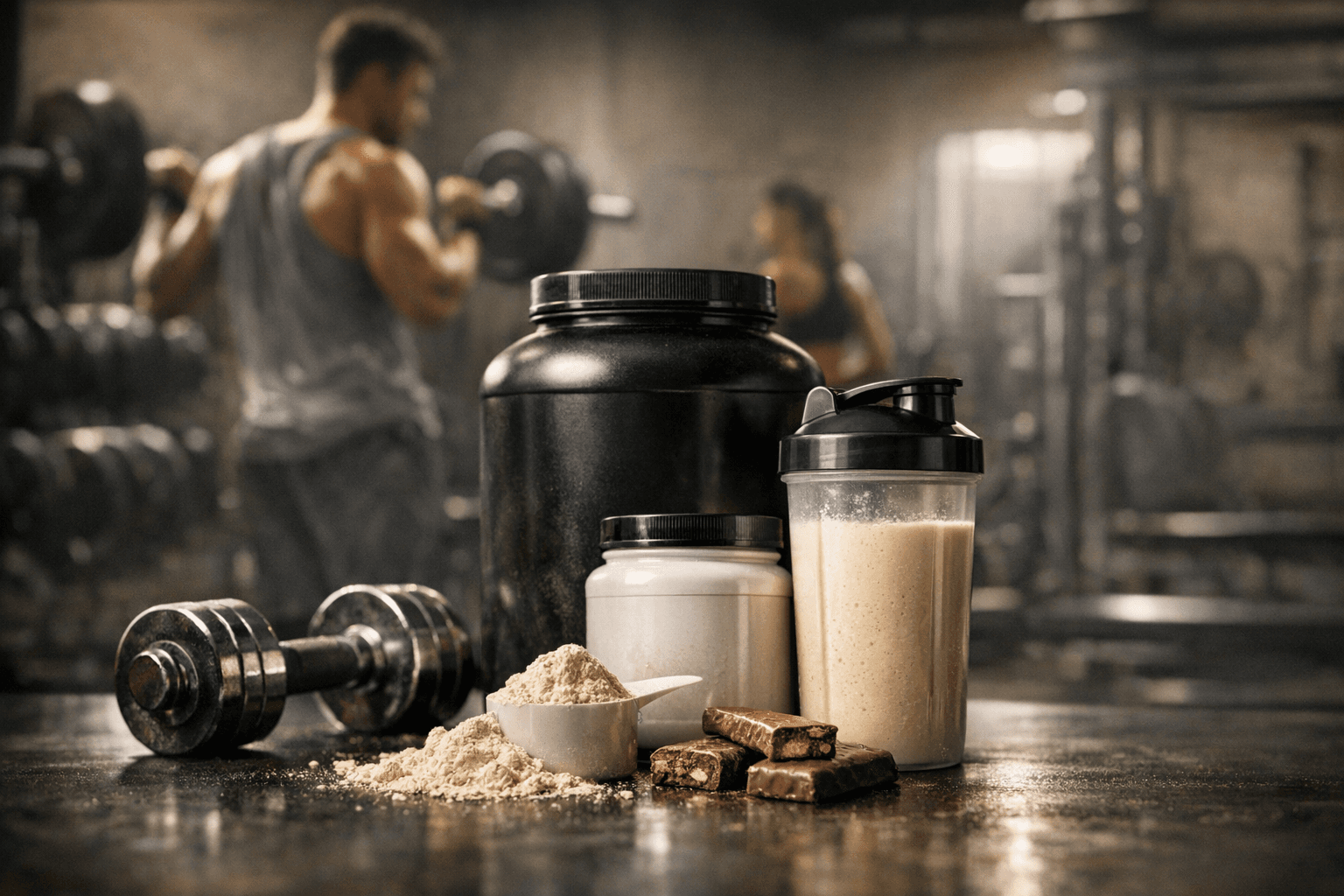
Protein supplements are moving well beyond the squat rack. Allied Market Research pegs the global market at $23.9 billion in 2021 and expects it to hit $50.7 billion by 2031, a 7.8% annual climb that points to a category being pulled by more than hardcore training alone.
The real story is in how broad the market has become. The study breaks protein supplements down by protein type, form, source, gender, age group and distribution channel, which is a clue that brands are selling into far more purchase occasions than the old bodybuilding aisle. Whey captured the largest share in 2021, but powders, ready-to-drink liquids and protein bars all sit inside the same growth engine. Allied Market Research also says the powder segment dominated in 2021, while plant-based protein is expected to post the highest growth through the forecast period. That split tells you exactly where the market is going: whey and powders still carry the volume, but formulation flexibility and lifestyle fit are doing more of the heavy lifting.
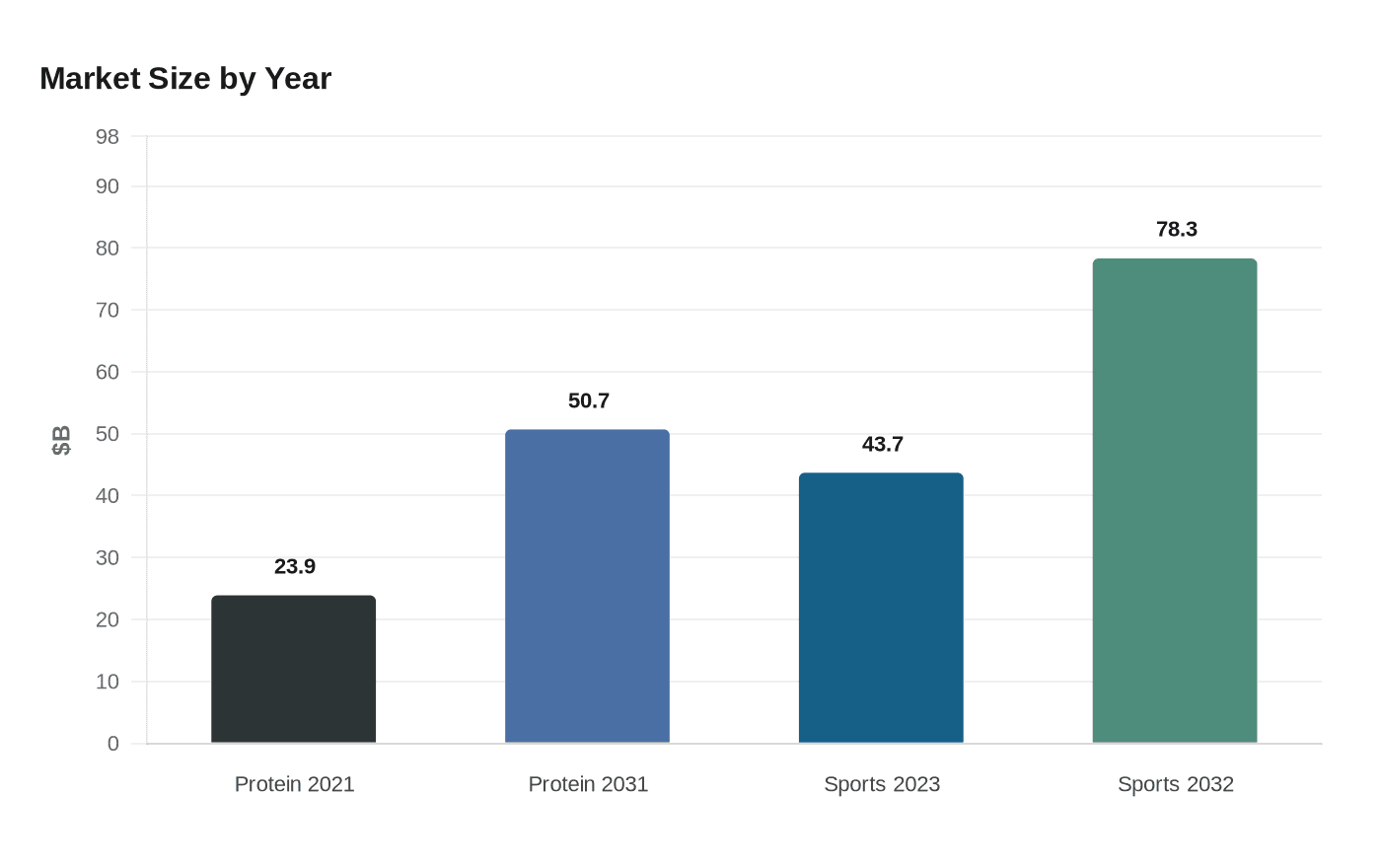
North America generated the highest revenue in 2022, and the category’s momentum is tied to sports nutrition, technical innovation, natural-origin ingredients and millennial-driven fitness culture. It also sits inside a much larger performance-nutrition business. Allied Market Research values the global sports nutrition market at $43.7 billion in 2023 and sees it reaching $78.3 billion by 2032, which makes protein supplements look less like a standalone niche and more like one of the category’s core engines.
The consumer case for protein is not going away, but the science is more measured than the marketing. A 2024 systematic review and meta-analysis covering 28 studies and 373 athletes found protein intake delivered modest benefits, with endurance gains most apparent when protein was taken with carbohydrates. A 2025 narrative review said protein supplementation is widely used for recovery and performance, but the leap from short-term muscle protein synthesis to measurable performance gains remains debated. That matters commercially because it explains why shoppers keep buying even when the edge is subtle: protein still feels useful, even when the upside is incremental.
The category also faces a harder question about trust. Consumer Reports said its 2025 tests of 23 protein powders and ready-to-drink shakes found more than two-thirds contained more lead in a single serving than its experts consider safe for a day, and it urged the U.S. Food and Drug Administration to set strict limits on lead in protein powders and shakes. That scrutiny is a reminder that the market’s next phase will not be won on grams alone. It will be won by convenience, format, plant-based innovation and whether consumers believe the product in the tub or carton is worth the label claim.
This article was produced by Prism’s automated news system from verified source data, official records, and press releases, then run through automated quality and moderation checks before publishing. The system is built and supervised by the people who set the standards it runs under. Read our full AI policy.
Did this article answer your question?