Scientists uncover antibody mix-up in 300 cancer aging studies
A p16 antibody mix-up slipped into 312 of 334 reviewed studies, sending the wrong reagent into cancer and aging research for more than a decade.
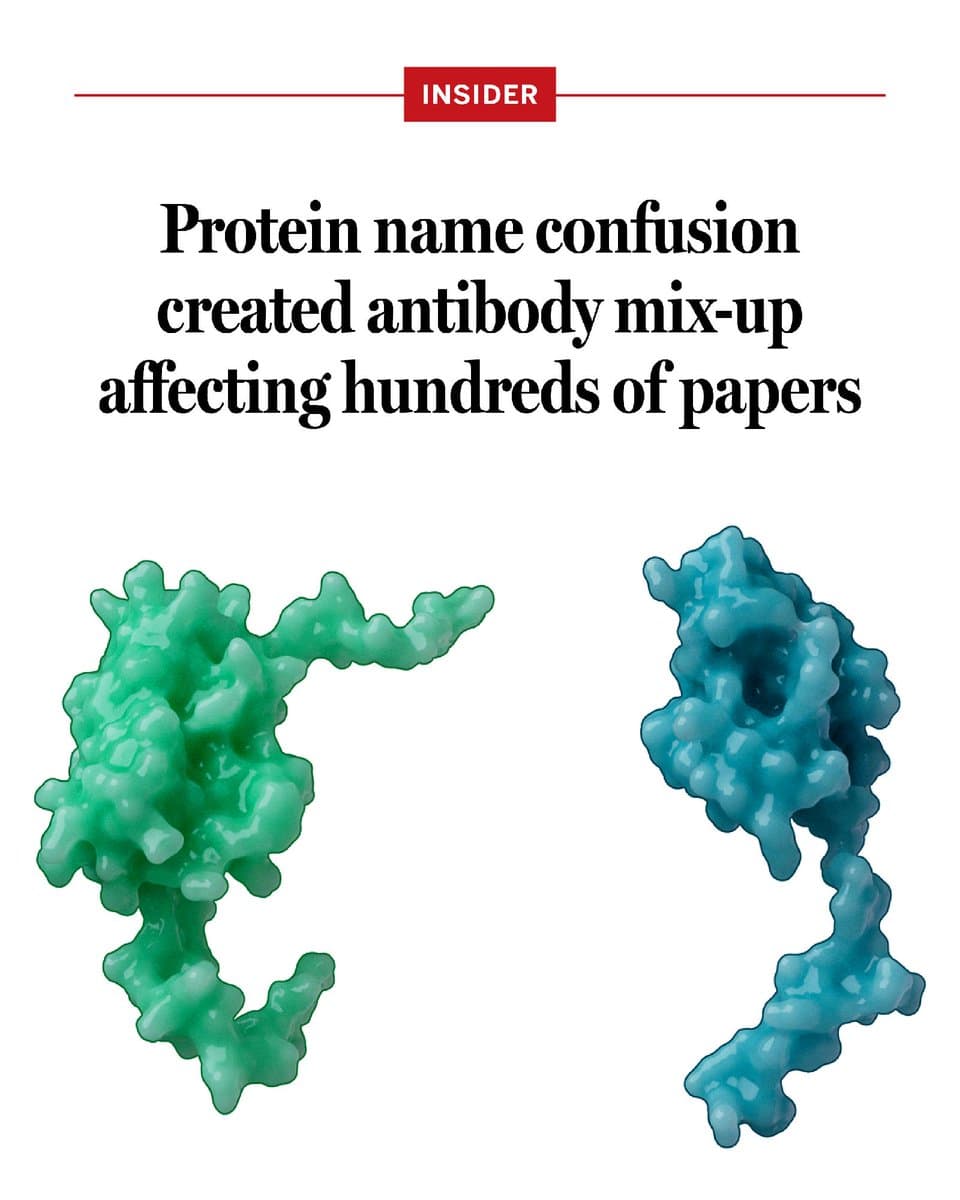
A tiny naming error with outsized consequences has quietly threaded through cancer and aging research for years, sending scientists after the wrong protein with the wrong antibody. The mix-up centered on two similarly named molecules, p16INK4a and p16-ARC, and it now appears in more than 300 papers, including studies published in Nature, Nature Medicine, Cancer Cell, eLife and Science Advances.
The science matters because the two proteins do not do the same job. p16INK4a is a tumor-suppressor protein tied to cell-cycle arrest and senescence, while p16-ARC helps shape the cell’s molecular skeleton. Use the wrong antibody, and an experiment meant to track one biological process can instead light up something else entirely, leaving results that may look persuasive while resting on the wrong target.

Sholto David, a molecular biologist who recently left a biotech job to become a full-time error hunter, traced the problem through 334 studies and found that 312 of them reported using p16-ARC antibodies to probe p16INK4a. He posted his analysis on June 2, and the oldest affected papers go back more than a decade, showing how long a simple label confusion can keep circulating once it enters the literature. The episode has already pushed some scientists to dig through old lab notebooks and, in at least one case, rerun experiments.
The damage is not a total rewrite of p16 biology, but it is a correction of the record that reaches into thousands of cancer and aging experiments. That matters because p16INK4a antibodies have been widely used across the field, and antibody validation problems have been a known reproducibility weak spot for years. In 2013, a PLOS One study found that one widely used p16INK4a antibody, F-12, did not show specificity in its tests and produced staining patterns that differed from other antibodies.
The new finding lands in a research culture that has spent years trying to clean up antibody-driven errors, from cataloging bad reagents to demanding better validation before results are treated as settled. Here, the failure was not a dramatic fraud or a single catastrophic mistake. It was a smaller, more ordinary breakdown in quality control, one that kept spreading because the label looked close enough and too few people stopped to ask whether the antibody matched the biology.
This article was produced by Prism’s automated news system from verified source data, official records, and press releases, then run through automated quality and moderation checks before publishing. The system is built and supervised by the people who set the standards it runs under. Read our full AI policy.
Did this article answer your question?