A Simple Gesture builds resilience with flexible pickups and volunteer networks
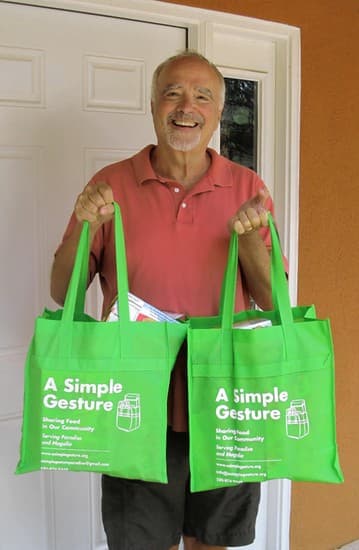
A Simple Gesture's green-bag network runs best when cash, routes, and volunteers are visible early, so the nonprofit can pivot before service slips.

A Simple Gesture’s strength has always been practical: make giving easy, move food quickly, and keep the pipeline predictable enough that pantries can count on it. In Guilford County, that kind of reliability now looks like a resilience strategy, not just a logistics strategy. When donation volume shifts, volunteer supply tightens, or a pantry partner changes needs, the organization’s ability to see problems early and respond fast becomes part of the workday, not a back-office luxury.
Why resilience is an operations issue here
For a food-recovery nonprofit, financial discipline is not separate from service delivery. It shapes whether green bags get picked up on schedule, whether food-recovery drivers have enough support, and whether staff can keep volunteers engaged without scrambling from one week to the next. A Simple Gesture’s model depends on recurring behavior from donors and volunteers, so the organization’s real risk is not just a budget gap, but a break in the chain that connects a doorstep bag to a pantry shelf.
That is why the framework of visibility, velocity, and versatility matters so much. Visibility means knowing what is happening in real time through forecasts, dashboards, and triggers that show when donation flow is slowing or a route is overextended. Velocity means leadership can make a call quickly, with governance aligned and a playbook already in hand. Versatility means the program can flex across pickup methods, partnerships, and staffing patterns without losing momentum.
Start with visibility before the slowdown shows up
A Simple Gesture’s Guilford County operation says it partners with dozens of local food pantries and runs the Green Bag Program, Food Recovery Program, SHARE School Program, and Refugee Feeding Network. It also says it uses door-to-door pickups, corporate pickups, and timely food-recovery pickups. That mix is powerful, but it also means the organization has to watch a lot of moving parts at once: neighborhood participation, pantry demand, route density, gas costs, and volunteer coverage.
The scale underscores the need for early warning. As of December 2025, the organization says it had helped provide more than 8,000,000 child-size meals and $13,000,000 in donated food value, backed by more than 75 pantry partners, 3,900-plus recurring food donors, and 200 monthly volunteers. Those numbers are a strength, but they also mean a small disruption can travel fast. If one neighborhood underperforms, one chapter leader steps back, or one pantry needs more frequent service, the effect is not theoretical. It shows up in the route calendar and in the pantry line.
That is where a good dashboard matters. The point is not to drown staff in reports. The point is to spot patterns early enough to adjust pickup windows, recruit volunteers in the right neighborhood, or shift support toward the pantry partners absorbing the most pressure.
Make velocity part of the playbook
The organizations that stay steady under pressure usually decide in advance who can move, when they can move, and what triggers action. That is the velocity piece. For A Simple Gesture, speed is not about rushing. It is about reducing hesitation when the numbers change.
Scenario planning is especially useful. A short horizon can cover the next 30 to 90 days: gas costs, route gaps, volunteer no-shows, and seasonal changes in donations. A midrange plan can cover 6 to 12 months: donor pipeline health, pantry demand, and food supply relationships. A longer view, over 18 to 36 months, can look at chapter expansion, new community partnerships, or whether a pickup model needs redesign in a growing area.
That kind of planning protects staff as much as it protects the mission. When decisions are made ad hoc, coordinators carry the stress of uncertainty every day. When the rules are clear, they can spend less time improvising and more time keeping volunteers engaged, confirming routes, and making sure pantry partners know what is coming.
Versatility is what keeps the network from breaking
A Simple Gesture’s history shows why flexibility matters. Jonathan and Karen Trivers founded the model in Paradise, California, in 2011. The Guilford County chapter says it became a 501(c)(3) nonprofit in 2015. ASG-related sites say the model has spread to more than 65 communities nationwide, and one says about 20 new chapters opened starting in April 2025. That kind of growth only works if the system can travel well and adapt to local conditions.
Versatility shows up in the pickup mix. Door-to-door collection works in some neighborhoods. Corporate pickups fit different donor patterns. Food-recovery pickups can move quickly when perishables need to be redirected. If one channel weakens, the organization should be able to lean harder on another without losing service or exhausting staff.
It also shows up in revenue and partnerships. The broader nonprofit lesson here is simple: concentration is risk. If too much of the operation depends on one donor, one community partner, or one route pattern, the organization becomes brittle. Diversified support and strategic partnerships buy breathing room, and breathing room is what lets a mission-driven team adapt without panic.
Volunteer management is part of the resilience equation
At A Simple Gesture, volunteers are not an extra layer on top of the work. They are the work. The organization says volunteer roles include Green Bag drivers, food-recovery drivers, sorting, event support, and special projects. That means recruitment is only half the job. Retention, scheduling, route clarity, and respectful communication are what keep the system stable.
This is where financial discipline can feel surprisingly human. Volunteers notice when an organization is disorganized, and so do staff. A tight plan signals that leadership respects people’s time. It reduces last-minute scrambles, keeps routes more predictable, and makes it easier for recurring volunteers to stay engaged month after month.
The public need around Guilford County makes that consistency even more important. Local data show a 15.2% food insecurity rate in 2023, equal to 82,510 food-insecure residents, and a 22.5% child food insecurity rate, equal to 27,110 children. One county resource says average monthly Food and Nutrition Services participation is about 44,100 households, totaling $15.8 million per month. In that environment, every missed pickup matters more than it would in a looser system.
The county context rewards systems, not slogans
Guilford County and its partners are already leaning into systems thinking. The county promotes the Greater Guilford Food Finder and a countywide food-security hub to connect residents to resources. The Fill the Gap campaign, run with A Simple Gesture, The Greater High Point Food Alliance, and the Guilford Nonprofit Consortium, points in the same direction: food access works best when organizations coordinate instead of competing for attention.
A Simple Gesture’s own food-recovery work adds another reason to think this way. The organization says the U.S. wastes 30% to 40% of the food it produces. That means every efficient pickup route and every strong pantry partnership does two things at once: it reduces waste and moves food toward people who need it.
In that sense, resilience is not a financial abstraction. It is the quiet ability to keep pickups moving, keep volunteers informed, keep pantry partners supplied, and keep leadership calm enough to make the next decision well. For A Simple Gesture, that kind of discipline is a direct expression of care for both the mission and the people who make it possible.
This article was produced by Prism’s automated news system from verified source data, official records, and press releases, then run through automated quality and moderation checks before publishing. The system is built and supervised by the people who set the standards it runs under. Read our full AI policy.
Did this article answer your question?