A Simple Gesture can boost dignity and speed with drive-thru food delivery
Drive-thru distribution turns food recovery into a faster, more dignified handoff, and A Simple Gesture’s scale shows why that kind of workflow matters.

Why the curbside handoff matters
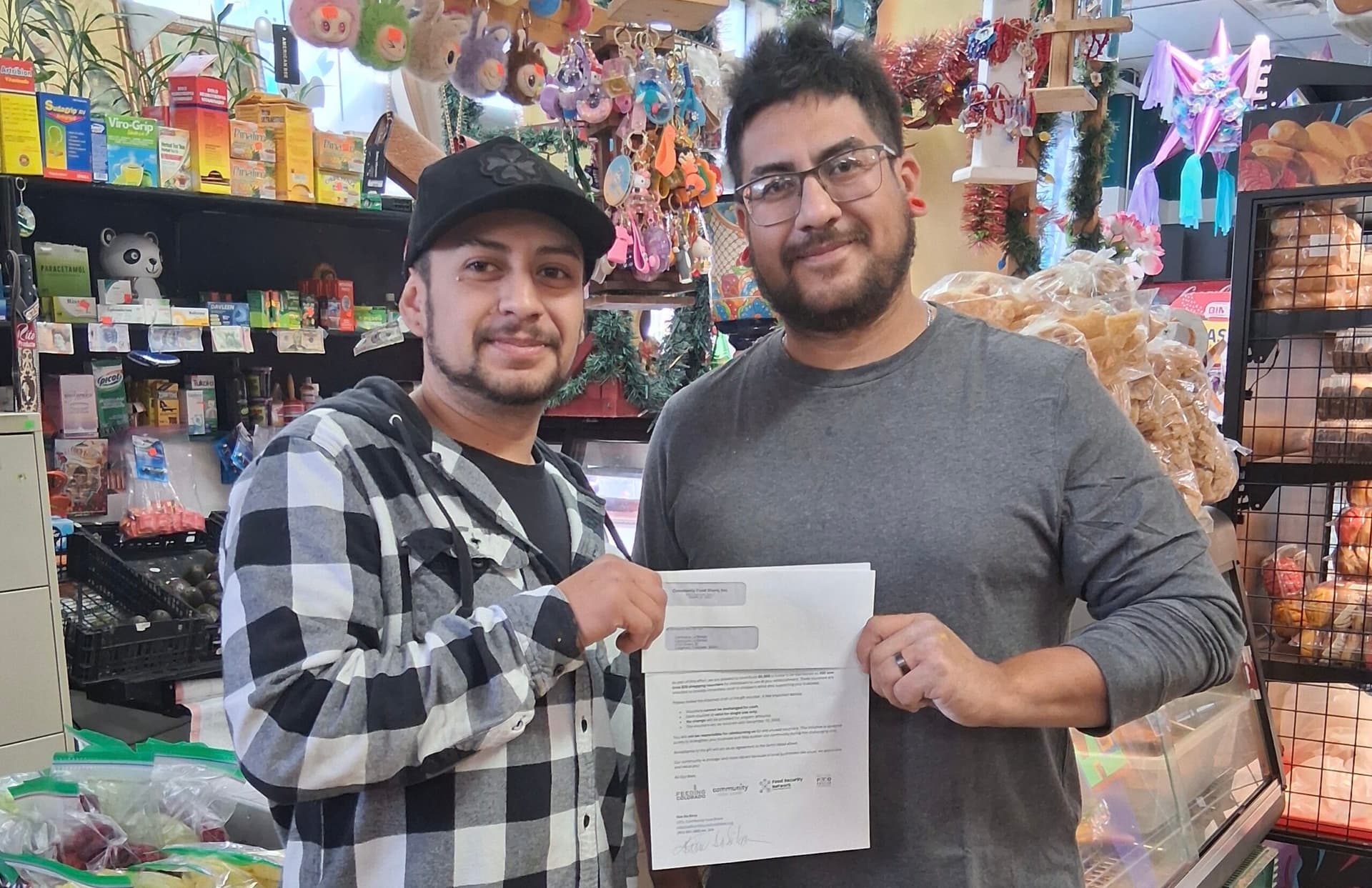
Drive-thru food delivery works because it strips away the two things that often slow emergency food access most: waiting and friction. Feeding America describes the model as a way for families to drive up, check in from the car, and receive pre-packed food loaded into the trunk, with staff and volunteers guiding the line and, in many cases, no appointment needed.
That matters in a country where Feeding America says 48 million people face hunger, including 14 million children, across a network of 200 food banks. When the service is built to move cars efficiently, it is easier for people balancing work, child care, transportation problems, or mobility issues to actually use it.
How the drive-thru model protects dignity
The strongest case for drive-thru distribution is not just speed. It is the way the process reduces the sense of exposure that can make people hesitate before asking for help. A person stays in the car, gets checked in quickly, and leaves with food already packed for the trunk, which keeps the interaction short and matter-of-fact.
That structure also gives coordinators a clean operating rhythm. Feeding America notes that local food banks can share times and locations and may ask for basic information such as ZIP code or household size, which helps track meals distributed without turning the visit into a bureaucratic ordeal. In practice, that balance is the point: enough information to count the service, not so much process that the line becomes a barrier.
What A Simple Gesture can learn from that workflow
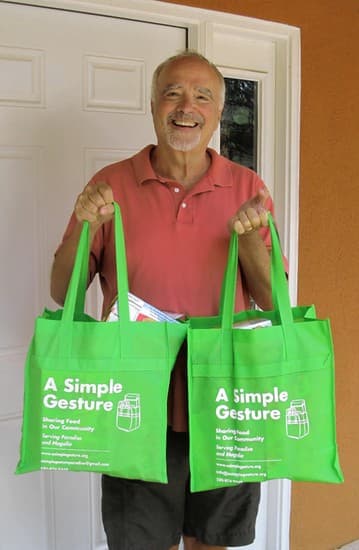
For A Simple Gesture, the lesson is immediately relevant because the organization already works on the principle that convenience drives participation. Its Guilford County chapter says it partners with dozens of local food pantries and nonprofit partners, and its mission is to make giving to local pantries and nonprofits as easy and convenient as possible through door-to-door pickups, corporate pickups, and timely food recovery pickups.
That same logic applies to drive-thru food delivery. The easier the handoff, the easier it is for volunteers to stay engaged and for households to use the service without extra steps. For a neighborhood food recovery nonprofit built around green bag pickups, the operational question is not whether a model sounds friendly. It is whether the workflow is simple enough to keep routes moving, pickups predictable, and families from dropping out because the process takes too long.
Scale is what makes the design question real
A Simple Gesture is operating at a level where small delays matter. Its Mission and Impact page says that as of December 2025, the Guilford County operation had generated over 8,000,000 total child-size meals and $13,000,000 in donated food value, with more than 75 pantry partners, more than 3,900 recurring food donors, and 200 monthly volunteers.
The organization also says it has more than 1,700 food donors and volunteer drivers who collect over 132,000 pounds of food each year. Those numbers show why a smoother pickup system matters: this is not a one-off neighborhood effort, but a large, recurring operation in which efficiency affects throughput, volunteer experience, and the amount of food that reaches pantry shelves.
What the numbers say about route discipline and volunteer load
A drive-thru model is useful because it makes the logistics visible. Someone is checking in, someone is guiding the line, and someone is loading pre-packed boxes or bags. That is the kind of workflow that can be taught quickly, which matters in a volunteer-driven system where retention depends partly on whether the job feels organized and worthwhile.
A Simple Gesture’s own history suggests that operational clarity has been built into the model from the start. The Guilford County nonprofit says it was established as a 501(c)(3) in 2015, and its story dates to 2011. In Reston, Virginia, Serve Virginia identifies Robert Schnapp as the founder and leader of A Simple Gesture Reston, and a 2023 profile says the program reached 1,500 donor households, used about 700 volunteers, and donated 162,000 pounds of groceries in the prior year to four emergency food pantries in Reston and Herndon.
That is a concrete comparison point for anyone thinking about scale. The model is not theoretical or decorative. It produces measurable volume when the volunteer structure, route planning, and pantry partnerships are all lined up.
The startup lesson for staff and coordinators
Schnapp’s early work also shows how much labor can sit behind a model that looks simple from the outside. A Serve Virginia profile says he spent more than 40 hours a week getting the program off the ground, handling everything from signing up donors and drivers to building routes, sending emails, delivering bags, and helping sort food.
That is the real staffing lesson for A Simple Gesture. If a distribution system is going to serve working families well, the organization has to protect the volunteer experience as much as the client experience. Clear instructions, predictable routes, and a clean handoff are not just nice to have. They are what keep people coming back to volunteer and make it possible to absorb demand without burning out the people holding the operation together.
Why food recovery and distribution design belong in the same conversation
A Simple Gesture’s food recovery page says the U.S. wastes 30 to 40 percent of the food it produces. That makes the case for efficient collection and redistribution even stronger, because every extra layer of friction can slow food that is already in the system from reaching families who need it.
There is also a broader nutrition argument. A systematic review of food pantry-based interventions found that pantry programs can improve diet-related outcomes, including food-security status and fresh produce intake. That is a reminder that distribution design affects more than convenience. When the pickup process is easier and less stigmatizing, more households are willing to participate, and that can improve the quality of the food experience itself.
The bottom line for A Simple Gesture
Drive-thru food delivery is more than a curbside convenience. For a nonprofit like A Simple Gesture, it is an operational model that can reduce stigma, shorten waits, support volunteer retention, and make it easier to measure how many households are served. The same principles that make green bag collection work, clear routes, clear roles, and a fast handoff, are what make curbside distribution strong.
In a system serving thousands of donors, hundreds of volunteers, and dozens of pantry partners, dignity and speed are not separate goals. They are the same service standard, and the organizations that design for both will be the ones that move more food with less friction.
This article was produced by Prism’s automated news system from verified source data, official records, and press releases, then run through automated quality and moderation checks before publishing. The system is built and supervised by the people who set the standards it runs under. Read our full AI policy.
Did this article answer your question?