A Simple Gesture Can Build Volunteer Loyalty Through Ongoing Recognition
Recognition keeps A Simple Gesture’s volunteers coming back, because route-by-route praise tied to real impact turns a pickup into belonging.

Why recognition matters more than a thank-you
A Simple Gesture is sitting on a scale of work that makes volunteer loyalty a staffing issue, not a soft perk. Its Guilford County operation says it has delivered more than 8,000,000 child-size meals, $13,000,000 in donated food value, 75+ pantry partners, 3,900+ recurring food donors, and 200 monthly volunteers as of December 2025. When a mission depends on that many repeat commitments, the difference between appreciation and recognition starts to shape whether a route gets covered next month.

Appreciation is the feeling that people are seen, heard, and valued. Recognition is the system that keeps proving it, by naming what someone did, connecting it to impact, and giving them a reason to belong and grow. For a food recovery nonprofit that relies on doorstep green bag pickups, that distinction matters because the work is cumulative and easy to miss. If volunteers only hear from staff when a shift is open, the relationship can feel transactional. If they regularly hear what their pickup changed, they are far more likely to stay.
The pressure point in nonprofit staffing
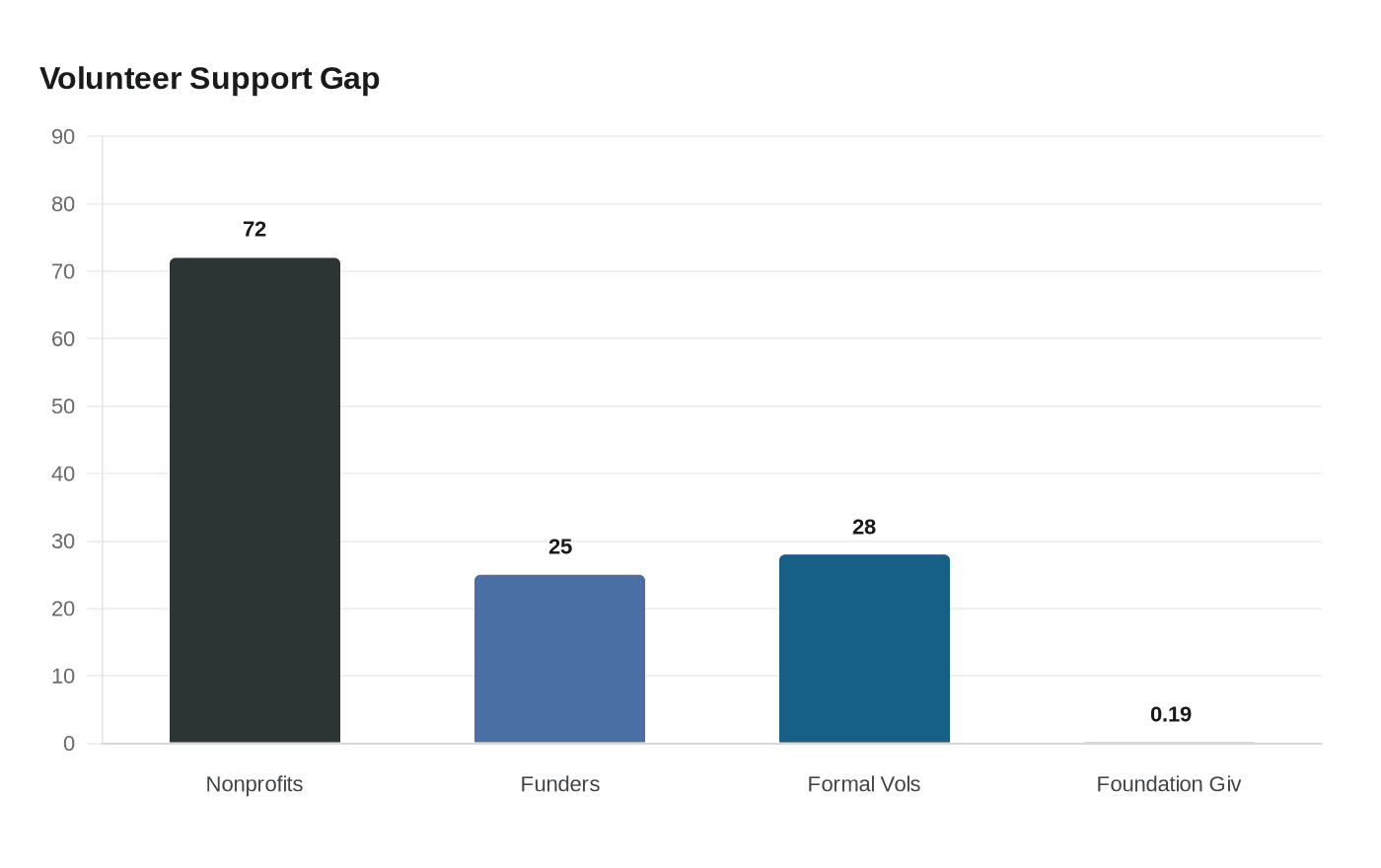
Points of Light’s 2025 research makes the larger case that volunteer management is infrastructure, not decoration. It says 72% of nonprofits say volunteers improve service quality, but only 25% of funders agree. It also says volunteer participation has stagnated between 20% and 30% for decades, only 28% of the U.S. population currently volunteers formally, and just 0.19% of foundation giving over the last decade has supported volunteer development. In that context, recognition is not just morale work. It is one of the few tools nonprofits have to protect a limited labor force.
Points of Light also says volunteers make up one-third of the nonprofit workforce, which is a reminder that many organizations are already running on a mixed model of paid staff and unpaid labor. The group is pushing a goal of doubling national formal volunteering rates by 2035, but that kind of growth will not happen through recruitment alone. Organizations have to recruit, train, deploy, recognize, and retain volunteers well enough that the experience feels worth repeating.
What ongoing recognition looks like on the ground
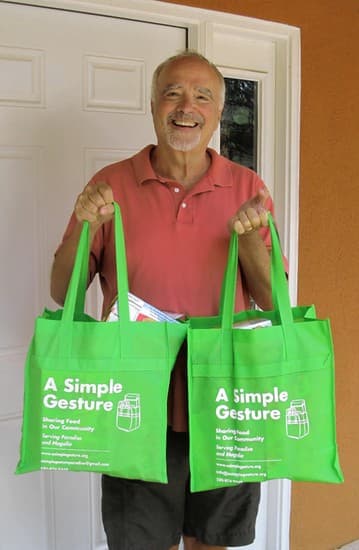
For A Simple Gesture, ongoing recognition has to fit the rhythm of green bag pickups, food recovery runs, pantry partnerships, and school-based support. The most effective recognition is usually immediate and specific: a quick thank-you at the end of a route, a note about which pantry received the food, or a brief story showing how a pickup helped stock a shelf or keep a community meal going. That kind of feedback is especially important in green bag programs, where the best work often happens out of sight and can be undercounted.
Points of Light argues that storytelling is one of the most useful parts of recognition because it connects action to impact and builds culture. In practice, that can mean a photo from a route, a short writeup about a neighborhood collection, or a simple update on how a food recovery pickup moved surplus food to a vetted partner. Those small touches make volunteers part of the mission narrative instead of just a fill-in for a shift.
A good recognition system also has to be regular. It should not wait for an annual banquet or a once-a-year appreciation campaign. Volunteers who show up repeatedly need repeated confirmation that their time still matters, especially when the job is quiet, repetitive, and easy to take for granted.
Why A Simple Gesture is a good test case
A Simple Gesture-Guilford County was established as a 501(c)(3) nonprofit in 2015, and its model is built around making giving and recovery easy through door-to-door pickups, corporate pickups, and timely food recovery runs. Its Guilford County programs support local food pantries, community meals, and the SHARE program in Guilford County Schools. Its food recovery program matches surplus food with more than 35 vetted nonprofits in Guilford County, which means the organization is coordinating both volunteer routes and a broader partner network at once.
That structure makes retention especially important. A lost volunteer is not just a missing name on a roster. It is a gap in route coverage, a missed pickup, or a broken chain between a donor’s bag and the pantry that needs it. Recognition helps close that gap by making routine work feel consequential and by reminding volunteers that reliability is itself a form of mission delivery.
The scale behind the current operation also shows how much is at stake in keeping people engaged. As of December 2025, the Guilford County chapter says it has more than 8,000,000 child-size meals donated, $13,000,000 in donated food value, 75+ pantry partners, 3,900+ recurring food donors, and 200 monthly volunteers. Those numbers are hard to sustain without a culture that keeps people coming back.
What the broader A Simple Gesture model can teach local chapters
The A Simple Gesture model began with Jonathan Trivers in Paradise, California, where the effort now has more than 1,700 food donors and collects over 132,000 pounds of food each year. That origin story is useful because it shows how the model scales when repeat participation becomes a habit. The more the work depends on ordinary routines, the more recognition has to be built into those routines.
That means chapter managers should think less about recognition as a special event and more about it as an operating practice. A short thank-you after a pickup, a route-level update showing what changed, and a steady stream of volunteer stories all help reinforce the same message: this work is noticed, and it matters. For a mission-driven organization that cannot afford churn, that message is part of the staffing model.
The recognition practices that fit this kind of work
The research points to a few habits that are likely to matter most:
- Thank people in person, when possible, and do it often. The 2013 Volunteer Canada study found nearly 70% of volunteers wanted to be thanked in person on an ongoing, informal basis.
- Tell volunteers how their work made a difference. That same study found 80% wanted recognition through hearing about impact, not through ceremony alone.
- Use quick storytelling. A photo, a route note, or a pantry update can make invisible labor visible.
- Tie recognition to the mission. Volunteers are more likely to stay engaged when they understand how a porch pickup becomes meals, pantry stock, or school support.
For A Simple Gesture, the lesson is not to celebrate volunteers once and hope that covers the year. It is to make recognition part of the daily rhythm of food recovery. That is what keeps a volunteer program from feeling like a transaction and turns it into a dependable workforce for a mission that runs on consistency.
This article was produced by Prism’s automated news system from verified source data, official records, and press releases, then run through automated quality and moderation checks before publishing. The system is built and supervised by the people who set the standards it runs under. Read our full AI policy.
Did this article answer your question?