A Simple Gesture expands refugee food support through reusable bag pickups
Reusable bags turn refugee food support into a doorstep system, letting A Simple Gesture reach households pantry hours and standard sign-up flows can miss.
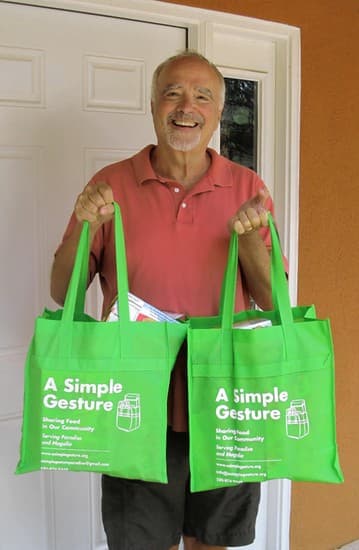
The hardest part of food support is often not the food itself, but the last mile to the kitchen. A Simple Gesture’s Refugee Feeding Network is built for that gap: families get a reusable bag, fill it with needed items, and leave it out for pickup, a simple routine that fits into the organization’s existing volunteer and donor habits.
A pickup model designed for reach
A Simple Gesture describes the Refugee Feeding Network as a community-led effort that helps refugee neighbors access wholesome, nutritious food. That matters because the model does not ask households to navigate a separate bureaucracy or learn a new system from scratch. It works much like the Green Bag Food Donor Program, which means the same basic mechanics that support broader food recovery can also support a more targeted neighborhood need.
For staff and coordinators, the advantage is operational as much as mission-driven. The organization’s broader mission is to make giving to local food pantries and nonprofits easy and convenient through door-to-door pickups, corporate pickups, and food-recovery pickups. The refugee program fits that structure instead of competing with it, which is why it can be folded into route planning, volunteer training, and recurring pickup schedules without making the operation harder to run.
A Simple Gesture-Guilford County was established as a 501(c)(3) nonprofit in 2015 and follows the food-collection template established by Jonathan. That history matters because it shows the refugee program is not a side project built on goodwill alone. It is an extension of an established operating model that already depends on repetition, neighborhood trust, and predictable logistics.
How the mechanics work on the ground
The core workflow is plain, and that is a strength. A family receives a reusable bag, fills it with the most needed items, and sets it out for pickup. Volunteer drivers then collect it, which turns food support into a home-based system rather than a destination-based one.
That pickup structure is important for retention on the volunteer side too. A Simple Gesture’s volunteer page says residents can sign up to serve as volunteer drivers for the Refugee Feeding Network, which suggests the program is built around a recurring route system rather than one-off donation pushes. For coordinators, that predictability helps with route tags, scheduling, and follow-through, the practical details that often decide whether a volunteer model stays steady or becomes a scramble.
The broader lesson for nonprofit staff is that access improves when the process is easy to repeat. A refugee family does not need to wait for pantry hours, secure transportation, or sort out a new intake process just to get food. A volunteer driver does not need a complex assignment to make a meaningful delivery. The system works because both sides know what to do, when to do it, and how the handoff happens.
Why a refugee-focused food line matters
The Refugee Feeding Network is more than a duplicate of the Green Bag program with a new label. It is a way to respond to food insecurity in households that may face language barriers, cultural concerns, and unfamiliarity with U.S. food systems. That is where the workplace value becomes clear: the program gives staff a way to solve a real access problem without building a separate infrastructure from zero.
Public-health guidance from the Centers for Disease Control and Prevention says refugees can face malnutrition risks because of food insecurity, limited dietary diversity, increased risk of infection, chronic illness, and variable access to supportive nutrition programs. The CDC also points to language barriers, socioeconomic status, cultural concerns, and a lack of education on U.S. food purchasing and preparation as part of the risk picture. In practice, that means a good food program has to be understandable, culturally respectful, and simple enough to use consistently.
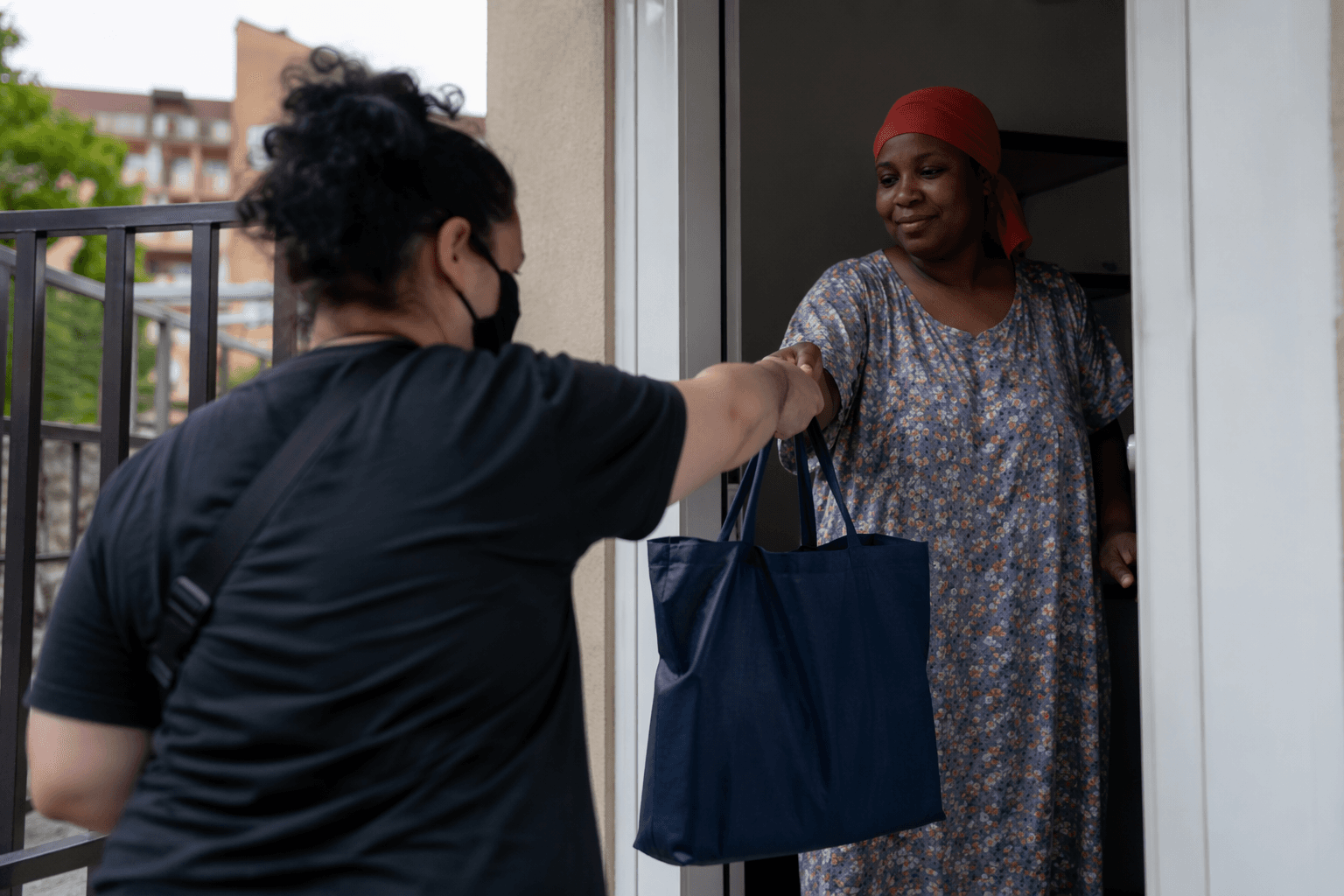
That is where the reusable-bag model earns its keep. It makes the interaction feel familiar and manageable, which can matter just as much as the amount of food collected. For a newly resettled household, a system that arrives at the door can feel less intimidating than one that requires navigating new geography, new hours, and new rules.
The scale behind the system
The refugee program sits inside a much larger food-recovery network. As of December 2025, A Simple Gesture reported more than 8,000,000 child-size meals donated and about $13,000,000 worth of donated food. The same report listed more than 75 pantry partners, more than 3,900 recurring food donors, and more than 200 monthly volunteers.
Those numbers matter because they show the refugee effort is not a standalone gesture. It is plugged into a functioning donor base, an active volunteer pool, and a broad pantry-partner network. For staff, that kind of scale can absorb a specialized program more easily than a smaller operation could, and it gives coordinators a deeper bench when they need volunteers who can cover recurring routes.
The pantry-partner count also signals that A Simple Gesture is not just collecting food, it is moving it into a network of local distribution points that already know their neighborhoods. That is the operating model at work: donor households, volunteer drivers, pantry partners, and a pickup schedule that ties them together. The refugee program extends that chain to families whose needs might otherwise be missed by standard distribution methods.
Why the local context makes this work necessary
The need for flexible food support is not abstract in Guilford County. A UNC Greensboro piece cited Feeding America projections showing food insecurity in Guilford County rising from 13.1 percent to 15.1 percent during the first two years of the COVID-19 pandemic. That kind of increase is exactly where neighborhood-based food recovery systems become valuable, because they can adapt faster than large centralized models when the pressure shifts.
Greensboro’s refugee-support ecosystem also makes collaboration essential. The Greensboro Refugee Employment Advancement Team is a partnership among Church World Service Greensboro, New Arrivals Institute, Montagnard Dega Association, and the Center for New North Carolinians. Refugee Community Partnership is also part of the region’s support landscape, reinforcing the point that this work depends on coordination across organizations, not one group carrying the load alone.
For A Simple Gesture, the Refugee Feeding Network functions as a practical expression of that local network. It reaches households where pantry hours, transportation barriers, or unfamiliar processes can block access. It also gives volunteers and staff a clear, repeatable way to serve without turning every pickup into a special case.
That is why the model stands out. It is not just compassionate, and it is not just efficient. It is a last-mile system that turns trust, routine, and neighborhood logistics into food access that actually lands at the door.
This article was produced by Prism’s automated news system from verified source data, official records, and press releases, then run through automated quality and moderation checks before publishing. The system is built and supervised by the people who set the standards it runs under. Read our full AI policy.
Know something we missed? Have a correction or additional information?
Submit a Tip