Cincinnati nonprofits team up to streamline food rescue and meal prep
Cincinnati’s new food-rescue partnership links pickup, kitchen prep and meal distribution into one chain, cutting waste and matching surplus to need faster.
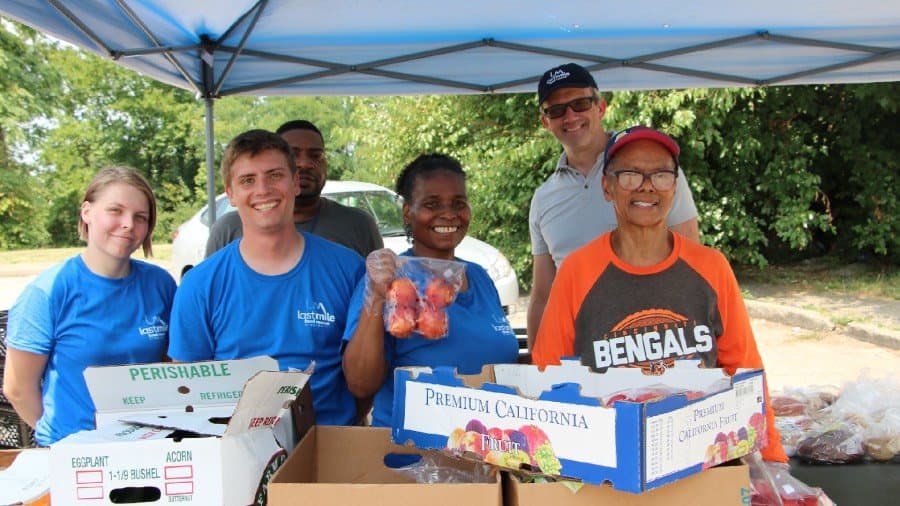
Two Cincinnati nonprofits are trying to fix a problem that food banks and rescue groups know too well: food gets saved, but the handoff between pickup, sorting and meal prep still leaks time, labor and usable product. Last Mile Food Rescue and La Soupe are building a shared system that lets each group stay in its lane while moving surplus food through the chain faster, with less waste and a better fit between what arrives and what neighbors actually need.
A more deliberate handoff
The shift is not about merging charities or blurring missions. Last Mile says the two groups will keep separate leadership, staff, missions and finances, but will start operating as if the rescue chain were designed end to end instead of stitched together after the fact. That matters in a region still wrestling with two stubborn facts at once: one in five residents is unsure where the next meal will come from, and roughly 40 million pounds of surplus food are thrown away every year.
The new initiative, backed by a $100,000 grant from the Greater Cincinnati Foundation’s Better Together Fund, is planned as a pilot launch for fall 2026. Over the summer, Last Mile will study La Soupe’s donors, routes and volunteers, then begin coordinating some deliveries in the fall. The goal is simple to state and hard to pull off: let Last Mile handle rescue logistics while La Soupe stays focused on turning rescued ingredients into prepared meals.
How the workflow changes
Last Mile already works upstream, collecting food from grocery stores, warehouses and commercial kitchens and moving it to food banks, pantries and other organizations. La Soupe works farther downstream, transforming donated ingredients into ready-to-eat meals. In a system that has often depended on good intentions and a lot of manual coordination, that division of labor is the real breakthrough.
La Soupe says the partnership will allow its chefs to focus on meal production while Last Mile brings its logistics and dispatch operation to the table. That should make the system more resilient across Greater Cincinnati and Northern Kentucky, because it reduces the number of times food has to sit waiting for the next volunteer, the next truck or the next available kitchen hour. The City of Cincinnati makes the broader case plainly: food rescue is both a landfill strategy and a hunger strategy, and the new collaboration pushes both aims at once.
For A Simple Gesture and other doorstep collection programs, that is the core lesson. Collection day is only the start. The operational question is what happens after a bag is picked up, who can process it quickly, which partners have capacity in a given week and how much waste is created when the chain is built around separate organizations instead of shared flow. The Cincinnati model suggests that the gains come less from adding more trucks than from tightening the route between rescue, processing and redistribution.
Why the scale matters
This is not a tiny experiment happening on the margins. Last Mile says it rescued 5.4 million pounds of food in 2025 and 17 million pounds since founding in 2020. The organization says it has grown 30% annually and is aiming to rescue 15 million pounds a year by 2029. La Soupe says it rescued more than 8 million pounds of food since 2015, then turned 1.4 million pounds of surplus food into 1.8 million ready-to-eat meals last year alone.
La Soupe also says it processes about 30,000 pounds of food each week in its Board of Health-certified facility. That number helps explain why the partnership is being framed as infrastructure work rather than branding work. Both groups are already operating at scale, but they are doing different jobs in the chain. When those jobs are coordinated, the region gets more than goodwill. It gets throughput.
La Soupe’s own recent reporting shows the partnership is building on momentum rather than replacing what already works. The organization says it has shared more than 10,800 bags of food so far in 2026 and doubled weekly distributions in 2025, with La Soupe meals included at every location. In other words, this is not a rescue system starting from zero. It is a system that is trying to stop losing efficiency at the seams.
What volunteers and coordinators should notice
The most practical takeaway for people who recruit volunteers, plan routes or manage pantry relationships is that role clarity can be more powerful than scale alone. Last Mile describes its volunteers as Food Rescue Heroes, and its app-based pickup model depends on people showing up at the right place and time with the right expectations. La Soupe’s meal-production model depends on a kitchen team that can transform whatever arrives into food that is both dignified and useful.
That is the piece many food recovery efforts miss when they stay in parallel. A surplus tomato is only valuable if someone can get it from donor to truck, from truck to kitchen, from kitchen to meal and from meal to pantry shelf without letting the chain fray. The Cincinnati partnership is a reminder that the cleanest-looking programs on paper are not always the ones that move food best in real life.
For A Simple Gesture, the useful comparison is not whether the green-bag model looks the same. It is whether the network around the bags is designed to absorb the food efficiently once it enters the system. The more precise the handoff, the less spoilage, the faster the response when supply shifts, and the more likely the right food lands with the right partner at the right time. That is what a functioning surplus-food chain looks like when organizations stop treating rescue as a standalone act and start treating it as logistics.
This article was produced by Prism’s automated news system from verified source data, official records, and press releases, then run through automated quality and moderation checks before publishing. The system is built and supervised by the people who set the standards it runs under. Read our full AI policy.
Know something we missed? Have a correction or additional information?
Submit a Tip