A Simple Gesture explores clinic-based food distributions with health-care partners
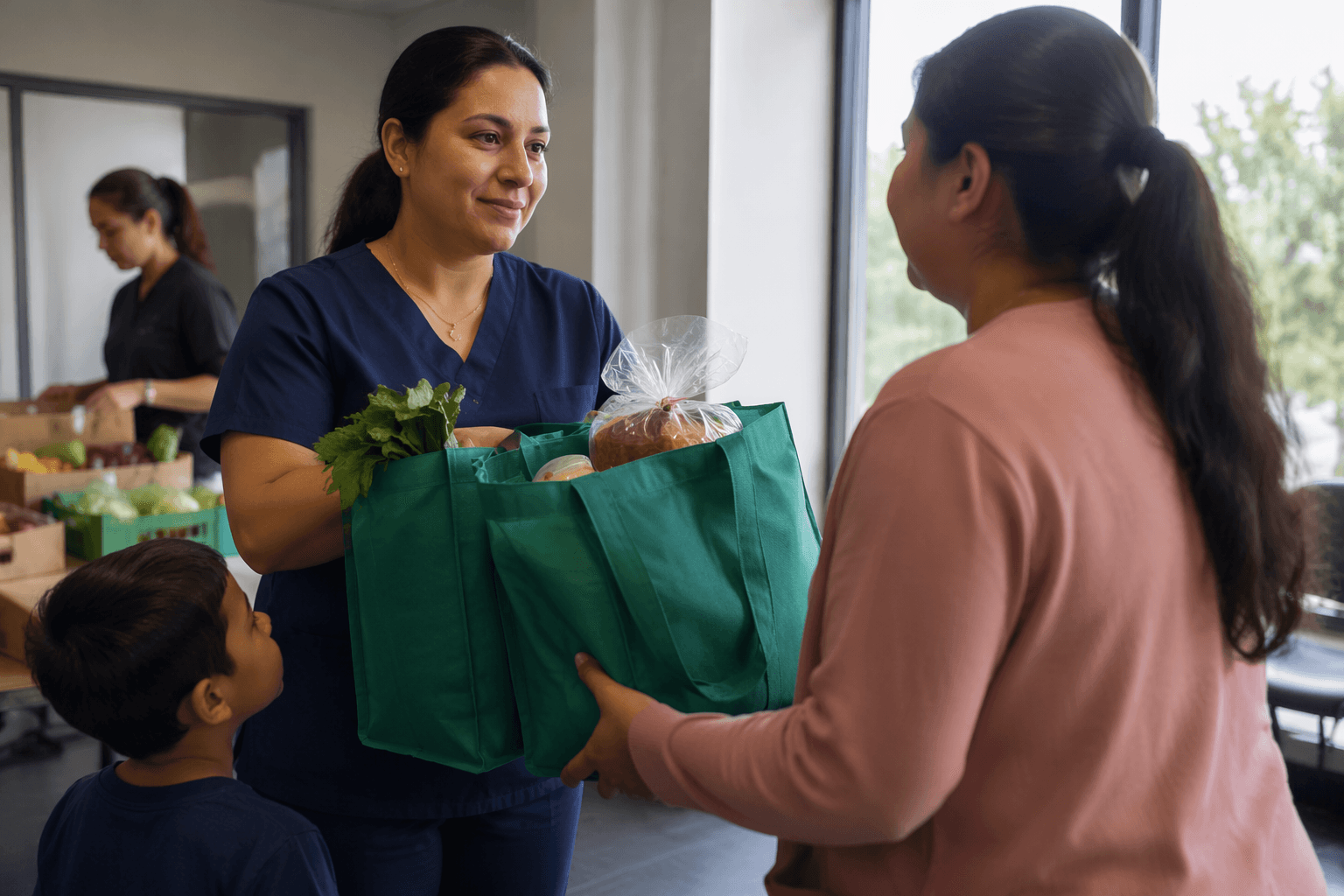
Clinic-based food distributions could put groceries at the point of care, where screening, referrals and follow-through already happen. For A Simple Gesture, that opens a more stable, more trusted way to reach families.
Food relief is moving closer to the exam room
A clinic-based food distribution changes the job in a very practical way: instead of sending families to another stop on an already crowded schedule, it brings food into the place where they are already getting help. That matters when patients do not have easy access to a pantry or when a permanent on-site pantry is not realistic. It also changes the meaning of hunger relief inside a health system, because food insecurity starts to look less like a separate crisis and more like part of the same web of needs that shapes a person’s health.
For A Simple Gesture, the appeal is obvious. The organization already knows how to build trust through neighborhood routes, pantry partnerships and recurring donation habits. A clinic-based distribution extends that logic into a setting where patients are already thinking about care, follow-up and support, which can improve attendance, make access easier and reduce the chance that families fall through the cracks after a referral.
Why the Feeding America model matters now
Feeding America released its Food Bank-Health Care Partnerships toolkit in January 2022 to help food banks build partnerships with health care organizations, reach more households facing food insecurity, improve diet quality, promote wellness and advance health equity. Its mobile pantry guidance already points to churches, community centers, schools, shopping centers and other convenient places, often in areas without grocery stores or other food pantries. The clinic model pushes that idea one step further by placing food support inside a setting where patients are already present and often already screened for need.
The action-plan materials are clear that this is not a loose goodwill project. Leadership buy-in matters, and food banks need to review their existing mobile distribution capacity before they promise regular service at a health site. Just as important, the health-care partner should already have food-insecurity screening and referral processes in place. In practice, that means the clinic is not just a location. It is part of a workflow that connects screening, referral, distribution and follow-through.
The toolkit also names the people who can make the partnership work day to day: patient navigators, social workers, medical assistants, dietitians, nutritionists, nurses and community health workers. Feeding America also says trained volunteers can support SNAP outreach and application assistance, which turns a food distribution from a one-time handoff into a more complete bridge to benefits and longer-term stability.
What changes when food is embedded in health care
The strongest argument for clinic-based food distribution is not just convenience. It is the chance to catch people at a moment when health needs and food needs are already overlapping. An integrated-care case study on Eskenazi Health Center Pecar in Indianapolis said food insecurity and poor nutrition are common in primary care and contribute to chronic conditions such as obesity, hypertension and diabetes. The same case study emphasized that long-term management of food assistance and nutrition programming takes substantial resources, partnerships and leadership.
Roots Community Health makes a similar case for hospital and clinic-based distribution, arguing that co-locating food support can provide urgent access, reduce patient burden, offer nutrition education and strengthen institutional trust. That trust piece matters. When people are already wary of systems, bringing food into a familiar health setting can make the help feel less fragmented and more usable.
The scale of the problem gives that model more urgency. Roots Community Health says more than 35 million Americans faced food insecurity before the pandemic and more than 50 million were food insecure during it. Feeding America estimated that 42 million people in the United States, including 13 million children, may have experienced food insecurity in 2021. Against that backdrop, food at the clinic is not a symbolic gesture. It is one more way to reduce the number of steps between a need being identified and something useful actually landing in a household.
Why this fits A Simple Gesture’s operating model
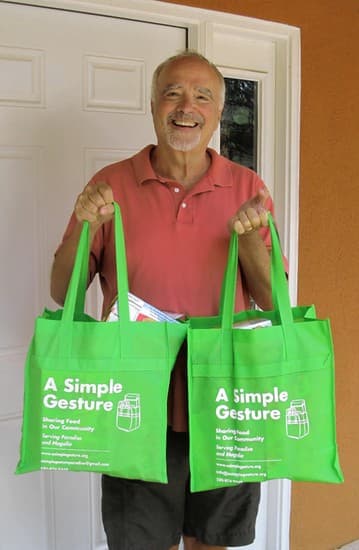
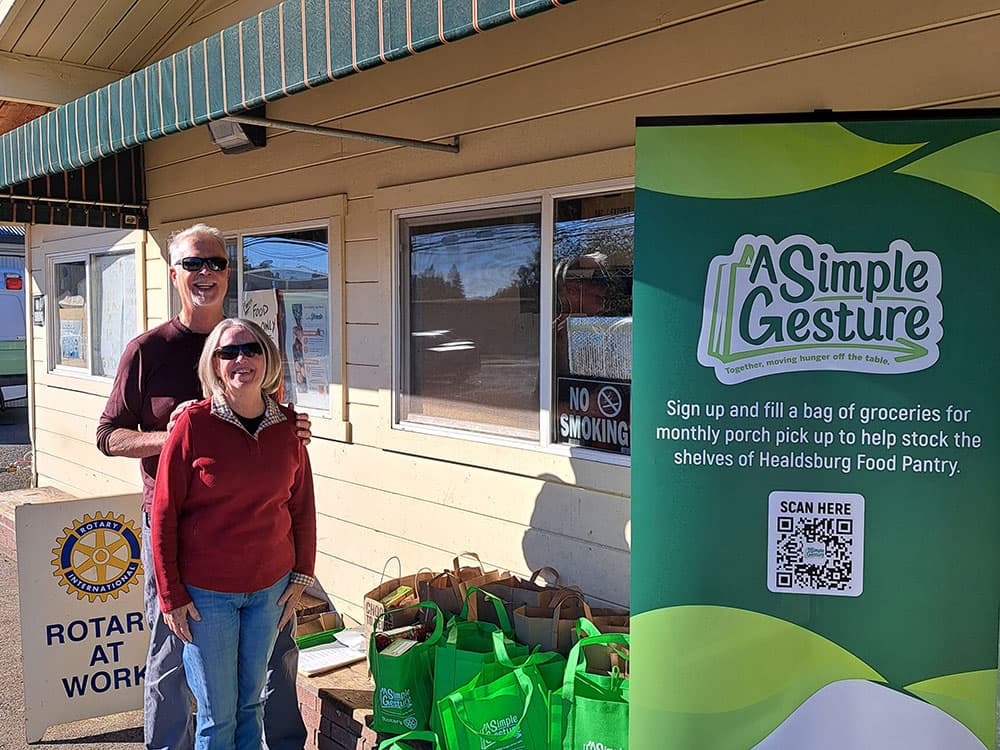
A Simple Gesture already works like an organization that understands repeatable systems. In Greensboro, more than 4,000 people do the green-bag routine on the same Saturday morning each month, and the group says it partners with dozens of local food pantries across Guilford County, North Carolina. That rhythm is useful here because clinic-based distributions are most effective when they are reliable enough to build habits around them, not just pop-up events that staff and volunteers have to reinvent every time.
The High Point chapter shows that the organization has already moved into medical-adjacent settings. A profile of the program says A Simple Gesture was founded in Paradise, California, later moved its national headquarters to Greensboro and expanded into High Point through a church partnership. It also reported that the group works with food pantries located at pediatrician and obstetrician offices in High Point, where patients can be screened for food insecurity. That is a meaningful precedent: the health-site idea is not a leap into the unknown, but an extension of work the organization is already doing in places where care and food access intersect.
For staff, that creates a different set of operational questions than a standard pantry partner site. A clinic distribution needs scheduling that matches appointment flow, communication that keeps the medical team and food team aligned, and an evaluation plan that can show whether patients are being reached and served without slowing down the clinic. It also changes the volunteer equation. A recurring clinic site can be easier to staff than a one-off event because the workflow stays stable enough to train people once and reuse that training, which can help with recruitment and retention.
What to watch if this model expands
The real test is whether clinic-based food distribution makes the system easier for families to use. If a parent can be screened, referred and handed food in the same place, the path from need to help gets shorter. If a patient navigator, social worker or nurse can reinforce that referral in a familiar clinical setting, the odds of follow-through improve.
For A Simple Gesture, the broader lesson is that the strongest partnerships are likely to be the ones that sit at the boundary between food and health, not just at the edge of charity. Mobile pantry work has always been about meeting people where they are. In clinics, that idea becomes even more precise: food access is no longer one more errand. It is part of the care setting itself, and that is where the model’s staying power may come from.
This article was produced by Prism’s automated news system from verified source data, official records, and press releases, then run through automated quality and moderation checks before publishing. The system is built and supervised by the people who set the standards it runs under. Read our full AI policy.
Did this article answer your question?