A Simple Gesture FAQ explains mission, programs, and pantry network
The FAQ is A Simple Gesture’s operating manual, showing exactly how food moves from donors to pantries, schools, and community meal partners across Guilford County.
The FAQ as the working manual
A Simple Gesture’s FAQ is the fastest way to understand how the operation really runs. It explains not just the mission, but the mechanics behind a Guilford County-based 501(c)(3) that says it exists to end childhood hunger and food disparity by building a steady supply line for local pantries and food banks. For the people doing the work, that matters because the FAQ ties together donation rules, partner networks, tax questions, monthly giving, and volunteer entry points in one place.
The scale behind that system is not small. As of December 2025, the organization says it has donated more than 8,000,000 child-size meals and roughly $13,000,000 in donated food value. It also says it works with 75+ pantry partners, 3,900+ recurring food donors, and about 200 monthly volunteers, which helps explain why the FAQ reads like an operations guide instead of a simple public-facing overview.
How the three programs fit together
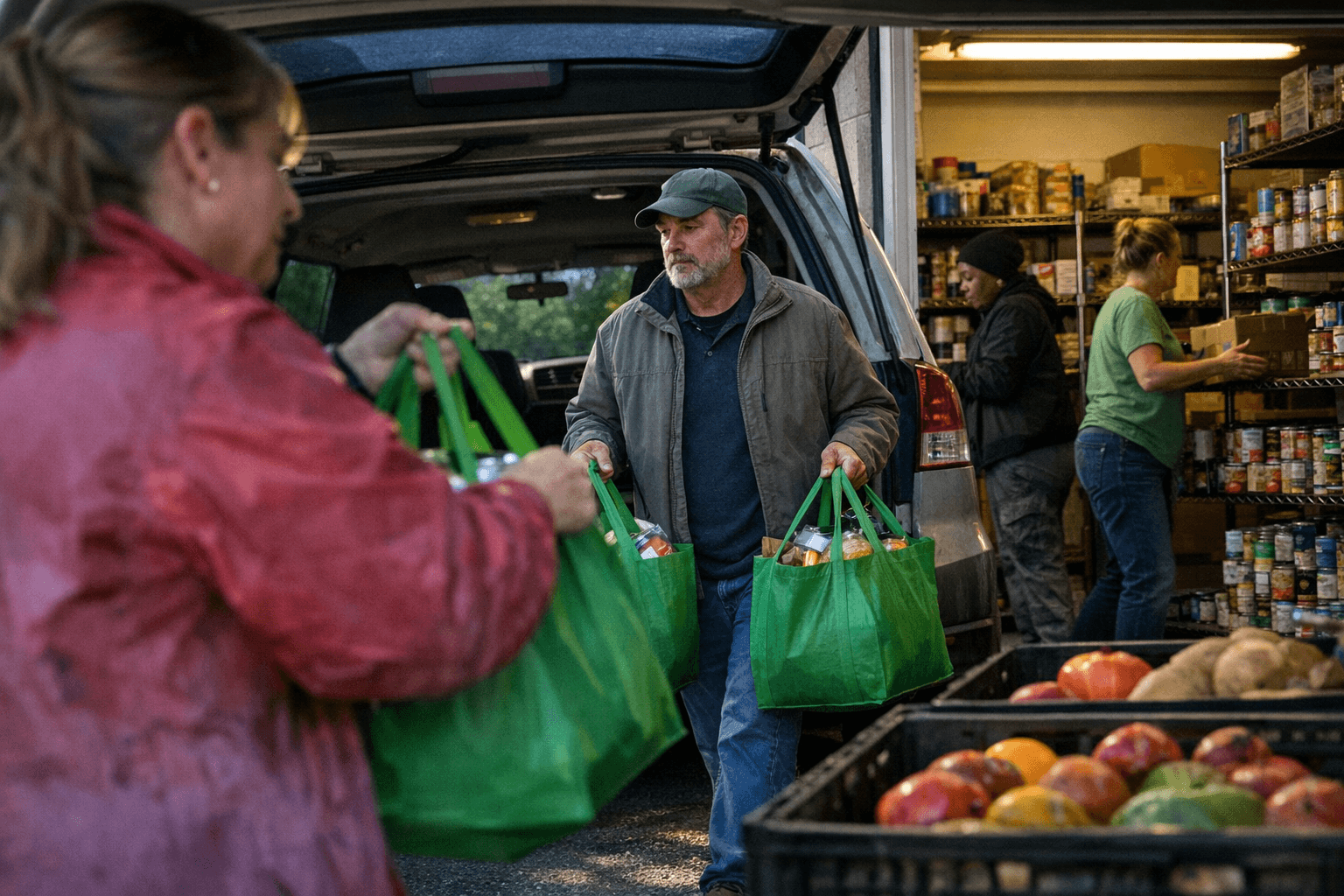
The organization’s model rests on three core programs that each serve a different part of the food pipeline. The Green Bag Food Donor Program is the familiar household-facing piece, where individuals give shelf-stable food through the green bag system. The Food Recovery Program captures excess perishable food from businesses and redirects it to nonprofits and community meals. SHARE Refrigerators in Guilford County Schools extend the network into school settings, giving students another access point when food insecurity shows up during the school day.
That three-part structure is the key thing many donors miss. A Simple Gesture is not only picking up canned goods from front porches; it is also moving edible surplus from commercial sources and supporting school-based refrigeration efforts. The mission page says the point is to provide sustainable food supply to local pantries, recover excess perishable food for local nonprofits and community meals, and support SHARE in Guilford County Schools. In practice, that means the chapter is trying to keep the whole local safety net stocked, not just one channel of donation.
Where the food goes
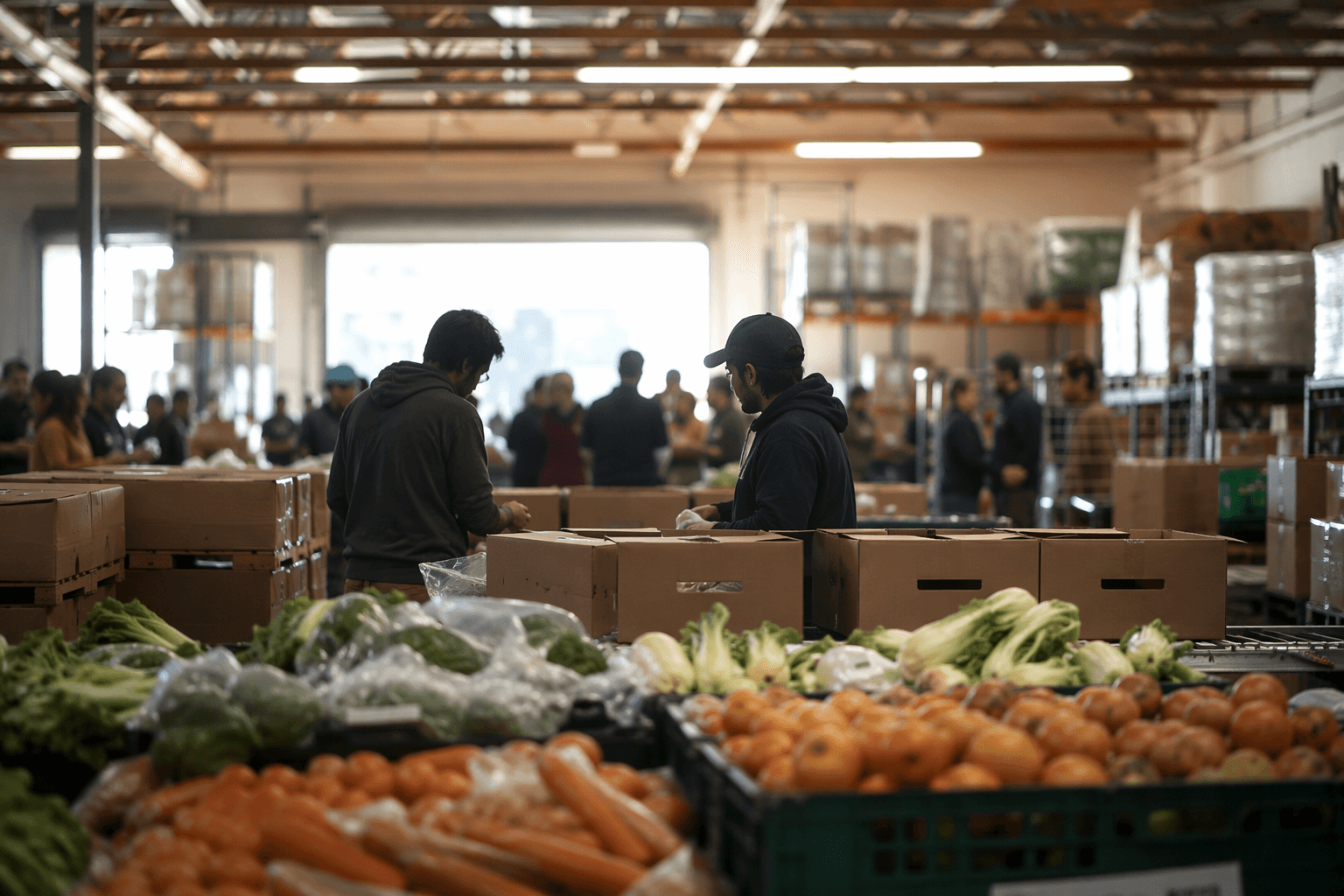
The FAQ’s pantry list makes the distribution side of the work very concrete. Donations flow to partners such as BackPack Beginnings, Second Harvest, Jewish Family Services, Guilford Backpack Ministries, Open Door Ministries, West End Ministry, Burns Hill Neighborhood Pantry, Ward Street UMC, First Christian Church, First UMC Food Pantry, COAT of Archdale, Grace Point, Greater First United Baptist, Drawers of Hope, High Point Community Clinic, Northwood Community Center, and school-based pantries.
Perishable recovery widens that footprint even further. The page also names Bread of Life/New Jerusalem, Northside Baptist Church, One Step Further, Sunday Serve, Cone Women’s Medical Center, Center for New North Carolinians, WD Mohamed Islamic Center, Interactive Resource Center, Pallet Community for the Unhoused, and FaithAction International as receiving partners for recovered food. That mix shows how the program reaches beyond traditional pantry lines into clinics, centers serving newcomers, faith-based partners, and services for people experiencing homelessness.
For staff and coordinators, this is the practical answer to the question of where contributions actually go. Food does not sit in a generic warehouse; it moves into a local network built to meet different needs in Greensboro, High Point, Archdale, and across Guilford County.
What the model is trying to solve
The FAQ and related organization pages place the work in a blunt local context. A Simple Gesture says Guilford County is one of the hungriest metropolitan areas in the United States, and it says 50,000 students in Guilford County Schools are food insecure. Those figures explain why the chapter emphasizes consistency, not one-off drives. The job is to create a reliable flow of food for pantry staff, volunteer coordinators, and logistics teams who need predictable inventory, not occasional spikes.
The broader food-recovery backdrop also matters. The organization’s food-recovery material notes that the United States wastes 30% to 40% of the food it produces. That framing connects the charity’s work to both hunger relief and waste reduction, which is one reason the model resonates with workplaces and volunteers who want a tangible, local response to a national problem. A loaf of bread or tray of produce that would otherwise be discarded can become part of a meal chain for a pantry client or a community kitchen.
What volunteers and workplace coordinators need from the FAQ
The FAQ is especially useful because it answers the operational questions that often slow participation. It addresses how to get involved if someone wants to donate food, support monthly giving, or volunteer. It also covers tax deductions, receipts, and other practical details that matter to workers and workplace coordinators trying to set up giving campaigns or track donations correctly.
That matters because the chapter is built around recurring behavior, not random goodwill. If a company or office wants to support the mission, the FAQ gives them a path for donation logistics and ongoing participation. If a volunteer wants to help, the system makes clear that the role is part of a steady workflow, not a one-time event. A chapter with about 200 monthly volunteers depends on that kind of clarity to keep routes covered, partner expectations aligned, and donors informed.
The organization’s own history reinforces that structure. A Simple Gesture-Guilford County says it was established as a 501(c)(3) nonprofit in 2015 and follows the food-collection template established by Jonathan, with the broader model dating back to 2011. That background helps explain why the chapter feels so process-driven. It is built on a repeatable structure that can absorb donations, route them to partners, and keep the system moving week after week.
Why the FAQ matters to the people inside the system
For anyone working around the operation, the FAQ is more than a help page. It is a quick reference for how the organization protects supply, serves partners, and keeps volunteers engaged without making the process overly complicated. That is especially important in a nonprofit operating at the scale shown in its public filings, which reported $4,443,968 in revenue and $4,338,131 in expenses for fiscal year 2024.
The big takeaway is that A Simple Gesture’s value is not just in collecting food, but in coordinating a durable local network around it. Its FAQ explains where food goes, who receives it, how the three programs differ, and how donors and volunteers fit into the system. In a county where hunger is widespread and school food insecurity is severe, that kind of operational clarity is what keeps the mission usable day to day.
This article was produced by Prism’s automated news system from verified source data, official records, and press releases, then run through automated quality and moderation checks before publishing. The system is built and supervised by the people who set the standards it runs under. Read our full AI policy.
Did this article answer your question?