A Simple Gesture maps food donations from donors to pantry shelves
Green bags move on a fixed cycle here: donors, drivers, and sorters keep food flowing to Boone shelves every other month, weather permitting.
How the green bag system actually moves food
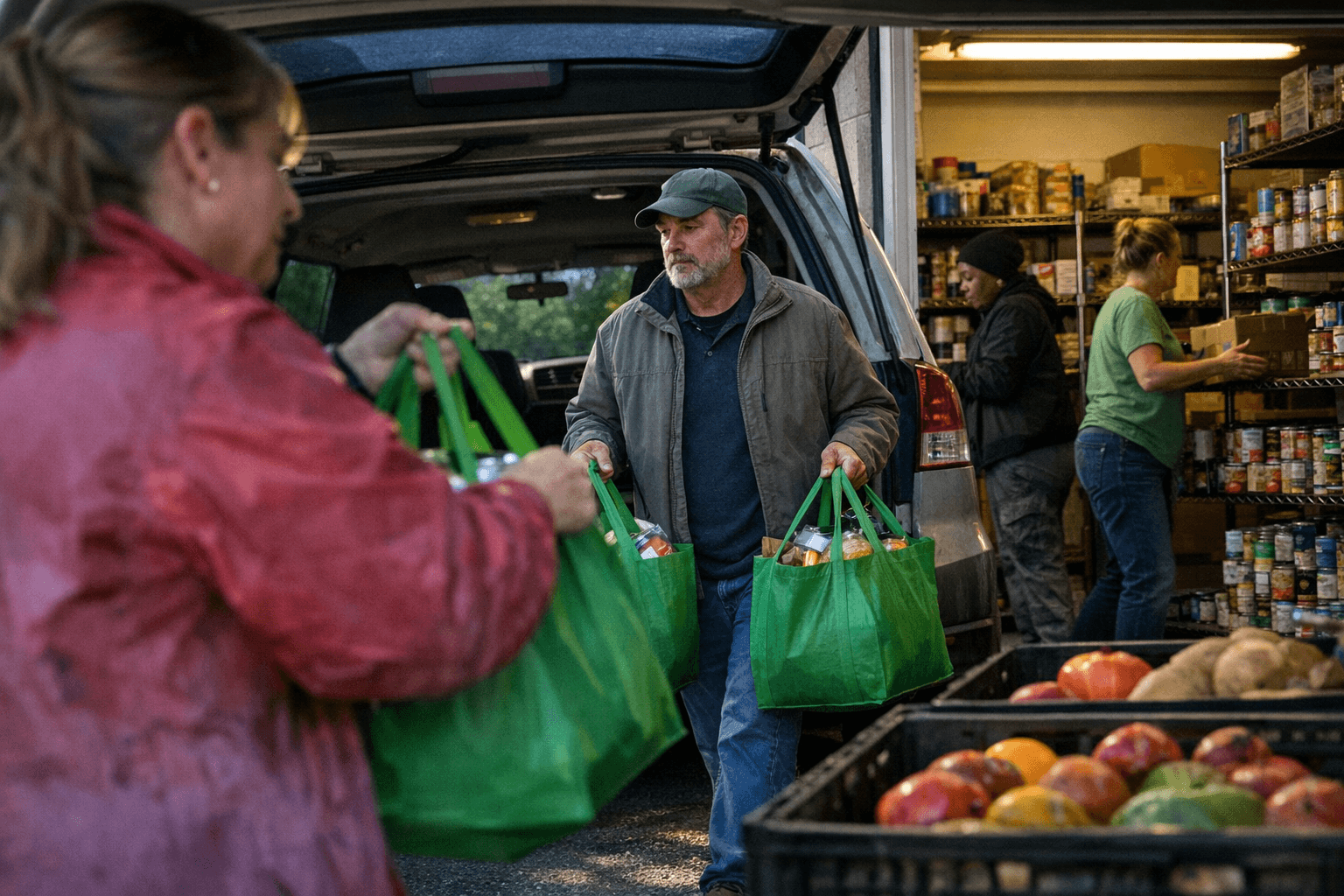
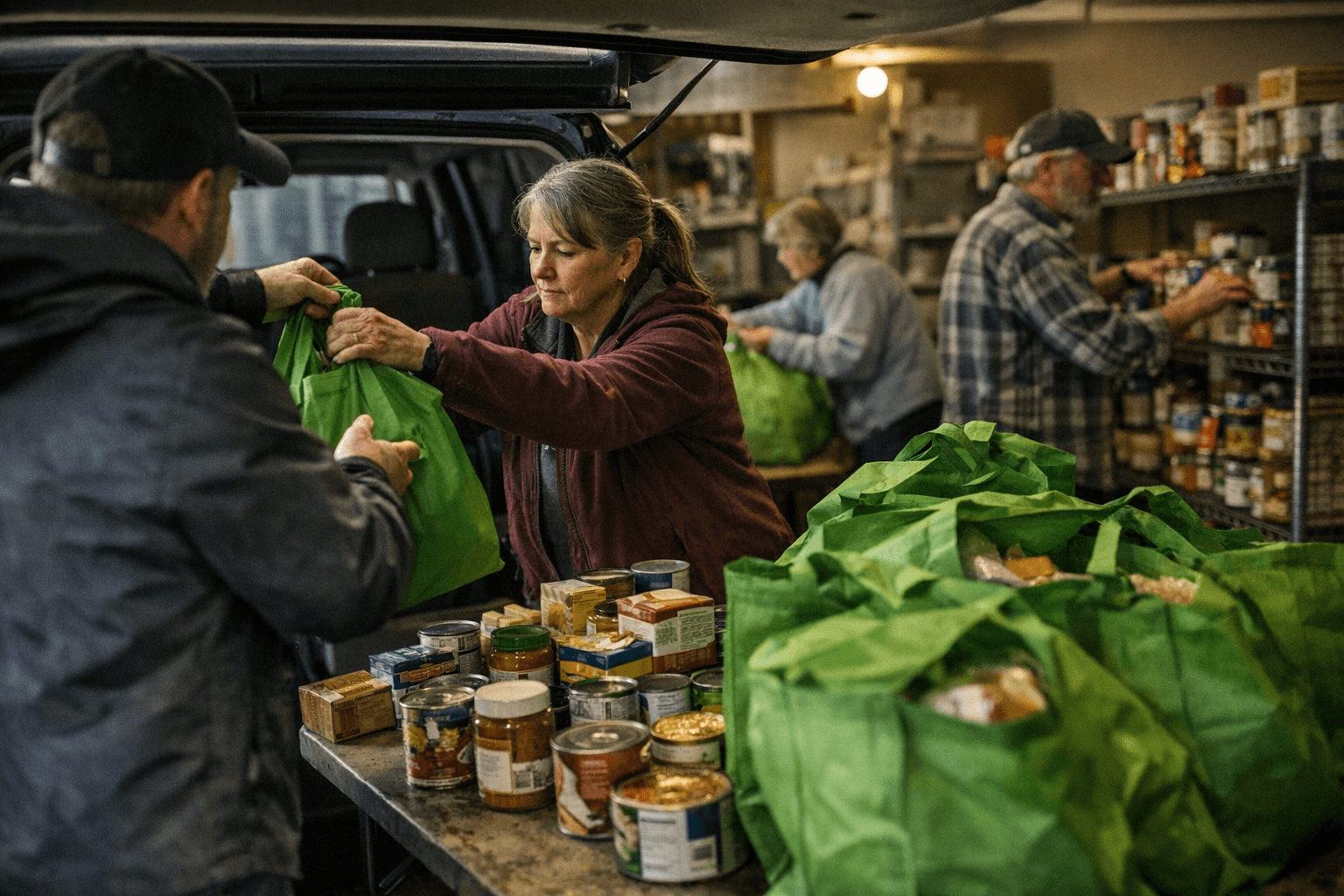
A Simple Gesture at the Hunger and Health Coalition is built on repetition, not one-time drop-offs. Households keep a reusable grocery bag in the kitchen, add at least one nonperishable item each week, and then set it outside the front door on the scheduled pickup date every two months. Volunteer drivers collect the bag, leave an empty one behind for the next cycle, and the food moves into the coalition’s distribution network.
That steady loop is the point. The model only works when donors remember the weekly habit, drivers cover household routes, and sorters turn a pile of bags into usable pantry inventory. In a food recovery system, consistency is operational strength.
The 2026 pickup calendar sets the rhythm
The Hunger and Health Coalition’s A Simple Gesture page lists 2026 pickup dates as Feb. 21, April 25, June 13, Aug. 1, Oct. 24, and Dec. 5. The page also notes that those dates can change depending on weather and road conditions, which is a practical reminder that food recovery in the High Country is tied to local geography as much as to volunteer intent.
For coordinators, that makes the calendar more than a publicity tool. It is the backbone of route planning, volunteer recruitment, pantry receiving schedules, and donor reminders. When the weather turns or roads become unsafe, the system needs judgment as well as goodwill.
What volunteers do after the bags are picked up
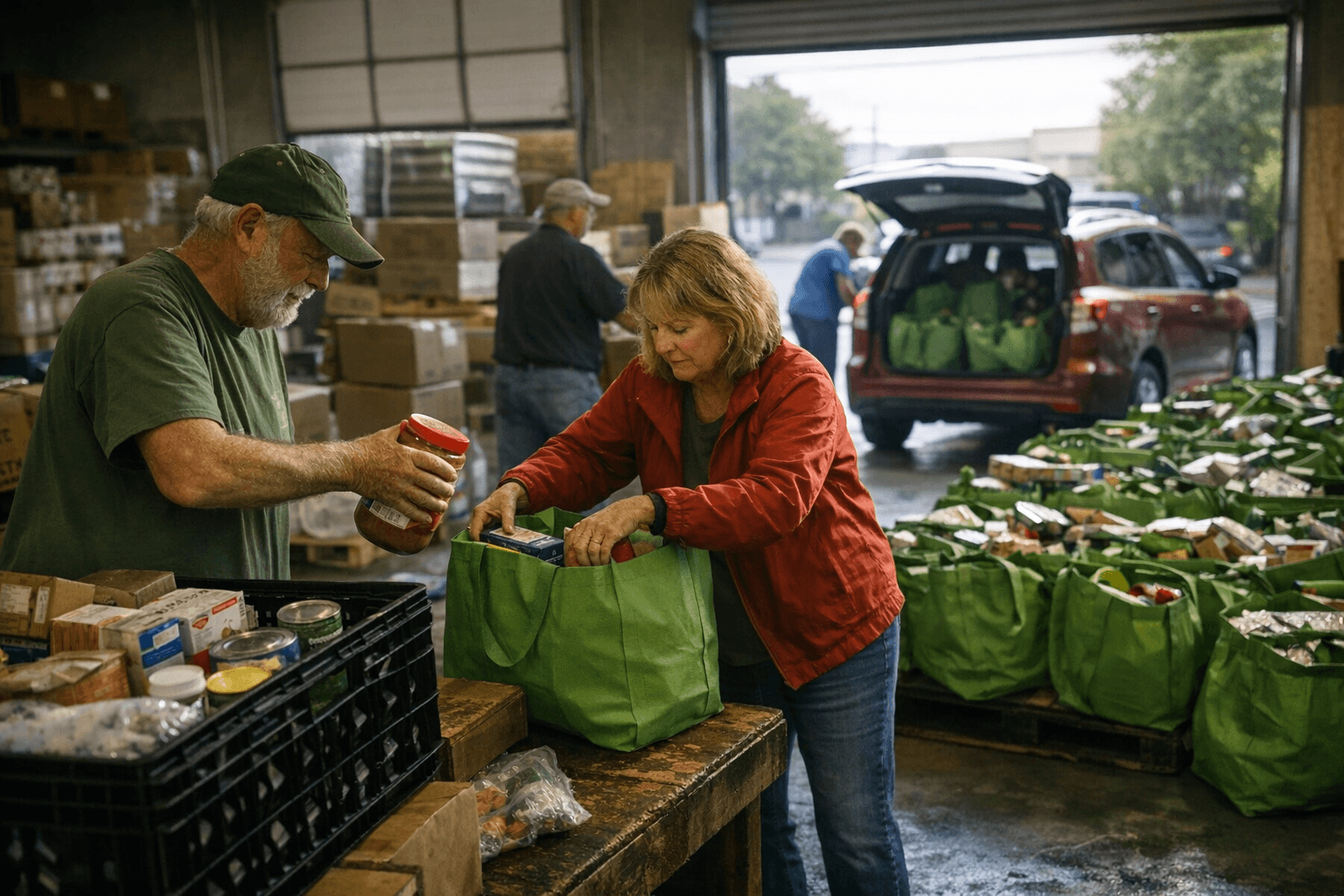
The work does not end at the curb. Sorters are a key part of the program because they weigh donations, check dates, cross off barcodes, and stock shelves. That is the difference between a donation and inventory: food has to be sorted fast enough to move through the coalition’s shelves, but carefully enough to remain safe and useful for pantry distribution.
Drivers are the other essential labor force. The program relies on them for household pickups, the route work that turns hundreds of individual doorsteps into a dependable food supply. Green Bag members matter just as much, because the program only works when the donor side stays consistent between pickup days and keeps filling the bag week after week.
Why steady participation matters more than occasional giving
A Simple Gesture is designed to lower the barrier to giving while creating a predictable supply for pantries. The original concept began when a group of friends decided to fill grocery bags and deliver them to food pantries, and that simple idea still shapes the program’s structure. In Guilford County, the organization says the program dates to 2011 and the nonprofit was established in 2015, with a 501(c)(3) mission aimed at ending childhood hunger and food disparity.
That history matters because it shows how the model was built for reliability. It is not a large, vague charity campaign. It is a repeatable logistics system that depends on ordinary households, local routes, and volunteers willing to keep showing up on schedule.
Where the food goes once it leaves the porch
At the Hunger and Health Coalition, A Simple Gesture is part of a broader food access system that includes a pantry, Food Recovery Kitchen, Fresh Market, Mobile Delivery, and Food is Medicine programs. The coalition says it has served the High Country for 40 years, growing from a closet into a county-owned facility, which gives the A Simple Gesture chapter a long institutional home rather than a stand-alone side project.
The coalition’s main site is at 141 Health Center Drive, Suite C, Boone, North Carolina, 28607, and it is open Monday through Friday from 9:00 a.m. to 4:00 p.m. for food and medication pickup. That schedule matters for donors, drivers, and staff because the back end of food recovery depends on receiving hours, shelf space, and the timing of partner distribution.
The scale of need behind the route map
The coalition’s 2024-25 impact figures help explain why the program keeps leaning on recurring volunteer labor. It reports distributing 585,210 pounds of fresh produce, 19,500 food boxes, and 2,500 clinic visits tied to $3.18 million in free prescriptions for the community. Those numbers show that food recovery here is not a narrow charity function. It sits inside a wider network of basic needs, where food access, health access, and transportation all overlap.
A Simple Gesture fills a specific gap in that network. It brings in shelf-stable food on a predictable schedule, which helps the coalition manage inventory and move donations toward the right part of the system. In a place where need spans pantry shelves, clinics, and mobile delivery, predictability is not a convenience. It is the operating model.
How the chapter keeps volunteers and donors informed
The coalition’s newsletter, The Pulse, is part of the retention strategy. It includes program updates, data, client stories, upcoming events, monthly volunteer needs, and other ways to get involved. That matters because food recovery programs lose momentum when volunteers only hear from staff when a crisis hits. Regular communication keeps the route network alive and gives coordinators a way to adjust asks as pantry needs shift.
The page’s most-needed items list works the same way. It signals that community need changes over time, which is useful for volunteers who want to donate the right things and for staff who have to balance what arrives at the door with what actually moves off the shelf.
What the local chapter shows about the model
The High Country chapter follows the same basic A Simple Gesture template that grew out of Guilford County, but its value lies in the local mechanics. Drivers run routes, sorters prep inventory, and Green Bag members keep the weekly donation rhythm going until the next pickup date. That chain is what makes the program more than a food drive.
The clearest lesson for anyone working in the system is simple: hunger relief here depends on a recurring schedule, not a one-time surge. The bags only move because households fill them, volunteers collect them, and staff turn them into food that can be placed on pantry shelves when the need is real and immediate.
Know something we missed? Have a correction or additional information?
Submit a Tip