A Simple Gesture guide shows how to measure volunteer impact
Volunteer time counts like donor dollars when you can prove what it changed. A Simple Gesture's green-bag system shows how pounds, households, and retention turn goodwill into durable support.
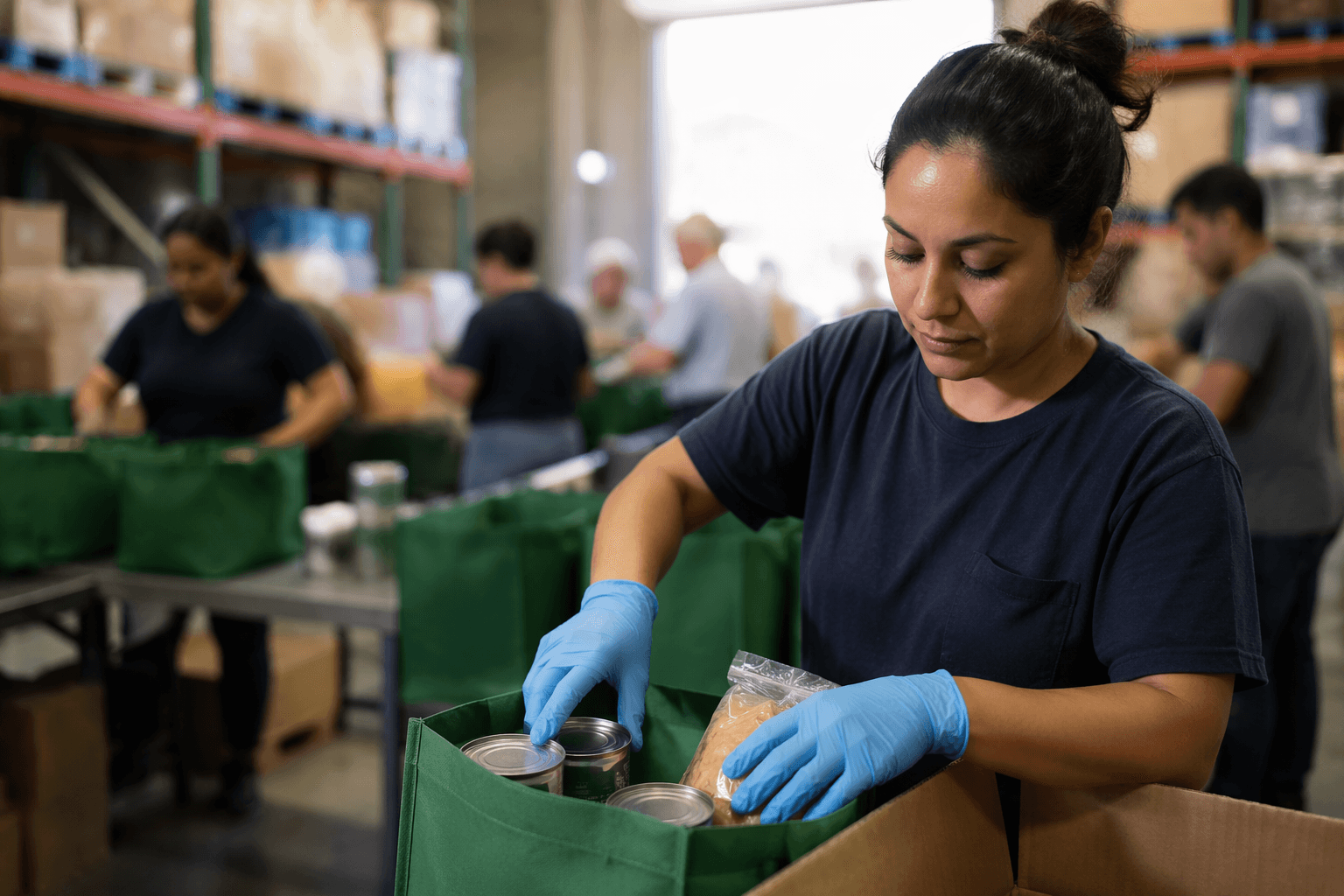
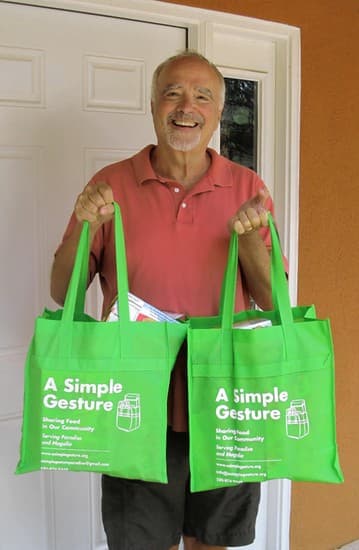
A Simple Gesture’s green-bag system makes volunteer work easy to count: pickup routes, sorting shifts, pantry deliveries, and pounds recovered. When volunteers can see what those tasks actually changed, they are more likely to stay engaged, and funders have a clearer reason to keep backing the model.
Why measurement matters in a volunteer-driven food network
Idealist’s guide to measuring volunteer impact argues that volunteers do more than provide free labor. They reduce operational costs, bring useful skills into mission work, and often become donors themselves. In a nonprofit built on recurring doorstep pickups, the difference between a good volunteer program and a strong one is not just head count, but whether the work holds together long enough to move food reliably from homes to pantries.
Impact measurement improves volunteer satisfaction and retention, a direct operational benefit for any program that depends on repeat drivers and consistent donor households. Donors and corporate partners are also more likely to invest when an organization can demonstrate its impact. For A Simple Gesture, that means the case for support is stronger when the story includes not just the number of green bags out in the neighborhood, but the number of routes completed, the number of pantries served, and the pounds recovered over time.
What to measure in a green-bag program
A Simple Gesture’s model makes measurement unusually concrete. The green-bag system creates a steady stream of activity that can be tracked at several levels: bags distributed, pickup reliability, pounds recovered, neighborhoods reached, and volunteer return rates. Those numbers do not just help with reporting. They show whether the operation is actually working at street level, where a missed pickup or weak pantry connection can break the chain.
A useful scorecard combines quantitative and qualitative measures:
- Hours volunteered, but only alongside return rates and repeat participation
- Number of donor households, which shows whether recruitment is broadening or stalling
- Pounds collected per cycle and per year, which reveals whether the system is scaling
- Pickup reliability, which tells coordinators whether routes are dependable
- Pantry partnerships, which show how far the network reaches into the community
- Volunteer, staff, and neighbor feedback, which captures what the work means beyond the totals
Guilford County shows how numbers build credibility
A Simple Gesture - Guilford County has made donating food easy since 2015 through its convenient collection programs. The chapter says it partners with dozens of local food pantries and uses a near zero-cost model in which a $1 donation converts to more than $30 of food going to food banks and pantries.
The chapter says it has more than 1,700 food donors and numerous volunteer drivers who help collect over 132,000 pounds of food each year. Another public report from the chapter puts it at about 1,500 donor households and about 700 volunteers, with 900,039 pounds of groceries recovered since 2015 and 162,000 pounds collected in one year. If donor households rise but pounds flatten, the program may need better route coordination. If volunteer numbers rise but retention slips, recruitment may be outpacing the experience of the work.
Reston shows how to make volunteer work legible
A Simple Gesture - Reston is a bi-monthly food collection program serving Northern Virginia, and it does not store or distribute food itself. Instead, it delivers directly to pantries, a design that keeps the volunteer role focused on collection and transport while leaving distribution to pantry partners such as Shoreshim Jewish Community, Cornerstone’s Reston Pantry, and LINK’s Pantry.
That structure makes measurement even more important, because the program’s value sits in coordination. In a 2019 update, more than 870 donors helped deliver 15,775 pounds in a single collection, with 48 drivers and 26 food sorting volunteers taking part. In a 2018 update, 700 donors, 47 drivers, and 27 sorting volunteers delivered almost 13,000 pounds of food and toiletries. In a 2017 post, more than 420 donors provided over 10,000 pounds, and the program had reached 51,363 pounds over its life at that point.
The chapter later said it had reached 100 tons of food since inception.
The story volunteers can actually see
Measurement gives volunteers a clear line between effort and outcome. In a green-bag model, that line can be traced from a front-door pickup to pantry shelves in a matter of days, and the numbers make that journey visible: more than 870 donors, 48 drivers, 26 sorters, 15,775 pounds; or 700 donors, 47 drivers, 27 sorters, nearly 13,000 pounds.
That visibility also helps recruitment. A route driver can see how many homes are covered. A sorting volunteer can see how much food is moving. A donor household can see that its bag is part of a larger neighborhood system, not a one-off good deed.
In November 2014, the local initiative was inspired by a Wall Street Journal article about the original A Simple Gesture in Paradise, California. That earlier model had provided 500,000 pounds of free groceries to local food pantries in three years by asking people to fill green bags with nonperishable food.
This article was produced by Prism’s automated news system from verified source data, official records, and press releases, then run through automated quality and moderation checks before publishing. The system is built and supervised by the people who set the standards it runs under. Read our full AI policy.
Did this article answer your question?