A Simple Gesture leans on volunteer tech to manage growing demand
A Simple Gesture's growth depends on treating volunteer coordination like logistics, not goodwill, so green-bag pickups keep food moving.

Volunteer tech is the difference between momentum and bottlenecks
Food banks are not operating in a normal demand cycle. USDA Economic Research Service estimated that 13.7 percent of U.S. households were food insecure in 2024, while Feeding America described a 2025 landscape with “potential for surging demand” across a network of more than 200 food banks and 60,000 pantries and meal programs. In that environment, volunteers are not a side benefit. They are part of the operating model, handling sorting, deliveries, and the quiet work that keeps food flowing when donations and schedules do not line up neatly.

That is the practical lesson inside Volgistics’ 2026 food bank volunteer management guide. The guide argues that volunteer-heavy operations need more than goodwill: they need real-time insight into who is coming, automated communication when plans change, workflows that do not break under pressure, and the flexibility to adapt when schedules shift suddenly. For A Simple Gesture, that is not abstract advice. It is the difference between a green bag pickup system that scales and one that gets bogged down in phone calls, missed routes, and avoidable confusion.
A Simple Gesture’s model only works when the logistics are tight
A Simple Gesture began in Paradise, California, where Jonathan Trivers started the first chapter after deciding to build on a neighborhood food project and make the process more efficient. The Guilford County chapter, based in Greensboro, North Carolina, says it was established as a 501(c)(3) in 2015 and partners with dozens of local food pantries. That combination, a local pickup network on one side and pantry partnerships on the other, is exactly the kind of setup that depends on repeatable systems rather than improvisation.
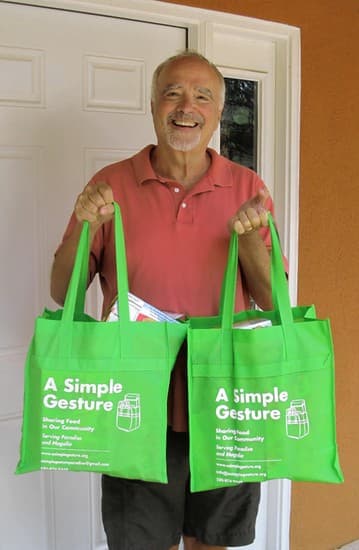
The organization’s green-bag model makes the point even clearer. Households set out donated food for pickup, volunteers collect it, and the food moves into the pantry network. Manual tracking can work for a one-off drive or a small event, but recurring doorstep pickups, changing route coverage, and ad hoc volunteer shifts quickly create friction if there is no reliable scheduling and communication structure. In a program built on neighborhood trust, that friction is not just administrative. It affects whether donors keep participating and whether pantries can count on steady deliveries.
What volunteer managers need from corporate groups
If companies want employee volunteering to help a food-recovery nonprofit, not burden it, the first requirement is clarity. Corporate groups work best when they arrive with a schedule that is locked in, roles that are clearly defined, and a task list that matches the actual work on the ground. A Simple Gesture’s food recovery volunteers must be 18 or older, able to lift 20-pound boxes, use a smartphone, drive a clean personal car, and wear closed-toe shoes. Those details are not fine print. They are the operating realities that should shape how groups are assigned and prepared.
That is where volunteer management technology earns its keep. Automated reminders, route information, and real-time updates reduce the back-and-forth that drains staff time. They also make it easier to match volunteers to the right shift, the right route, and the right physical expectations. For a nonprofit that relies on both regular helpers and short-notice support, the goal is not to make volunteering feel corporate. The goal is to make it dependable enough that staff can plan around it.
There is also a retention lesson here. When people know where to go, what to bring, and how their work fits into the larger pickup-and-delivery chain, they are more likely to return. That matters for A Simple Gesture because a green-bag operation is not built on one dramatic service day. It is built on repetition, consistency, and enough volunteer continuity to keep dozens of pantries supplied without forcing staff to rebuild the same instructions every week.
The green-bag system is small in concept, but large in operational demand
A Simple Gesture’s model looks simple from the outside, and that simplicity is part of its appeal. The organization says a one-dollar donation converts to more than $30 of food going to food banks and pantries, which helps explain why the model has spread beyond its original chapter. Affiliated chapter sites say the idea has been replicated by more than 70 chapters nationwide, and one Michigan chapter reports more than 1,700 food donors and over 132,000 pounds of food collected each year.
That kind of growth only happens when the system is easy to repeat. A Simple Gesture’s home pages and chapter materials point to the machinery behind the mission: pickup schedules, pantry-item lists, volunteer sign-up flows, and the basic coordination needed to move food from homes to local partners. The more chapters grow, the more important it becomes to standardize those pieces so the model can travel without losing its reliability.
For coordinators, that means treating every volunteer interaction as part of a chain. A donor sets out a bag. A volunteer needs to know the route. A pantry needs the food to arrive on time. If any one step gets vague, the whole system becomes harder to trust. Technology does not replace the human side of the work, but it does give staff a better way to keep all the moving parts aligned.
The real test is whether the system can hold under pressure
A Simple Gesture’s history shows how a neighborhood idea can become a regional and national recovery network, but scale brings new pressure. More chapters, more donors, and more pantry partners all raise the cost of confusion. That is why the Volgistics guide lands so well here: volunteer management is not an afterthought once demand grows. It is the infrastructure that keeps a mission from stalling.
For A Simple Gesture, the next step is not simply recruiting more volunteers. It is making volunteer work easier to understand, easier to schedule, and easier to repeat. In food recovery, the most valuable systems are the ones that turn scattered goodwill into dependable logistics, week after week, bag after bag.
This article was produced by Prism’s automated news system from verified source data, official records, and press releases, then run through automated quality and moderation checks before publishing. The system is built and supervised by the people who set the standards it runs under. Read our full AI policy.
Did this article answer your question?