A Simple Gesture mobilizes donations, food drives, and pantry support during shutdown
A Simple Gesture is turning a SNAP gap into a clear workplace response, with office drop-offs, virtual drives, and pantry routing that teams can use now.
The biggest problem in a shutdown is not just the policy fight in Washington. It is the grocery bill landing in a household that was already balancing too much to qualify for help, or just barely enough to qualify and still not enough to get through the month. In Guilford County, that pressure lands inside a local food system that already counts 82,510 food-insecure residents, with 37% making slightly too much to qualify for SNAP and 18.7% receiving benefits as of 2021.
The emergency is local, and the response is operational
A Simple Gesture’s Fill the Gap page matters because it does not treat food insecurity like a vague awareness campaign. It turns a shutdown-related SNAP disruption into a concrete set of actions for donors, volunteers, office staff, and pantry partners. That is exactly the kind of translation workplace coordinators need when public benefits stall and demand spikes at the same time.
The county-level stakes are clear. Guilford County created OneGuilford: Support Our Pantries in response to food insecurity concerns during the federal government shutdown and the SNAP benefits pause effective Saturday, November 1, 2025. North Carolina’s Department of Health and Human Services said on October 27, 2025, that November benefits for the 1.4 million North Carolinians who rely on SNAP would be delayed if the shutdown continued, after the U.S. Department of Agriculture directed the state on October 10, 2025, to delay issuance of November SNAP benefits. That is the gap A Simple Gesture is helping fill.
For office managers, HR leads, and team captains, the lesson is simple: when benefits freeze, people do not need a slogan. They need a donation path, a pickup plan, and a way to keep pantry shelves stocked before the next household crisis lands.
How Fill the Gap turns urgency into workplace logistics
The strength of the Fill the Gap page is its clarity. It gives people a direct place to act by directing donations to an emergency SNAP fund and connecting that support to Greater High Point Food Alliance and pantry partners serving Greensboro and other parts of Guilford County. It also makes the logistics visible, which is critical when staff are trying to coordinate volunteers, donors, and delivery routes at the same time.
The page gives one especially useful instruction for workplace organizing: food can be dropped at A Simple Gesture’s office at 3503 Redington Drive in Greensboro, where items go in the bin by the garage door. That kind of detail matters because it removes the uncertainty that often slows down volunteer-driven food collection. A team captain does not have to improvise where donations go, and a front office does not have to answer the same basic question over and over.
The page also offers two food-drive pathways that fit different kinds of workplaces. Virtual drives run through a Walmart Registry, where food items are delivered directly to the ASG office and then sent to a local pantry partner. On-site drives work for businesses or organizations that want to host collection boxes, with A Simple Gesture supplying the boxes and later picking up the donations. For a workplace trying to move fast this week, that means the campaign can be as simple as a registry link shared in an email or as organized as a building-wide collection with scheduled pickup.
Why this is useful for staff inside a food-recovery nonprofit
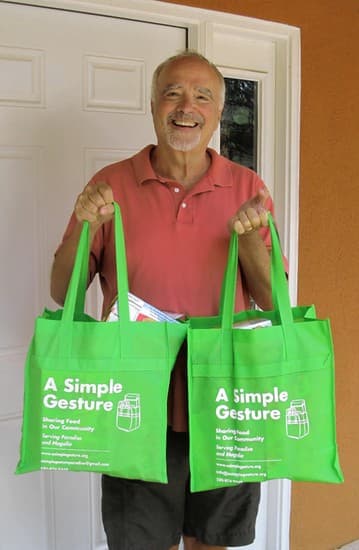
A Simple Gesture was established as a 501(c)(3) in Guilford County in 2015, and the broader model dates to 2011. That history matters because the Fill the Gap page is not building a response from scratch. It is extending an existing network built around green bag pickups, pantry partnerships, and food recovery systems that already know how to move donations from households to distribution points.
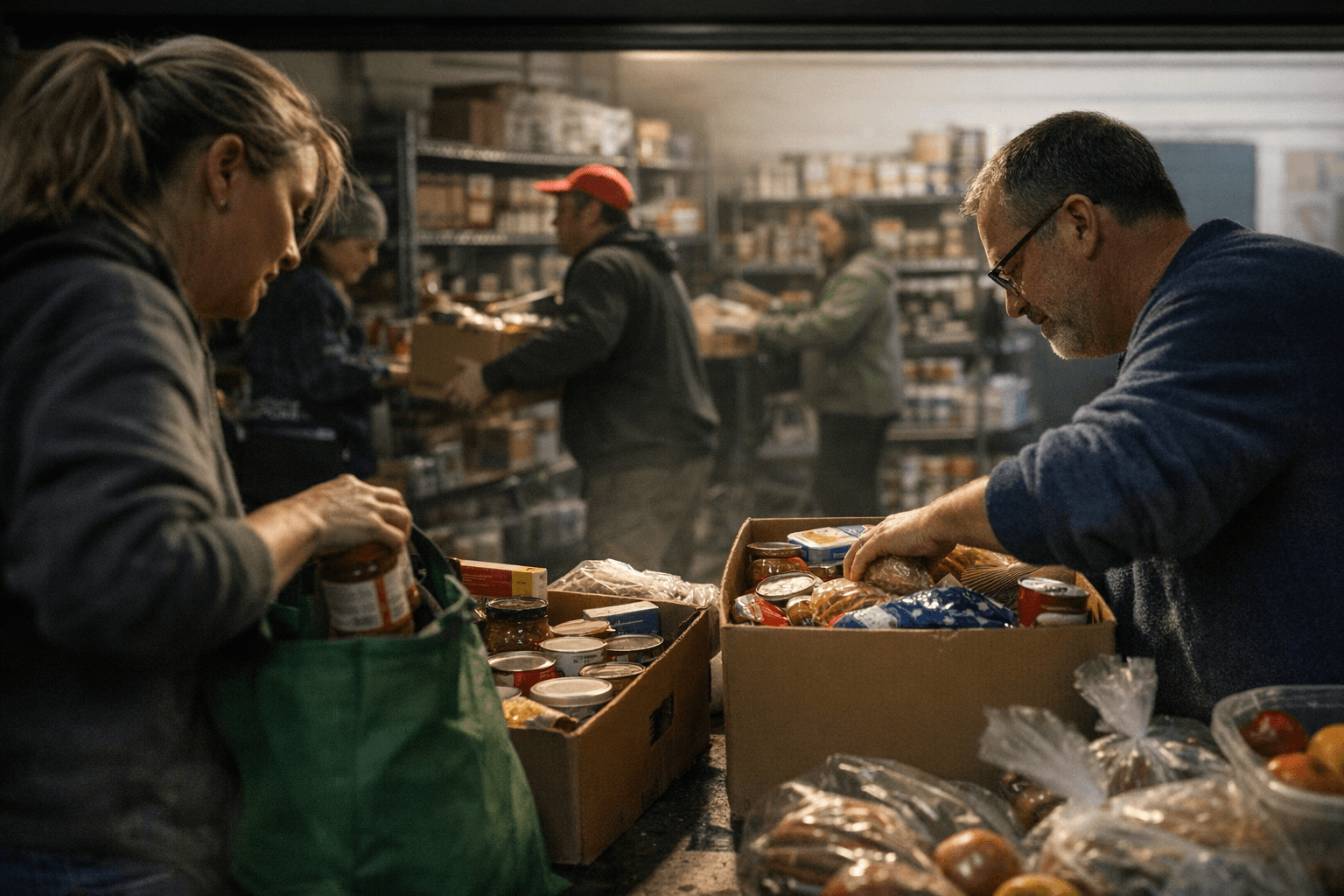
The organization says it partners with dozens of local food pantries in Guilford County, which makes the shutdown response more than a one-off emergency appeal. It is a stress test for the routes, relationships, and volunteer habits that already power the chapter’s work. If donation volume rises, the organization’s ability to keep pickup routes coordinated and pantry partners supplied becomes just as important as the fundraising message itself.
That is where the page’s operational value stands out. It does not bundle every program into one broad promotional pitch. Instead, it lays out a usable path: give money, give food, or host a drive. For staff who manage volunteer recruitment and retention, that clarity is a retention tool too. Volunteers are more likely to return when they understand exactly what the job is and how their contribution moves food to a pantry shelf.
The county network makes the response stronger
OneGuilford: Support Our Pantries shows that A Simple Gesture is operating inside a broader emergency network, not as a standalone appeal. Guilford County says it is coordinating with A Simple Gesture, Greater High Point Food Alliance, Second Harvest Food Bank, and other pantry partners to support residents impacted by the SNAP pause. The county’s related Fill the Gap effort also names A Simple Gesture, Greater High Point Food Alliance, and Second Harvest Food Bank of Western NC as donation partners.
That coordination matters because food insecurity rarely stays within one municipality or one nonprofit lane. People in Greensboro, High Point, Archdale, Trinity, and Jamestown all rely on overlapping systems of pantry access, transportation, and referrals. When the county, a food recovery nonprofit, and a regional food bank are aligned, the response is faster and less confusing for the people who need help most.
The page also points neighbors to the Greater Guilford Food Finder app and to 211 for quick help locating food. That makes the page useful not only as a donation hub but as a public-information tool, which is often the missing link in emergency response. If you work in operations, that is the part worth copying: keep the donor instructions, pantry referrals, and pickup logistics on the same page.
What a workplace can do this week
The best thing about A Simple Gesture’s approach is that it is easy to translate into a workplace action plan. A team does not need to invent a campaign from zero. It can pick the simplest lane, assign one person to coordinate it, and use the page’s structure to keep the effort moving.
- Share the emergency SNAP fund information in an all-staff message.
- Choose either a virtual Walmart Registry drive or an on-site box drive.
- If donating food directly, send items to 3503 Redington Drive in Greensboro and use the garage-door bin instructions.
- If hosting a drive, name one coordinator to track donations and one person to confirm pickup timing.
- Direct anyone needing food quickly to the Greater Guilford Food Finder app or 211.
A practical workplace rollout can look like this:
That is the larger value of Fill the Gap. It shows how a policy failure becomes a concrete workplace task list, and how a local nonprofit can convert public urgency into usable logistics without losing speed. In a shutdown, that kind of operational clarity is what keeps food moving.
This article was produced by Prism’s automated news system from verified source data, official records, and press releases, then run through automated quality and moderation checks before publishing. The system is built and supervised by the people who set the standards it runs under. Read our full AI policy.
Did this article answer your question?