A Simple Gesture’s Green Bag Program streamlines donor sign-up and volunteer recruitment
The Green Bag page turns one household sign-up into a recurring pantry pipeline, and quietly doubles as a volunteer intake form for route recruitment.
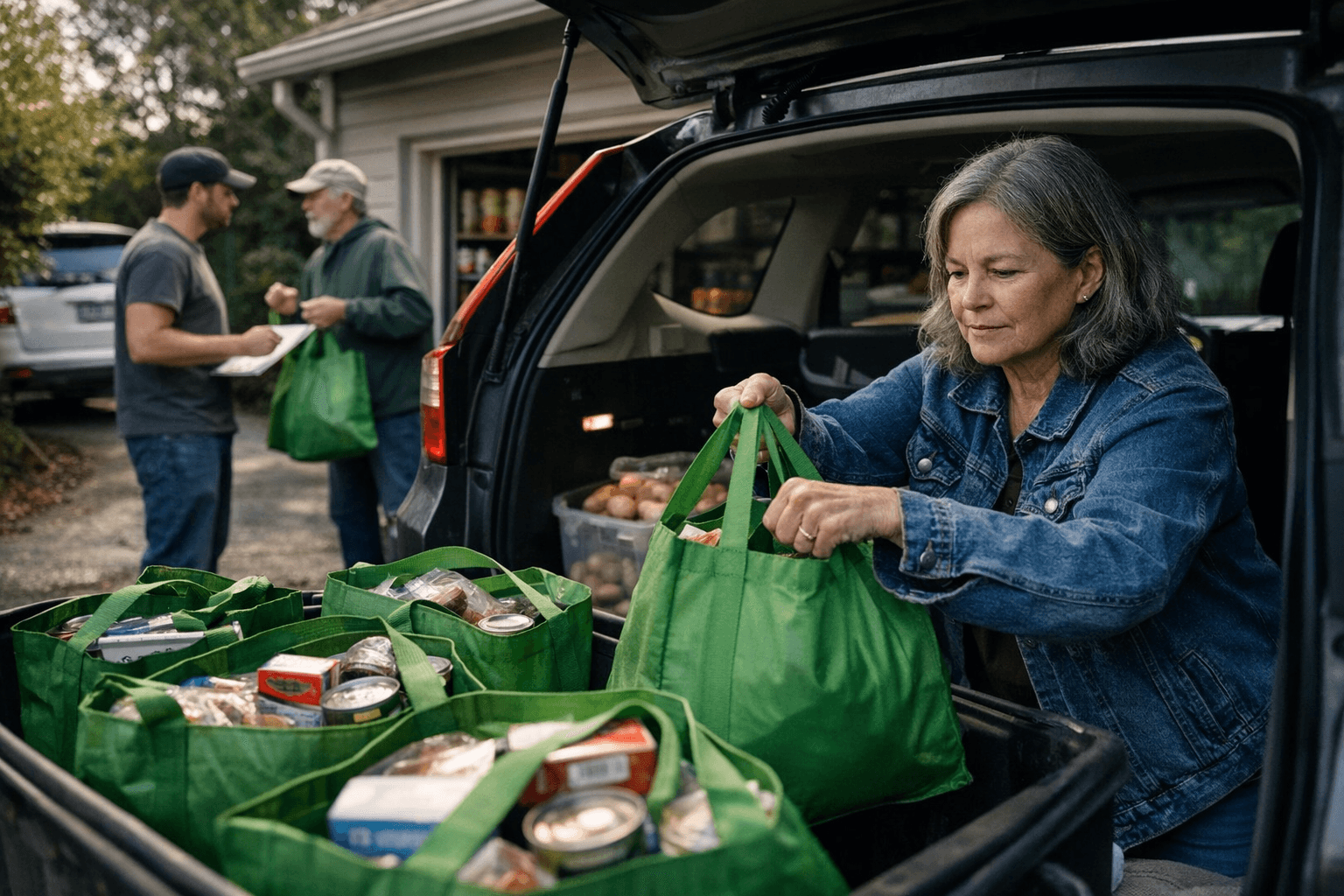
How the Green Bag workflow moves food from a doorstep to a pantry
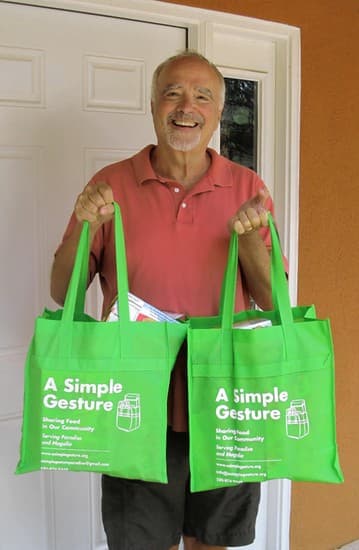
A Simple Gesture’s Green Bag program is built around one simple handoff: sign up, receive a green bag, fill it with nonperishable food, and leave it on the doorstep on collection day. A volunteer picks up the bag, leaves a fresh one behind, and delivers the donation to a local pantry partner, turning an ordinary shopping routine into a predictable supply line for hunger relief.
That repeatable loop is the point. The page lets donors choose either a monthly or bi-monthly donation cadence, which gives coordinators a practical way to shape route volume, reminder timing, and pantry delivery flow. In a food-recovery operation, frequency is not a minor preference, it is a scheduling tool.
One form does two jobs
The sign-up form is more than a donor intake sheet. It asks for name, address, city, zip code, email, phone, donation frequency, and whether the person wants to volunteer to pick up donated food and deliver it to food pantries. That makes the page a single entry point for both sides of the operation: recurring donors and route volunteers.
For staff, that matters because it reduces friction. A curious neighbor does not have to navigate separate pages or multiple sign-up paths to figure out how to help. The page also points users to a most-needed items list, a pickup schedule, and contact information, which means common questions can be answered without sending people elsewhere. In practical terms, it gives households enough information to know what to buy, when to set the bag out, and what happens next.
That clarity is also a retention tool. When donors know the cycle, they are more likely to stay in it. Recurring pickups create a steadier pantry stream than one-off drives because coordinators can plan around known volume instead of chasing unpredictable bursts of generosity.
Why the recurring model works for volunteers and coordinators
The Green Bag system is not just about convenience for donors. It is designed to make route coordination manageable for volunteers and staff who have to balance neighborhoods, schedules, and pantry needs. Monthly and bi-monthly pickup rhythms make it easier to assign routes, forecast bag counts, and keep fresh bags moving back into circulation.
That structure also helps the volunteer side of recruitment. Someone who signs up to donate can be converted into a route helper from the same form, which is a significant advantage for a nonprofit that relies on monthly volunteers. A Simple Gesture’s impact page says the Guilford County operation had more than 3,900 recurring food donors and 200 monthly volunteers as of December 2025, evidence that a recurring workflow can support both inventory and staffing.
The system is especially useful because it turns goodwill into a scheduled action. Instead of asking supporters to respond to a crisis drive, the chapter asks them to participate in a regular household habit. That is the difference between a charitable gesture and a supply chain.
A broader mission behind a simple doorstep exchange
The Green Bag page sits inside a larger mission in Guilford County. A Simple Gesture says it exists to provide a sustainable supply of food to local food pantries, collect excess perishable food for nonprofits and community meals, and support the SHARE program in Guilford County Schools. The organization also says it aims to end hunger in Guilford County as a community.
That broader remit helps explain why the donor page is built for operational repeatability. A stable flow of nonperishable bags supports pantry partners, while food recovery work handles edible surplus from businesses and sends it to local nonprofits. The SHARE connection extends the reach into schools, where food access has direct consequences for students and families. In other words, the Green Bag workflow is not a standalone donation gimmick; it is one intake point in a network that spans pantries, schools, community meals, and recovery routes.
The scale is already substantial. A Simple Gesture’s impact page says that as of December 2025, the Guilford County operation had delivered more than 8,000,000 child-size meals and $13,000,000 in donated-food value. It also lists more than 75 pantry partners, showing that the chapter is not feeding a single outlet but a local network with multiple distribution points.
The local operation behind the page
A Simple Gesture-Guilford County was established as a 501(c)(3) nonprofit in 2015, and the team page shows the people who keep the workflow moving. Leslie Loyd is president and COO, Maria Purcell is director of the Green Bag Donor Program, and Jean Rochelle serves as SHARE and Volunteer Coordinator. Those roles reflect the structure of the program itself: donor recruitment, bag logistics, school partnerships, and volunteer coordination all depend on tight communication.
That matters because a page like this is only as strong as the people who run it. When donors call with questions about the schedule, when a route needs coverage, or when a school pantry connection needs attention, the sign-up form becomes the front door to a wider operation. For workers inside the organization, that means the page is not just marketing. It is part of the daily machinery that keeps bags moving and pantry shelves filled.
A model built to scale through ordinary routines
The logic behind Green Bag is consistent with the larger origin story of A Simple Gesture. The model began with Jonathan Trivers in Paradise, California, after the idea took shape that the town had enough food, but no easy way to move it to people who needed it. In Paradise, a community of about 35,000 people and roughly 14,000 households, the original chapter now has more than 1,700 food donors and collects over 132,000 pounds of food each year.
The same pattern appears in other chapters. A Simple Gesture Reston, founded by Robert Schnapp, grew from a practical observation: many donors worked Monday through Friday business hours while pantries were open at the same times. That chapter built a two-month reusable-bag system in which volunteer drivers pick up full bags and leave replacement bags and grocery lists. It now reports 1,500 donor households, about 700 volunteers, 900,039 pounds of groceries since 2015, and 162,000 pounds collected in one year.
Taken together, those numbers show why the Green Bag page matters. The model works because it reduces charity to a reliable household routine, then layers volunteer logistics, pantry partnerships, and food recovery on top of that routine. For A Simple Gesture, the operational win is not just more donations. It is a dependable stream of food, volunteers, and routes that local pantry partners can plan around all year long.
This article was produced by Prism’s automated news system from verified source data, official records, and press releases, then run through automated quality and moderation checks before publishing. The system is built and supervised by the people who set the standards it runs under. Read our full AI policy.
Did this article answer your question?