A Simple Gesture shows how shared software can streamline food pantries
Shared pantry software can cut wait times from hours to minutes, while giving volunteer networks a cleaner way to route pickups and track demand.
Why shared software matters to a pantry network
A Simple Gesture already knows the hard part of food access is not just finding food. It is getting the right food to the right place at the right time, without burning out volunteers or making neighbors wait longer than they should. That is where Plentiful offers a useful model: shared software that lets pantry partners coordinate reservations, check-ins, messaging, and demand reporting across a much larger network than any one local team could build alone.

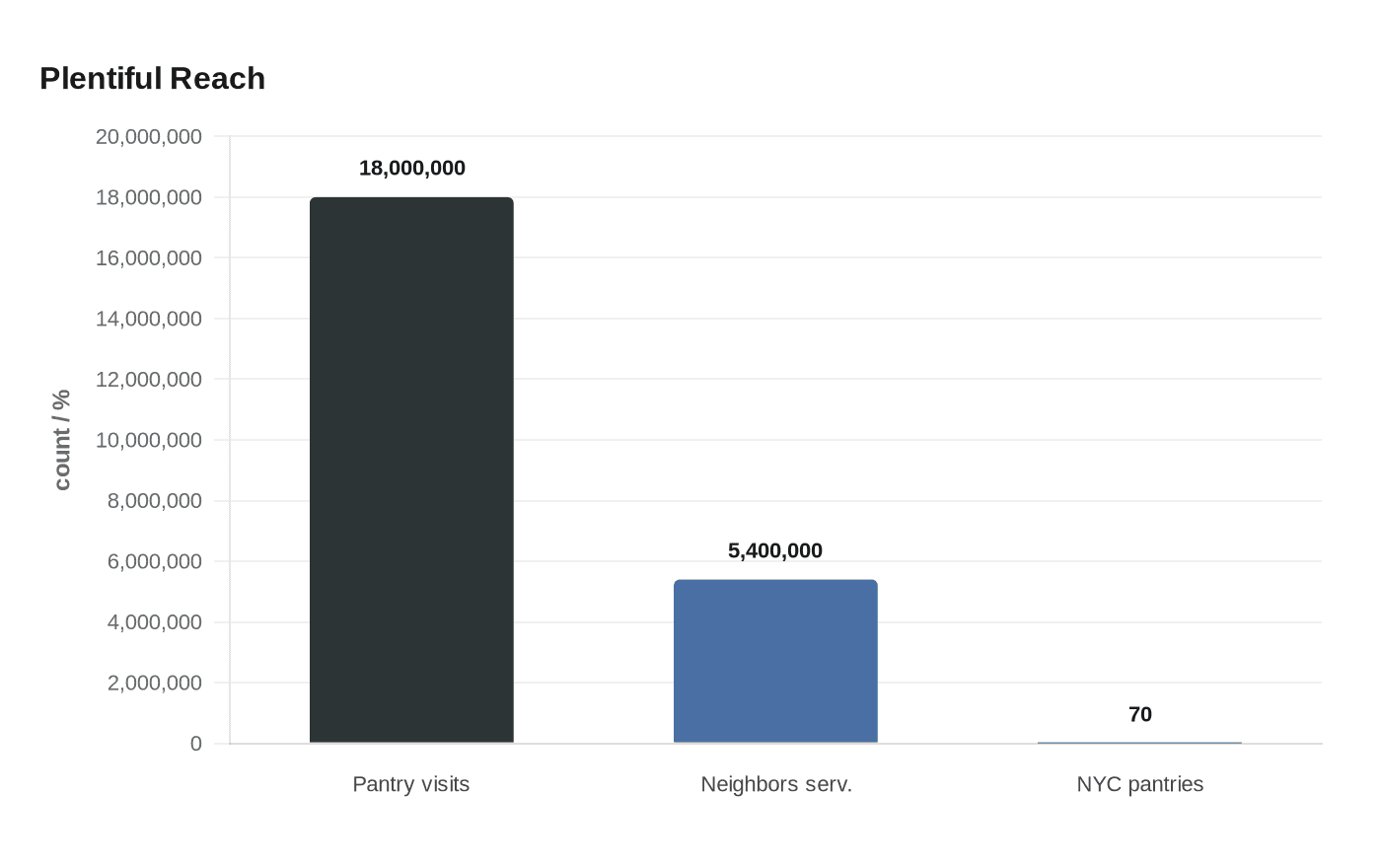
Plentiful says it has facilitated more than 18 million pantry visits, served more than 5.4 million neighbors, and connected 70 percent of food pantries in New York City. It also says wait times have fallen by 88 percent in New York City, a reminder that software can change the flow of a pantry line, not just digitize it. For a workplace like A Simple Gesture, which relies on volunteer donors, volunteer drivers, and pantry partners across Guilford County, that matters because every smoother handoff saves staff time and neighbor time at once.
What the shared infrastructure actually does
The most useful thing about Plentiful is not a vague promise of digital modernization. It is the specific operational work it handles for pantry staff. The platform is free for neighbors and pantries, available in nine languages, and can be accessed by SMS, WhatsApp, iOS, Android, or web. That combination matters because pantry access is often fragmented across tech comfort levels, language barriers, and changing schedules.
For providers, Plentiful offers digital check-ins, multilingual messaging, pre-registration, reservations, and impact reporting. In plain terms, it reduces the amount of paper, phone tag, and line management staff have to do manually. Plentiful’s product director, Bryan Moran, has said about one-third of providers using the platform now offer reservations, and that many have seen wait times drop from hours to minutes. Another report quoted a New York City adoption lead saying client wait times fell from at least 30 minutes to 4 minutes. That is the operational promise A Simple Gesture staff would care about most: less time spent managing congestion, more time spent moving food.
What changes for neighbors
The neighbor experience changes in a few concrete ways when a pantry network shares software instead of relying on isolated sign-up systems. Reservations make arrival more predictable. Digital check-ins reduce the need to stand in line while staff manually verify names. Multilingual messaging makes it easier to confirm details without adding a layer of confusion for households already navigating food insecurity.
That predictability also affects dignity. Pantry access can be stigmatizing, and uncertainty is part of what makes it hard. A system that confirms timing, reduces crowding, and gives real-time updates turns a chaotic trip into a more manageable one. Plentiful’s own materials frame that as an access issue as much as a resource issue, and that framing fits A Simple Gesture’s world, where the problem is not just how much food exists, but how efficiently it gets to people through pantry partners.
Why A Simple Gesture is a good test case
A Simple Gesture Greensboro was founded in 2015 and says it partners with dozens of local food pantries in Guilford County. It also describes itself as a near-zero-cost program, and says a one-dollar donation converts to more than $30 of food going to food banks and pantries. That kind of operating model depends on precision. If volunteer routes slip, if a pantry gets overwhelmed, or if a delivery lands at the wrong time, the margin disappears quickly.
Its food recovery program shows why software coordination matters. Volunteers need a smartphone and a personal car for weekday pickups and deliveries, which means the organization is already running on a distributed logistics network. Route changes, pickup windows, and last-minute substitutions are exactly the kinds of moving parts shared software can tame. For a team like A Simple Gesture’s, the question is not whether it needs more technology. It is whether that technology reduces duplicate trips, cuts idle time, and helps staff see demand before it spills into longer lines or missed pickups.
The demand signal is already there
The need in Guilford County is large enough that better coordination could have real consequences. Feeding America estimated 82,510 food-insecure people in Guilford County in 2023, a 15.2 percent food insecurity rate. North Carolina Cooperative Extension repeated that same figure in 2026. United Way of Greater Greensboro’s February 2026 poverty quick facts added another warning sign, saying 35.7 percent of community residents in Guilford County were food insecure in 2025.
That level of need matters because pantry systems do not fail only when they run out of food. They also fail when demand arrives unevenly, when one pantry gets slammed while another sits underused, or when volunteers make unnecessary trips because no one can see the whole picture. Shared infrastructure can help the network behave more like a system and less like a set of disconnected sites.
What it takes for another network to adopt the model
The Plentiful model is not plug-and-play in the sense of “install software and walk away.” It works because several conditions are in place. First, pantry partners have to agree to share operational data, including reservations, check-ins, multilingual messages, and reporting. Second, staff need a way to update schedules fast enough that neighbors can trust the information. Third, the network needs enough consistency across sites that a shared tool can create order instead of just exporting confusion.
There is also a scale requirement. Plentiful was launched in 2017 by the New York City Food Assistance Collaborative, which was convened in 2015 by the Helmsley Charitable Trust together with the New York City Mayor’s Office of Food Policy, City Harvest, United Way of New York City, the New York City Human Resources Administration, and New York State’s Hunger Prevention and Nutrition Assistance Program. Helmsley has said the platform has been adopted by 235 pantries, enabled 1 million client visits, and served more than 250,000 unique clients since launch. That history suggests a successful rollout depends on trusted conveners, local buy-in, and a clear operational pain point, not just software enthusiasm.
For A Simple Gesture and similar food-recovery groups, the lesson is straightforward. Shared software works when it lowers friction for volunteers, gives pantry partners clearer visibility into demand, and makes the neighbor experience more predictable. The best systems do not just manage a line. They prevent the line from forming in the wrong place in the first place.
This article was produced by Prism’s automated news system from verified source data, official records, and press releases, then run through automated quality and moderation checks before publishing. The system is built and supervised by the people who set the standards it runs under. Read our full AI policy.
Did this article answer your question?