A Simple Gesture shows nonprofits how to build donor pipelines
A Simple Gesture’s growth lesson is operational: protect donors, simplify onboarding, and repeat the pickup enough times that food keeps moving and risk stays low.
Donor pipelines are the real supply chain
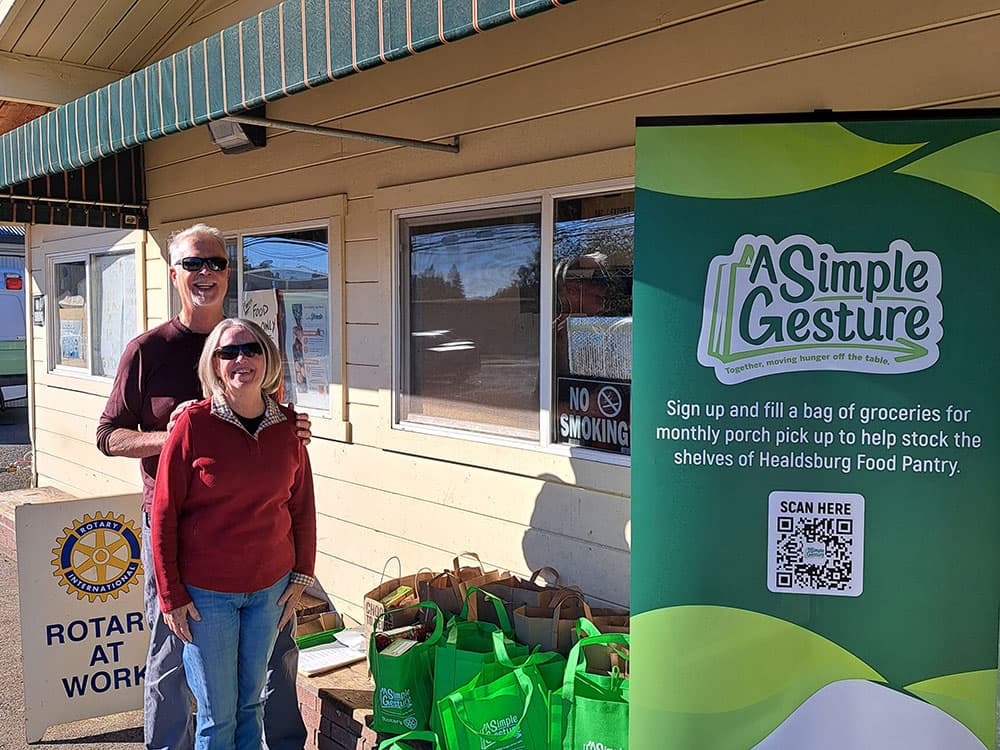
The hardest part of food rescue is not the bag at the curb. It is the system that convinces a donor to keep filling it, keep trusting the process, and keep handing over surplus food again and again. A Simple Gesture’s model shows that doorstep collections only scale when donor onboarding, liability protection, and pickup discipline work together.

That is why the most transferable lesson in the Food Rescue Hero training material is not about enthusiasm, but about execution. Successful food rescue starts by understanding the donor’s why, then removing as much friction as possible from every step after that.
Start with the donor’s why, then make the path obvious
The training material treats donor motivation as an operational input, not a soft-skill extra. Some donors care about community impact, others are focused on sustainability, and still others want to advance internal ESG goals. If a nonprofit understands which of those motives is driving the relationship, it can shape the ask, the follow-up, and the language around the partnership.
That matters for A Simple Gesture because recurring neighborhood pickups depend on repeat behavior. A donor who understands exactly why the program exists, exactly how the food will move, and exactly who is responsible for the next step is far more likely to stay in the pipeline. The same logic applies when coordinators are trying to recruit volunteers and keep routes full: clarity lowers the chance that either side drops out.
The deck’s advice is simple but hard to overstate. Start small, keep the process easy, and build around the donor’s schedule instead of forcing the donor to fit the nonprofit’s internal convenience.
Liability protection is part of the pitch
For many donors, the biggest obstacle is not generosity. It is worry. The Bill Emerson Good Samaritan Food Donation Act, enacted in 1996, gives federal liability protection to donors and nonprofits under certain conditions, which is exactly the kind of reassurance a food recovery program needs when it asks a business or institution to donate excess food on a regular basis.
USDA’s current FAQ says those protections incorporate amendments passed on January 5, 2023, under Public Law 117-362. That update matters because it reinforces the legal framework around good-faith donations of apparently wholesome food, including the limited liability protection available to people and organizations that feed the hungry through nonprofits.
For coordinators, the takeaway is practical: liability language is not a back-office detail. It is part of donor onboarding. When a potential partner understands the protection clearly, the conversation shifts from hypothetical risk to concrete process, and that is often the point where a stalled donor becomes a recurring one.
Build the operating system before the route expands
The Food Rescue Hero guidance is strongest when it gets specific about logistics. It recommends clear food safety and packaging guidelines, memorandums of understanding, contact cards that tell donors exactly who to call, and pickup schedules that can flex when a business needs a change. Those are not administrative niceties. They are the rules that keep the system from breaking the first time a route changes or a staff member leaves.
The training also makes an important cultural point: rescues should be collaborative, not competitive, when another organization is already serving a donor. That approach protects relationships and avoids confusing the donor with competing asks. For a chapter-based model like A Simple Gesture, that kind of coordination is especially valuable because the network depends on consistency more than one-off wins.
A simple operating checklist emerges from the guidance:
- identify the donor’s internal champion and keep that relationship warm
- spell out food safety and packaging standards in plain language
- use a memorandum of understanding so responsibilities are explicit
- give donors a direct contact card for scheduling and problems
- make pickup timing flexible enough to survive real workplace calendars
- maintain communication even after the first successful pickup
That last point is critical. The deck notes that turnover among food donors can be high, so the relationship cannot be treated like a completed sale. It has to be maintained continuously, especially when the person who first said yes is no longer the person running the account.
Why internal champions matter so much
The material’s focus on internal champions is especially useful for chapter-based food recovery. In a company, school, or institution, one highly motivated employee often keeps the entire process alive through staff turnover, schedule changes, and competing priorities. When that person leaves, the donor relationship can disappear unless the nonprofit has already built a wider, more durable structure.
That is where strong onboarding becomes a retention tool. A donor who has been trained on the schedule, the packaging, the legal protections, and the point of contact is less dependent on one enthusiastic staff member. The partnership becomes easier to repeat, easier to hand off, and easier to defend inside the organization when budgets or staffing tighten.
For A Simple Gesture, that is the hidden logic behind donor growth. Better onboarding is not just about landing a donor. It is about making the donor resilient enough to survive change.
A Simple Gesture’s scale depends on low-friction repetition
A Simple Gesture describes itself as a near zero-cost program and says a one-dollar donation converts to more than $30 of food for food banks and pantries. That ratio explains why the organization’s chapter model has room to grow: the economics work only if the collections keep flowing and the system stays simple enough for volunteers and donors to repeat.
The Guilford County chapter says the program dates to 2011 and was established as a 501(c)(3) nonprofit in 2015. The organization’s history page says the team wants to add 900 new chapters by the end of 2035, with a goal of contributing 450 million pounds of food. Those are ambitious numbers, but they also show why donor pipelines matter more than slogans. A network that big will not scale on goodwill alone.
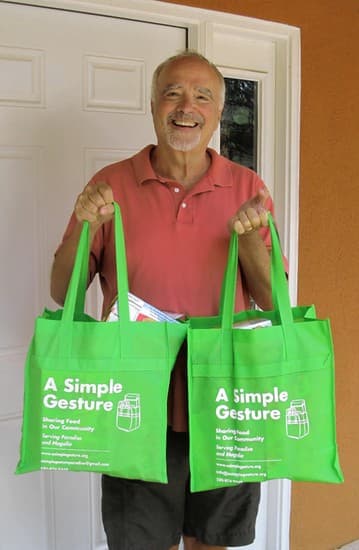
The local operating rhythm shows how the model works in practice. A Simple Gesture Reston says it is a bi-monthly, six-times-a-year collection program that provides non-perishable food to area pantries. Dulles South Food Pantry says its A Simple Gesture pickup runs five times per year. Those schedules are not just calendar notes. They are proof that the model depends on reliable cadence, predictable volunteers, and pantry partners who know what is coming next.
The founder’s workload shows the real cost of friction
Robert Schnapp has said A Simple Gesture Reston was needed because donors usually work weekday business hours while pantries often accept donations during the same hours. That mismatch is easy to overlook, but it is one of the main reasons doorstep food recovery exists at all. If donation depends on someone leaving work early or finding a pantry open at the right moment, the system loses people before it even begins.
Schnapp also said he spent more than 40 hours a week in the beginning doing everything from donor sign-ups and route creation to emails, deliveries, and sorting. That detail is the clearest reminder that donor pipelines are not abstract. They are built through labor, repetition, and a lot of unglamorous coordination before the model starts to feel stable.
The lesson for any chapter is straightforward. The donor relationship is the infrastructure. When nonprofits protect donors, simplify the process, and make every pickup easy to repeat, they build a system that can carry more food, reach more pantries, and reduce more risk over time.
This article was produced by Prism’s automated news system from verified source data, official records, and press releases, then run through automated quality and moderation checks before publishing. The system is built and supervised by the people who set the standards it runs under. Read our full AI policy.
Did this article answer your question?