A Simple Gesture streamlines food bank donations with reusable bags, pickup reminders
Porch pickup and reminder texts make giving easier, but the real value is the food bank’s exact item list, which turns a loose donation ask into a usable supply chain.
How the green-bag system removes the two biggest barriers to giving
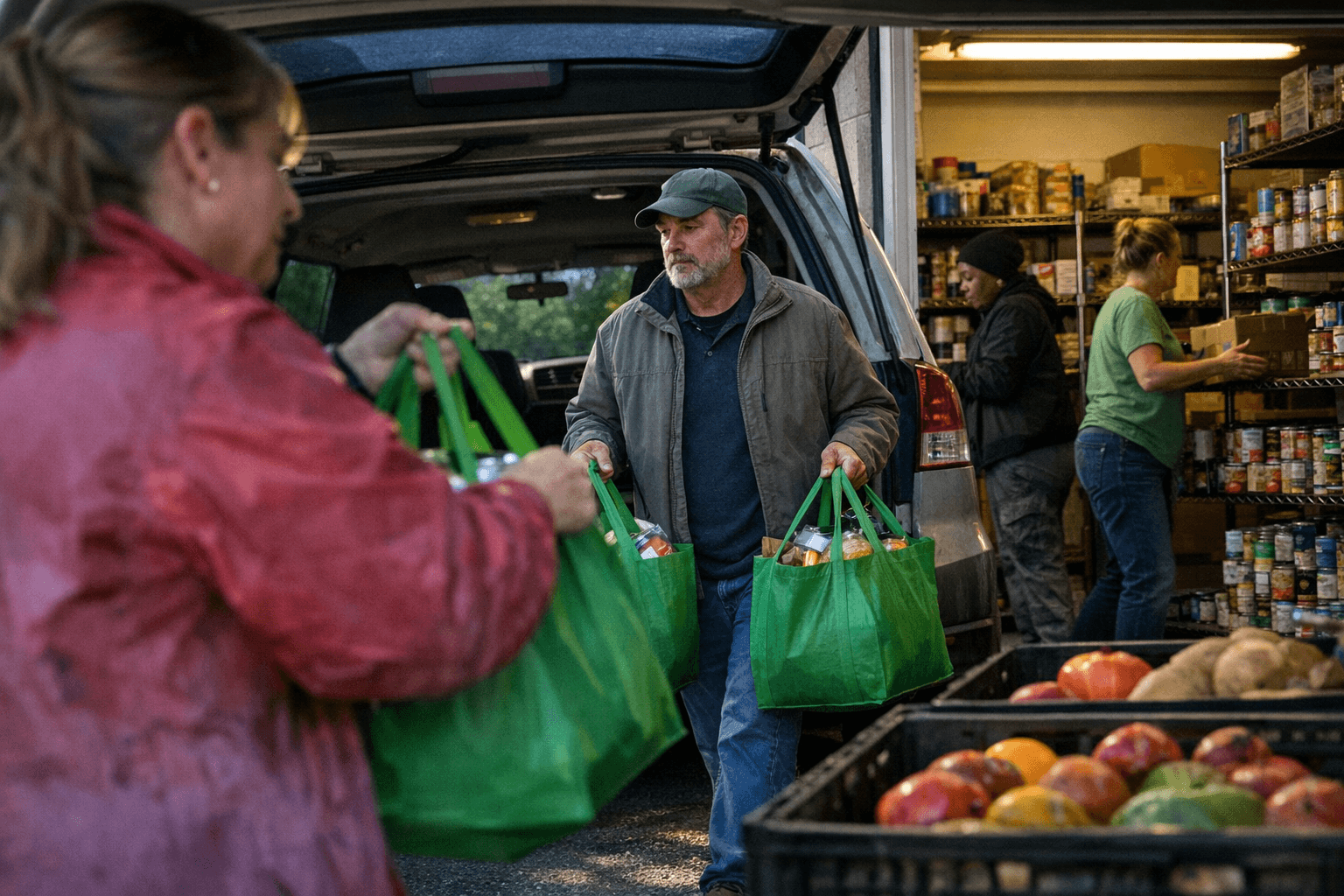
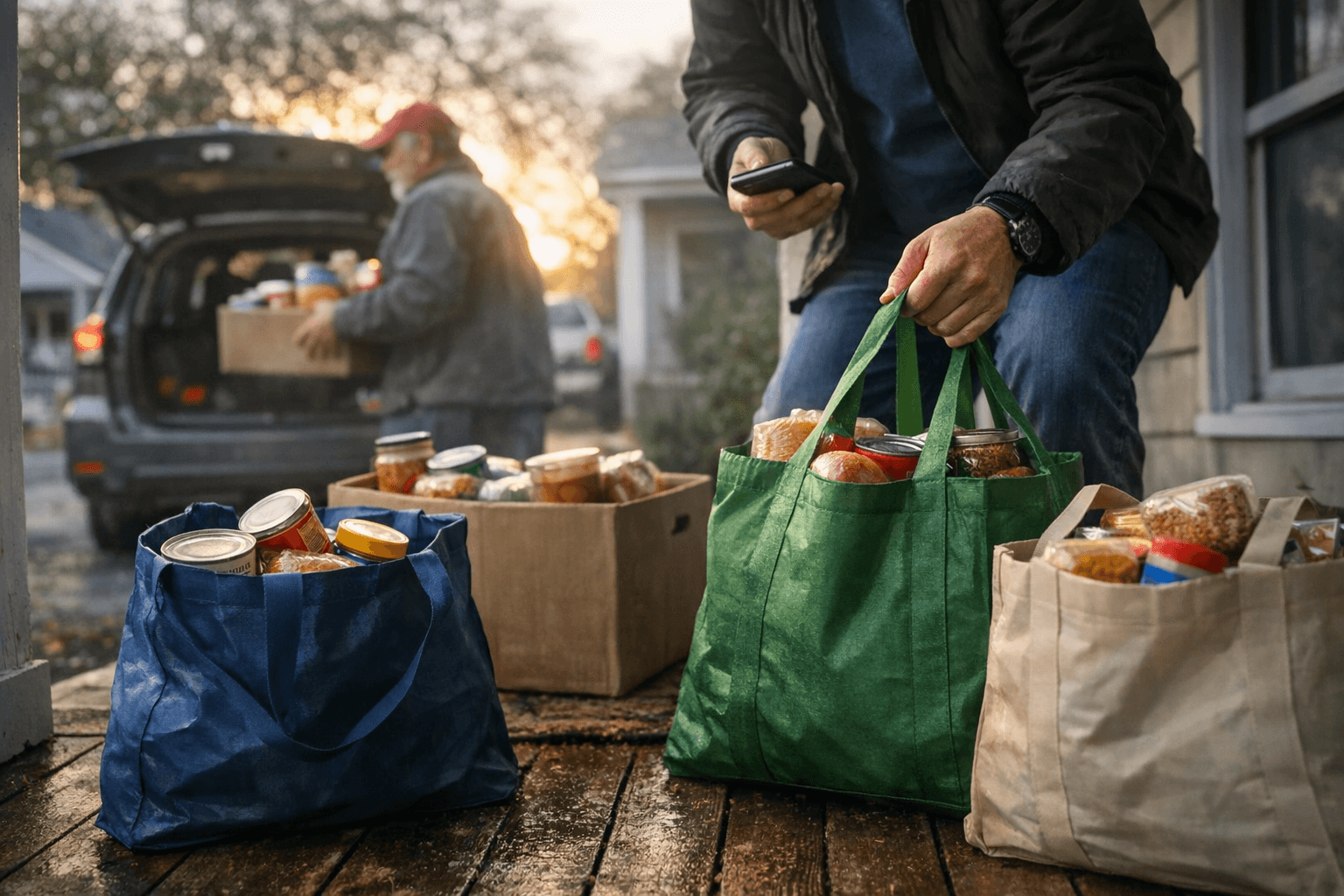
A Simple Gesture works because it takes the friction out of donating. Stanwood Camano Food Bank gives donors a reusable green bag, a pickup schedule, and a list of the items it needs most, then sends a text or email reminder when pickup is due. Donors fill the bag, leave it on the front porch, and a volunteer handles the rest.
That structure matters for Stanwood-Camano households because the hardest part of giving is usually not willingness, it is remembering and making the drop-off fit into a busy day. By turning the process into a repeatable routine every other month, the program reduces no-shows, keeps volunteer routes more efficient, and makes it easier for staff to predict what will come in.
What to put in the bag right now
The strongest part of the program is not just the convenience. It is the specificity. Stanwood Camano Food Bank is not asking for vague pantry donations. It is naming the exact foods and household basics that move fastest through a local food bank and fill the biggest gaps in family budgets.
Most-needed food items include:
- hearty soups and stews
- mac and cheese
- pasta
- pasta sauce
- canned beans
- low-sugar cereal or granola
- canned chicken or tuna
- canned fruit
- alternative milk
The non-food list is just as telling:
- toilet paper
- size 5 and 6 diapers
- baby wipes
- feminine hygiene items
That mix shows how a food recovery program becomes a household stability program. Families do not live on shelf-stable food alone, and the items that are hardest to buy at the grocery store are often the ones that cause the most strain when money is tight.
Why the request list matters for staff and volunteers
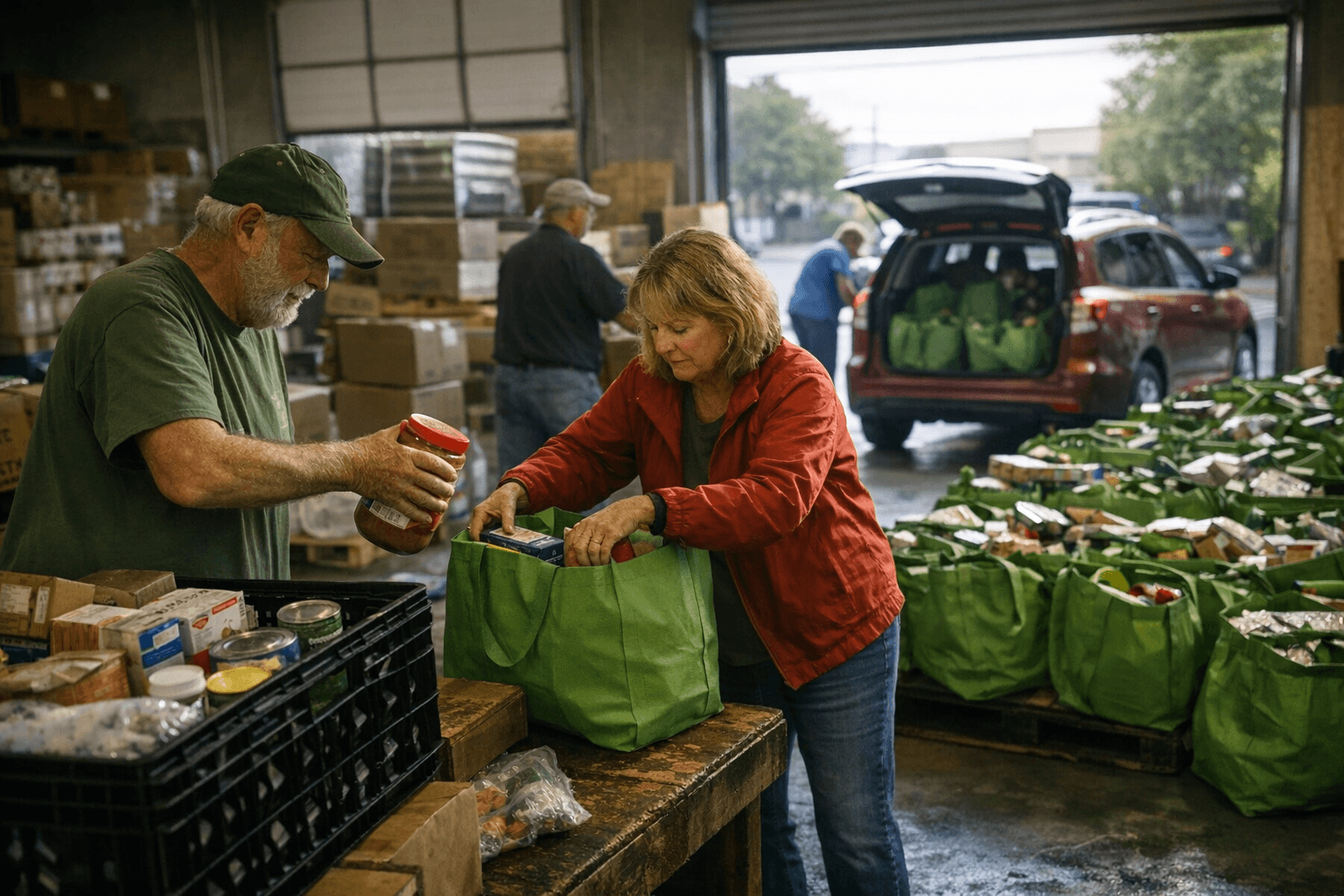
For staff, the green-bag model is more than a donor convenience. It is a logistics tool. When donors know what to pack before the pickup, the food bank gets a more predictable stream of category-specific items that are easier to sort, store, and distribute.
For volunteers, that predictability matters just as much. Porch pickup cuts down on confusion at the door, keeps routes cleaner, and lowers the odds that a bag sits uncollected because a household forgot the date. The reminder text or email may sound small, but in a volunteer operation it can be the difference between a smooth route and a wasted stop.
That is why this kind of communication works better than broad appeals. A simple ask, paired with a precise list and a clear pickup plan, helps donors act without needing to interpret the mission first.
How the donation system fits into the larger food bank operation
The A Simple Gesture program is one part of a much larger network at Stanwood Camano Food Bank. The organization says it serves more than 1,500 families per month and distributes over 1,000,000 pounds of food, supported by about 2,000 volunteer hours each month. That scale explains why a steady donor pipeline matters so much.
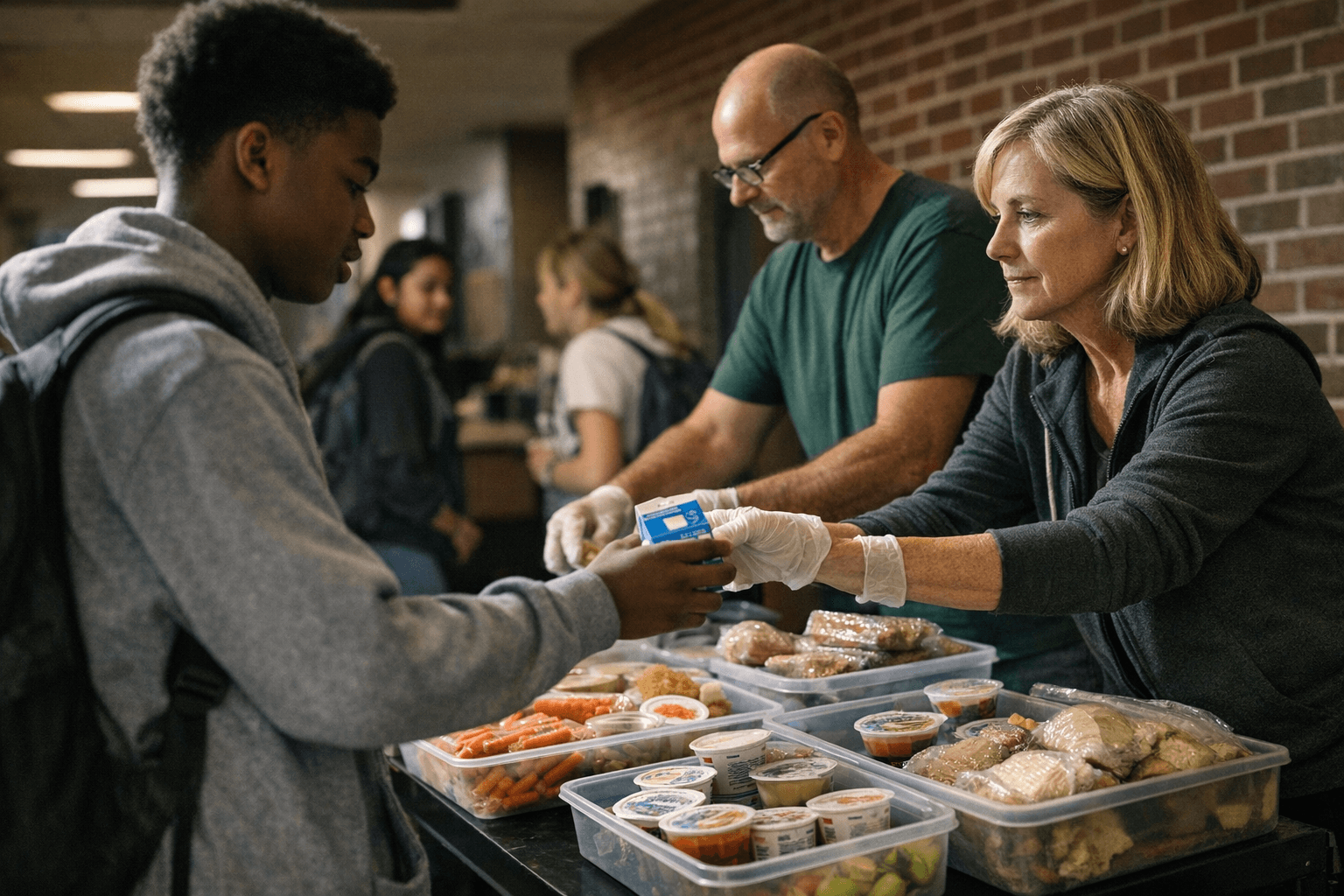
In-person distribution also runs on a tight schedule. The food bank is open for grocery-model food distribution on Wednesdays from 3 p.m. to 7 p.m. and Fridays from 11 a.m. to 3 p.m. Senior Serve is available on Thursdays from 11 a.m. to noon for people age 60 and older, and appointments are required. Households may shop once per calendar week, which makes consistency in incoming donations even more important.
The food bank also accepts non-perishable donations any time in a blue wooden bin outside the entrance. That gives local households more than one way to help, but the green-bag pickup system is the route that brings in the most structured donations with the least burden on the donor.
The community need behind the program
The scale of the ask makes more sense when you look at local food insecurity. Snohomish County Public Health says about 9% of county residents, or about 1 in 11 people, are food insecure. Feeding America’s 2025 Map the Meal Gap report, using 2023 data, reinforces that food insecurity remains a serious issue, especially for rural counties and children. Research from the University of Washington Food Systems, Nutrition, and Health Program found higher food insecurity among households with children, larger households, lower-income households, and respondents who are Black, American Indian/Alaskan Native, and multiracial.
That is the backdrop for why a porch-pickup program matters. It gives Stanwood-Camano households a way to contribute without needing a trip to the food bank, and it helps the organization keep pace with demand from families, seniors, and individuals who are already stretched thin.
A local system with deep roots
Stanwood Camano Food Bank did not appear overnight. Founder Jeanie Ovenell started the food bank in the 1970s, and the articles of incorporation were signed in October 1981, when it became official as Stanwood Camano Food Bank Services. A 2014 Food Lifeline profile said Ovenell began the work about 30 years earlier out of the trunk of her car.
That history matters because it shows how the current donation system grew out of a long habit of community improvisation. What used to depend on one person’s car trunk has become a more durable operation built around green bags, pickup reminders, and tightly defined needs. In a place where the pantry serves more than 1,500 families a month, that kind of operational clarity is not a branding detail. It is how the work keeps moving.
Know something we missed? Have a correction or additional information?
Submit a Tip