A Simple Gesture uses MealConnect and FreshTrak to improve food access
MealConnect and FreshTrak turn intake into routing, forecasting, and faster pickups. For A Simple Gesture, that means fewer misses, less waste, and clearer neighborhood coverage.
The real breakthrough is not the software, it is the handoff
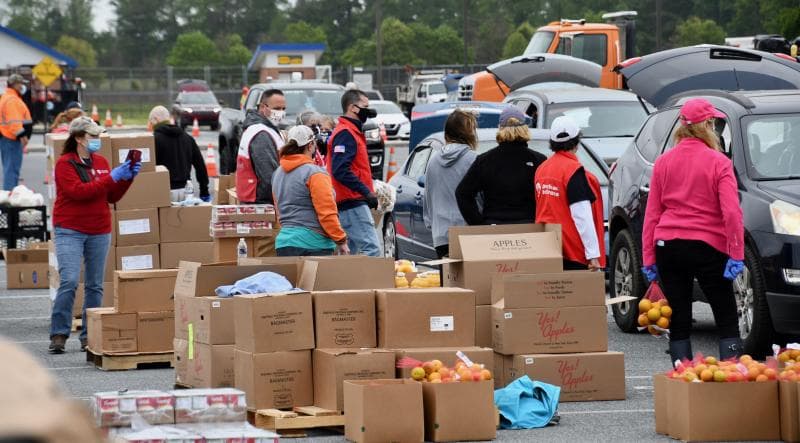
Food access gets easier when the front door and the back office are finally talking to each other. MealConnect’s Service Insights approach and FreshTrak both point to the same operational fix: capture neighbor information once, use it to plan service windows, and move food through the system with fewer gaps, duplicates, and wasted trips.

That matters for A Simple Gesture because its whole model depends on coordination at neighborhood scale. When door-to-door donation routes, pantry partners, and volunteer schedules line up cleanly, green bag pickups stop being a goodwill exercise and start functioning like a reliable distribution network. For staff and volunteers, the difference shows up in the small things that make or break a route: whether a donor is expected, whether a pantry can absorb a load, and whether extra food gets moved before it spoils.
Why MealConnect and FreshTrak work well together
FreshTrak describes its software as a way to streamline registration, plan service windows, and forecast needs. It also lets organizations register neighbors ahead of time or schedule pickup appointments where possible, so they can prepare for spikes in demand instead of reacting after the line forms. That front-end step matters because it creates a cleaner picture of who is coming, what they need, and when they can be served.
MealConnect’s Service Insights initiative is built around the same idea, but at network scale. Feeding America and partner food banks describe it as a way to electronically collect consistent client data across food banks and agencies. Some food banks also describe Service Insights on MealConnect as a free or no-cost neighbor intake tool, which lowers the barrier for organizations that need a better system without taking on another major technology expense.
For a nonprofit like A Simple Gesture, that combination is useful because it connects volunteer work to actual demand. A route is not just a list of houses; it is a data stream that can help a pantry partner know what is coming, help a coordinator know where the pressure is building, and help a volunteer team show up with the right cadence.
What large food banks have learned about coordination
The scale examples from San Antonio and Atlanta make the case plainly. San Antonio Food Bank says it works with more than 500 nonprofit organizations across a 29-county service area. Atlanta Community Food Bank says it supports a network of nearly 700 community-based partners across 29 counties, and in 2023 it announced that it had distributed its one billionth meal.
Those numbers are not just about size; they are about management load. Once a food bank is coordinating hundreds of agencies, the old methods of phone calls, paper forms, and disconnected spreadsheets stop being enough. Data becomes the organizing layer that keeps partners from duplicating effort, missing neighborhoods, or sending too much of one item to one site while another pantry runs short.
That is the lesson A Simple Gesture can borrow. Even at a more local scale, the same pressures show up in a different form: a donor forgets a pickup day, a volunteer route changes, or a pantry partner needs more than the week’s bag drop can handle. Better intake and better forecasting let a small team act like a larger one without losing the personal feel that makes doorstep giving work.
How the A Simple Gesture model fits this system
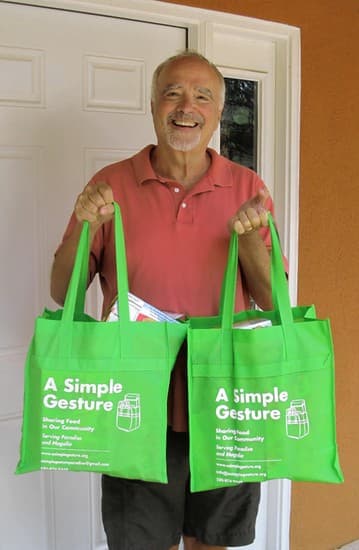
A Simple Gesture says it was started by Jonathan Trivers in Paradise, California, and its Guilford County chapter was established as a 501(c)(3) nonprofit in 2015. The organization’s basic promise is simple enough to fit on a doorstep: sign up, fill the green bag, leave it outside, and let volunteers pick it up and deliver it to local pantry partners.
But the operational reach is bigger than that simple ritual suggests. In Guilford County, A Simple Gesture says it works with more than 75 pantry partners, more than 3,900 recurring food donors, and about 200 monthly volunteers. As of December 2025, it says it had helped provide over 8,000,000 child-size meals and $13,000,000 in donated-food value.
Those figures explain why a tool set built around registration and service planning matters. When a program is juggling recurring donors, route-based pickups, pantry handoffs, corporate collections, and food recovery, every missed address or overloaded pickup window creates downstream waste. A digital intake layer helps staff see which neighborhoods are active, which donor groups are growing, and where volunteer shifts need to be reinforced.
Where the data saves time, food, and volunteer energy
- fewer missed pickups because donor information is captured ahead of time
- less duplication because agencies and routes are working from a shared intake picture
- less waste because food can be routed to the right partner before it sits too long
- better volunteer retention because schedules are clearer and route assignments are easier to manage
For volunteer coordinators, the practical value is straightforward:
That is especially important for A Simple Gesture because the organization does not rely on a single channel. It receives donations through Green Bag door-to-door pickups, corporate pickups, food recovery, and a school-based SHARE program. It also says its food recovery work matches businesses with vetted nonprofits, which means staff have to coordinate not just households but commercial donors and partner agencies with different timing needs.
The strongest systems do not treat those channels separately. They create one operating picture that helps route coordinators plan around real demand instead of guessing where help is needed.
Why workplace philanthropy should care about the back end
Corporate volunteering often gets judged by the visible moment, the team photo, the shift filled, the bags loaded. But in food recovery, the bigger win is what happens after that. If a company’s employee volunteers are feeding a system that can track intake, schedule pickups, and align with pantry partners, the gift is not just labor. It is predictability.
That is why the front end and back end of service design should be treated as one thing. A clean sign-up form, a smart pickup calendar, and a shared demand picture are not administrative extras; they are what make a neighborhood donation model durable. In a program like A Simple Gesture, where convenience and dignity both matter, the best distribution system is the one that makes it easy for families to give and easier for staff to deliver the food where it can do the most good.
The organizations that will move fastest are the ones that stop thinking of intake as paperwork and start treating it as infrastructure.
This article was produced by Prism’s automated news system from verified source data, official records, and press releases, then run through automated quality and moderation checks before publishing. The system is built and supervised by the people who set the standards it runs under. Read our full AI policy.
Did this article answer your question?