A Simple Gesture uses volunteer calendar to organize neighborhood pickups
A Simple Gesture’s calendar is the dispatch board for its green-bag pickups, turning volunteer sign-up into route coverage by color-coded neighborhood tags.

The calendar is the operation, not just the schedule
A Simple Gesture’s Volunteer and Events Calendar does more than list dates. It is the point where volunteer sign-up, neighborhood routing, and pantry deliveries come together, which is why a missed click can mean a missed pickup. For Green Bag volunteer drivers, the instruction is simple: click the date in the area they want to serve, then show up ready to cover that route.
That matters because the nonprofit is not running a loose, one-off donation drive. It is managing recurring doorstep pickups across Guilford County, and the calendar is how the organization keeps that system visible, organized, and accountable. The public can see when pickups are happening, and staff can use the same schedule to plan around volunteer availability, workload spikes, and route coverage.
How the route system is divided
The calendar organizes work through tag-based route groups, including green, white, orange, blue, and purple tags. Each tag is tied to a different neighborhood or schedule, which lets A Simple Gesture break a broad food-recovery network into smaller, manageable pieces without losing the local feel of the program.
That structure is especially useful across the geography the group serves. Current calendar coverage spans East Greensboro, West Greensboro, and the High Point area, showing that the organization is not treating food recovery as one citywide pickup bucket. It is using color-coded routes to match volunteer drivers to specific places and times, which makes the work more predictable for everyone involved.
The tag system also helps keep special pickups straight. Recent coverage notes purple-tag refugee-feeding pickups alongside the more familiar green-tag routes, a reminder that the calendar is serving multiple program streams at once. For coordinators, that means fewer mix-ups. For volunteers, it means the route is clearer before they leave home.
Why this matters for volunteers and staff
A volunteer base built around recurring service needs structure more than inspiration. Many drivers are balancing service with jobs, family responsibilities, and other nonprofit commitments, so a calendar that shows exactly when and where they are needed helps remove friction before it starts. If the pickup time, neighborhood, and tag are clear, volunteers are more likely to arrive prepared.
For staff, the calendar is a staffing tool as much as a public-facing page. It helps predict when route demand will rise, where a coverage gap might appear, and whether a given pickup cycle will need backup. In a nonprofit environment where logistics and mission delivery are tightly linked, that kind of visibility is not cosmetic. It is operational discipline.
The calendar also supports retention. Volunteers are less likely to drift away when the sign-up process feels organized and when the work fits into a routine they can follow. A Simple Gesture’s model makes scheduling part of the volunteer experience rather than a separate administrative chore, which is exactly the kind of practical design that keeps recurring programs alive.
How the calendar fits the broader food-recovery model
A Simple Gesture-Guilford County says it partners with dozens of local food pantries and operates three programs: Green Bag Food Donor, Food Recovery, and SHARE school refrigerators. That mix shows why the calendar has to do so much work. The organization is coordinating doorstep donations, recovered food, and school-based refrigeration support under one umbrella.
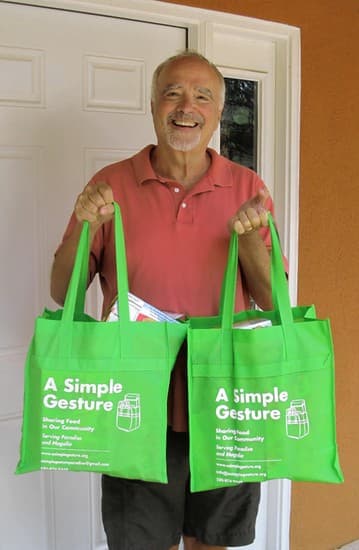
The group says volunteer drivers collect donated food from donors’ doorsteps and deliver it to food pantries, schools, and other nonprofits. That makes reliability essential. Donors need to know when to set out their green bags, pantry partners need confidence that food will arrive as expected, and staff need a system that translates community goodwill into usable inventory.
A third-party nonprofit profile describes A Simple Gesture-Greensboro as a grassroots food collection program dependent on volunteer donors and volunteer drivers. It also notes that the Green Bag program uses a designated Saturday of the month for porch pickup. That recurring cadence is exactly why the calendar matters: it links household behavior to a fixed operational rhythm.
What the organization’s footprint looks like
A Simple Gesture-Guilford County was established as a 501(c)(3) nonprofit in 2015, and the organization says its local history dates to 2011. That combination tells the story of a program that has moved from early local roots into a more formal nonprofit structure, with a service model that now spans multiple neighborhoods and partner sites.
Its public contact information lists PO Box 4426 in Greensboro and a physical address at 3503 Redington Drive in Greensboro. Those details matter in a practical sense because they point donors, volunteers, and partner organizations to the same local hub that supports the calendar, the routes, and the behind-the-scenes coordination.
The organization’s public materials also make clear that volunteers are not limited to driving. It invites help with bag sorting and folding, special projects, and signing up new donors. That broader volunteer menu reinforces the same point the calendar does: A Simple Gesture depends on a system of recurring, mundane tasks, not just periodic bursts of goodwill.
The scale behind the scheduling
Recent reporting said A Simple Gesture recovered more than 850,000 pounds of perishable food in 2025 through its Food Recovery Program, with an estimated value of about $1.64 million. Those numbers give the calendar real weight. Each date on the schedule represents not just a volunteer shift, but a piece of a larger supply chain that turns donated food into pantry inventory.
The organization’s impact pages emphasize measurable results in Guilford County, and recent coverage said the public calendar now uses five tag colors: blue, green, purple, white, and orange. That mix of tracking and scale shows a group that has outgrown a simple donation collection model. It is operating as a structured recovery network, with the calendar serving as its dispatch board.
Honda recently awarded a $50,000 grant to support the organization’s work, a signal that outside funders are treating the model as something worth sustaining. For a nonprofit built on volunteer coverage and pantry reliability, that kind of support matters because it helps underwrite the infrastructure that keeps the routes running.
What the calendar really signals
The biggest value of A Simple Gesture’s volunteer calendar is that it makes the mechanics of food recovery visible. It tells volunteers where they fit, tells staff what coverage looks like, and tells pantry partners that the timing of donations is being managed with care. In a field where missed pickups can ripple into empty shelves, that clarity is part of the mission.
A Simple Gesture is not simply asking people to help. It is organizing help by neighborhood, by color tag, and by date, so a doorstep donation system can function like a dependable local utility. That is what turns a volunteer calendar into an operations tool, and what makes the program easier to scale without losing the trust that keeps donors, drivers, and pantry partners coming back.
This article was produced by Prism’s automated news system from verified source data, official records, and press releases, then run through automated quality and moderation checks before publishing. The system is built and supervised by the people who set the standards it runs under. Read our full AI policy.
Did this article answer your question?