A Simple Gesture volunteers follow USDA food safety steps for donated food
Four USDA steps, clean, separate, cook and chill, are what keep a porch pickup from becoming a waste problem, a trust problem, or a risk.
Why the four-step rule matters on a rescue shift
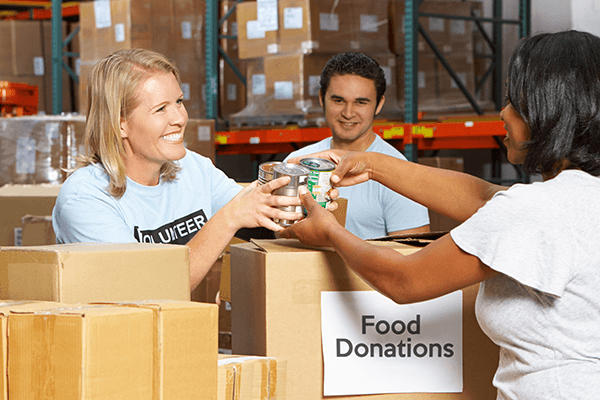
At A Simple Gesture, food safety is not an abstract policy. It is the difference between a useful donation and a load that has to be questioned, sorted again, or discarded before it reaches a pantry shelf. USDA’s Food Safety and Inspection Service reduces the job to four basic steps, clean, separate, cook, and chill, and that simple framework fits the reality of a green bag pickup just as well as a commercial kitchen.
The reason is scale. The Centers for Disease Control and Prevention estimates that 48 million people get sick from foodborne illness in the United States each year, with 128,000 hospitalizations and 3,000 deaths. CDC says norovirus causes the most foodborne illnesses, while Salmonella causes the most deaths among foodborne germs. Those numbers explain why a volunteer checking a package seal, a coordinator deciding where a bag sits during staging, or a staff member moving product into refrigeration is not doing clerical work. They are controlling risk at the point where food recovery either stays safe or starts to fail.
Clean comes first, because the shift starts with hands and surfaces
FSIS repeatedly stresses handwashing and safe handling as the first line of defense. In an A Simple Gesture pickup, that means volunteers and staff need clean hands before they touch donated food, clean bins or tables where bags are staged, and a checklist that does not assume “looks fine” equals safe. A torn package, sticky residue, or container that has been sitting in an uncontrolled space needs review, not a quick pass.
That matters in shared environments. The FSIS materials point readers to guidance for shared kitchens and other practical references on leftovers, refrigeration, and thermometer use, which is a reminder that nonprofit food recovery often happens in places with different equipment and training levels from one site to the next. A short, disciplined routine protects the organization from the kind of inconsistencies that can creep in during volunteer turnover, route changes, or busy distribution nights.
Separate is the rule that keeps a good donation from contaminating everything around it
“Separate” sounds simple, but it is one of the places where mistakes happen during sorting and packing. Donated food that is ready to eat should not be treated the same way as raw food, damaged packaging, or items with unclear storage histories. Once mixed together, a safe item can become a questionable one, and the whole batch may lose value.
For A Simple Gesture, that is a route-level issue as much as a warehouse issue. Bags collected at the door may sit in a car trunk, a staging area, or a community drop-off point before delivery to a pantry partner. Every handoff creates a chance for packages to get crushed, separated from labels, or stored beside food that needs a different temperature. A clean sorting system, with a clear food safety checklist at the center, keeps volunteers from making judgment calls in the moment.
Cook is less about the rescue line and more about knowing what belongs in it
FSIS includes cook as one of the four steps because unsafe temperatures are a major cause of foodborne illness. For a food recovery network, that means volunteers and coordinators need to know what kinds of donations belong in the program and what kinds need special handling or should not be passed along as routine shelf-stable product.
This is where the broader USDA guidance on perishable prepared foods becomes especially relevant. USDA says those donations often require refrigerated trucks, insulated coolers, bags or blankets, and prompt distribution. That is not a side note for a rescue operation. It is the operational standard for anything that can’t sit at room temperature without losing safety, especially when a pickup schedule stretches across multiple stops or a delivery waits for a pantry to open.
Chill is the rule that protects both the food and the network
FSIS says food should be kept out of the danger zone, the range between 40 F and 140 F, and its leftovers guidance says refrigerate promptly because leaving food out at an unsafe temperature is one of the main causes of foodborne illness. For A Simple Gesture, this is the most shift-sensitive part of the work. It is the point where a good pickup can turn into waste if a box, trunk, or staging shelf becomes a holding area instead of a bridge to cold storage.
That is why temperature control is not just a technical detail. It is part of the trust chain between donors, volunteers, and pantry partners. Donors leave food on the porch expecting it to be handled carefully. Partner pantries receive it expecting it to arrive usable. A consistent chill standard is what keeps that handoff credible.
What A Simple Gesture’s model asks of volunteers and staff
A Simple Gesture’s Guilford County Food Recovery program rescues edible food from businesses and delivers it to local nonprofits. Its SHARE school program places unopened, unwrapped food from school nutrition programs into refrigerators for students who need extra nutrition. Those two programs show why food safety has to be built into the operation itself, not bolted on after the fact. One moves product out of business settings, the other moves it into refrigeration for students, and both depend on timing, temperature, and careful sorting.
The organization says its Guilford County operation was established as a 501(c)(3) nonprofit in 2015 and follows a template established by Jonathan in 2011. It also says it partners with dozens of local food pantries. That network only works if each pickup, sort, and delivery follows the same basic logic: keep safe food separate, keep it cold when needed, and move it quickly to the next handoff.
Why the legal backdrop matters too
USDA says the Bill Emerson Good Samaritan Food Donation Act of 1996 was created to encourage donations to nonprofits feeding needy people and provides limited liability protection for good-faith donations. USDA also makes clear that the act does not override state or local health regulations. For a volunteer-heavy organization, that distinction matters because it helps explain why food safety rules are not optional even when a donation is made in good faith.
That legal structure supports the rescue model, but it does not replace judgment on the ground. A donation can be well-intentioned and still need to be rejected if the packaging is damaged, the temperature is wrong, or the handling history is unclear. The shift leader’s job is to protect the food, the people receiving it, and the organization’s reputation all at once.
The numbers show why the standard has to hold
A Simple Gesture says that as of December 2025 it had helped donate more than 8,000,000 child-size meals and more than $13,000,000 in food value, supported by 75+ pantry partners, 3,900+ recurring food donors, and 200 monthly volunteers. Those figures are more than a milestone; they are a warning that small mistakes can scale fast. A single weak pickup process can ripple through dozens of pantry partners, but a disciplined safety routine can protect an entire network.
USDA says donated wholesome food helps put food on the table and diverts waste from landfills. At A Simple Gesture, that promise only holds if volunteers treat clean, separate, cook, and chill as shift-level rules, not poster language. The operation succeeds when every bag, box, trunk, and refrigerator step reinforces the same standard: safe food stays usable, useful food reaches people, and the rescue system keeps its credibility.
This article was produced by Prism’s automated news system from verified source data, official records, and press releases, then run through automated quality and moderation checks before publishing. The system is built and supervised by the people who set the standards it runs under. Read our full AI policy.
Know something we missed? Have a correction or additional information?
Submit a Tip