A Simple Gesture’s doorstep model mirrors mobile pantry last-mile lessons
A Simple Gesture's doorstep pickups solve the same last-mile problem as mobile pantries: food only helps when routes, timing, and trust line up.
Last-mile food access is the real challenge
Food recovery systems do not fail because food is absent. They fail when the last mile is wrong, when a pantry is too far away, a pickup time misses a work schedule, or a site does not feel easy enough to use. That is why mobile pantries matter, and why A Simple Gesture’s doorstep model belongs in the same conversation: both are built around getting food to the place where daily life already happens.
Feeding America’s mobile pantry model shows how that works in practice. These distributions usually bring meat, fruits and vegetables, dairy, bread, ingredients for easy meals, and sometimes household basics like laundry detergent or soap. They tend to show up at churches, community centers, schools, shopping centers, and other convenient locations, especially in places without grocery stores or other food pantries. In other words, the model is not just about food volume. It is about making access feel possible.
That is the lesson for anyone coordinating a food recovery program. The right site is a strategic asset because it fits routine, not because it exists on paper. For a volunteer-led system, that means route density matters, parking matters, weather matters, signage matters, and the pickup window matters. If the timing or location creates friction, the food system may technically function while still failing the people it is meant to reach.
A Simple Gesture works because the doorstep is already part of the routine
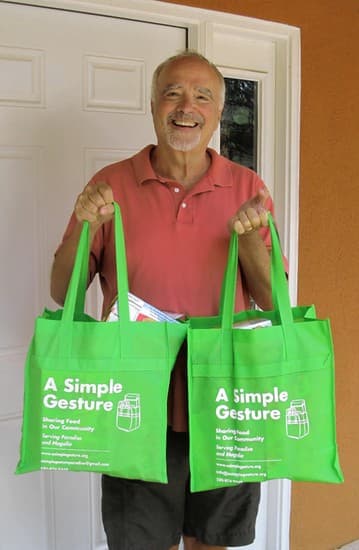
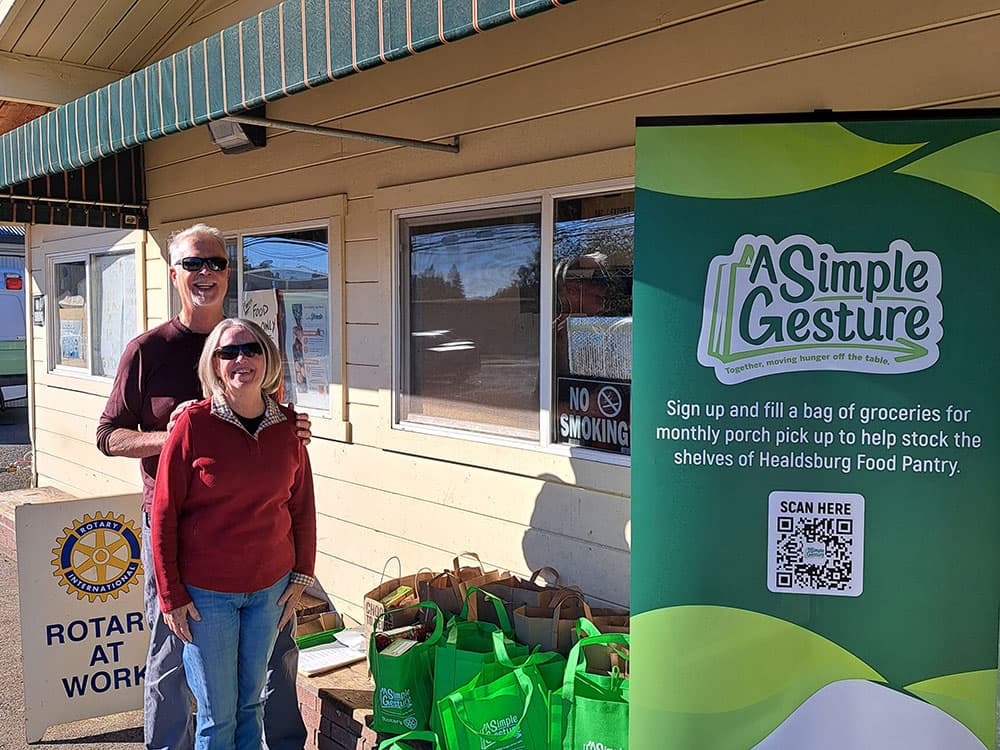
A Simple Gesture has made donating food easy since 2015 by building regular collection programs around doorstep pickups. Volunteer drivers collect donations right from the doorstep, which turns a private household routine into a predictable distribution channel. That design mirrors the mobile pantry idea in reverse: instead of asking people to travel to the food, the model makes the handoff happen where people already are.
The organization says founder Jonathan Trivers started the idea in Paradise, California, after concluding there was enough food in town to feed everyone but no easy way to get it to the people who needed it most. Paradise is a small town of about 35,000 people and roughly 14,000 households, and the model that grew there now includes more than 1,700 food donors and numerous volunteer drivers collecting over 132,000 pounds of food each year. That scale shows the value of consistency. Once a neighborhood learns when and how the program works, the system becomes easier to trust and easier to keep staffed.
That consistency is also a retention tool. Volunteers are not just hauling bags; they are keeping a schedule reliable enough that donors can build it into their week. When the pickup rhythm is steady, the program feels less like an occasional drive and more like a neighborhood service, which is exactly the kind of habit that keeps donor participation from fading.
The Guilford County operation adds recovery, school support, and family-facing reach
A Simple Gesture-Guilford County was established as a 501(c)(3) nonprofit in 2015, and its mission gives the organization a broader footprint than a single doorstep route. It says it aims to provide a sustainable supply of food to local food pantries, collect excess perishable food for local nonprofits and community meals, and support the SHARE program in Guilford County Schools. That mix matters because it connects household donations, business recovery, and school-based food access into one local network.
The Food Recovery Program is especially important for understanding the organization’s operational style. Rather than treating surplus food as a side project, the program rescues edible food from businesses and delivers it to local nonprofits. That puts grocery stores, restaurants, caterers, and corporate cafeterias into the same logistics picture as household donors, which expands the supply base while keeping food moving quickly to partners that can use it.
The school component shows how far last-mile thinking can stretch. A Simple Gesture says its SHARE refrigerators allow students to take unopened food from the school nutrition program during the day, which means access does not stop at the school door. The organization also says its Refugee Feeding Network helps local refugee children and families access wholesome, nutritious food. Together, those programs show a pattern: the work is not just about collecting pounds, it is about placing food where different communities can actually use it.
The broader field is measuring access differently now
The larger hunger-relief system is also shifting away from thinking only in terms of tonnage. Feeding America says its network includes more than 200 food banks, 22 statewide food bank associations, and 60,000 agency partners, food pantries, and meal programs. It also points people to mobile pantries, drive-thru pantries, SNAP application help, senior food programs, and food for kids as part of a broader access strategy.
That wider view lines up with a newer measurement approach developed with the Urban Institute. The Community Access framework focuses on community-level access, neighbor experience, and non-participant perceptions, and it does not treat pounds distributed as the core measure. For operators, that is a useful correction. A pantry can move a lot of food and still be hard to reach, hard to navigate, or hard to trust.
Recent economic pressure makes that point even sharper. Urban Institute research says household budgets have been strained and demand for charitable food has risen, while home delivery can improve access for people facing chronic health conditions, mobility limitations, or transportation barriers. That is why last-mile models keep expanding. They are not just more convenient. They are often the only workable option for people whose lives do not fit a fixed-site schedule.
What coordinators and volunteers should watch
For A Simple Gesture and similar food recovery groups, the operational questions are practical ones:
- Does the route reach the right neighborhoods with enough density to justify the time and fuel?
- Are pickup windows set so donors can count on them?
- Do signs, instructions, and curbside cues make the handoff effortless?
- Are partner pantries and recovery sites placed where people already go, not where they have to make an extra trip?
- Can the model adapt when weather, parking, or a temporary spike in need changes the day?
These are the same questions mobile pantry operators answer every week. The difference is that a doorstep model asks households to become part of the logistics network, while a mobile pantry asks a neighborhood site to do the same. In both cases, the food only works when the system is built around people’s routines instead of around institutional convenience.
That is the real overlap between mobile pantries and A Simple Gesture’s model. Both are last-mile systems trying to make food access feel ordinary, reliable, and dignified. In a field where access is increasingly judged by experience as much as output, that is where the strongest programs will keep winning.
This article was produced by Prism’s automated news system from verified source data, official records, and press releases, then run through automated quality and moderation checks before publishing. The system is built and supervised by the people who set the standards it runs under. Read our full AI policy.
Did this article answer your question?