A Simple Gesture’s green bag model fits food drive modernization push
A Simple Gesture’s green bag system already has the mechanics modern food drives need. Recurring pickups, pantry partnerships, and volunteer routes turn neighborhood giving into dependable supply.
Why the green bag model fits the modernization push
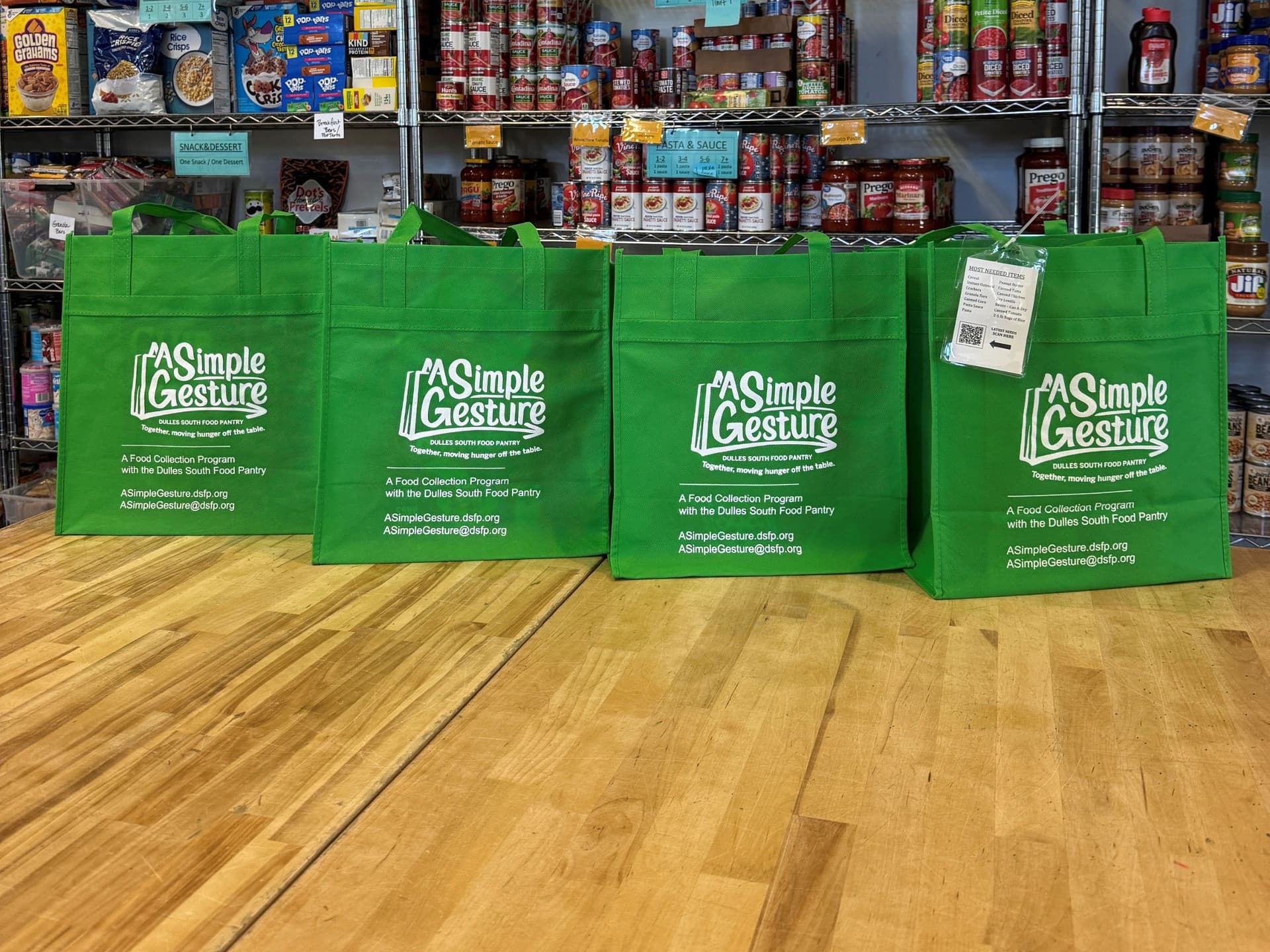
A Simple Gesture’s green bag program already behaves like the kind of food drive the sector is trying to build. It is recurring, route-based, and tied to pantry demand, which means the donation stream is not left to chance or one-off event energy.
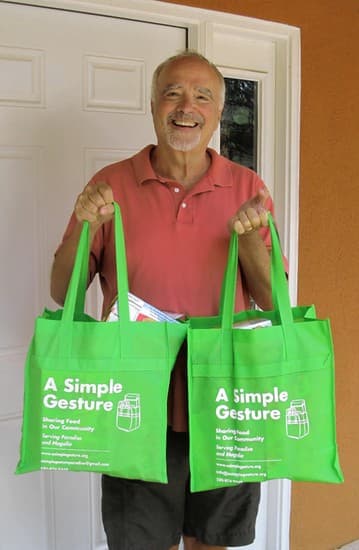
That matters because Food Bank News frames food drives as a system, not a nostalgia project. Its resource hub treats them as a flexible engagement channel that can still be modernized through healthier items, better quality control, and stronger virtual donation platforms. For A Simple Gesture, that is not a theoretical fit. The organization’s core promise is built around making donations easy and convenient through door-to-door pickups, corporate pickups, and timely food recovery pickups.
What the hub is really asking food drives to do
The practical lesson from the hub is that a drive works best when it is designed around usable product and simple logistics. It points to summer cereal drives, grassroots legal-community campaigns, and broader neighborhood efforts like City Harvest’s use of food drives to engage everyday New Yorkers. The common thread is not just generosity, but a collection model that can be repeated, explained clearly, and managed without creating extra sorting burden.
That is especially relevant for staff and volunteers who are trying to keep food flowing into pantries without wasting time on donations that are hard to sort, poor in nutritional value, or mismatched with what partner agencies can use. The hub’s emphasis on healthier items and quality control lines up with the reality on the ground: a food drive is more valuable when it produces reliable inventory, not just volume. In that sense, the modernization push is less about replacing drives than about tightening them.
How A Simple Gesture’s operation already works like a modern drive
A Simple Gesture-Guilford County gives the model a concrete operational base. The organization says it partners with dozens of local food pantries, and its Green Bag Program offers monthly or bi-monthly pickups. That cadence matters because it creates a regular collection rhythm for donors and a predictable intake pattern for the people who have to move, sort, and distribute the food.
The group says its Guilford County operation was established as a 501(c)(3) nonprofit in 2015, while the underlying model dates to 2011 and was founded in Paradise, California by Jonathan and Karen Trivers. Jonathan Trivers still spends time helping communities establish the program elsewhere, with the hope that hundreds of towns will adopt the template. For staff, that is a sign that the model is meant to travel: it is a system built for repeat use, not a one-time campaign.
The scale behind the neighborhood pickup idea
The numbers show why this model has weight. As of December 2025, A Simple Gesture says it had delivered more than 8,000,000 child-size meals and about $13,000,000 in donated-food value across Guilford County. It also lists 75-plus pantry partners, 3,900-plus recurring food donors, and 200 monthly volunteers.
Those figures tell a story about workflow as much as mission. A strong donor base and a broad pantry network can only function if pickups are coordinated, bags are handled consistently, and the volunteer pool is stable enough to cover route needs. In a workplace setting, that means the green bag model is not just fundraising language, it is an operations plan that depends on scheduling, route discipline, and follow-through.
Why local hunger data makes the logistics matter more
The case for a modernized, neighborhood-based system gets stronger when you look at need in Guilford County. Feeding America estimated that 82,510 people in the county were food insecure in 2023, with a food insecurity rate of 15.2 percent. It also estimated an annual food budget shortfall of $57.703 million.
Nationally, the same study said 47 million people, including 14 million children, experienced food insecurity in 2023. It found that nearly 20 percent of children nationally were food insecure. Those numbers help explain why a recurring collection system can still matter in a county like Guilford, where the need is substantial and the delivery network has to be dependable, not opportunistic.
What City Harvest shows about modern drive design
City Harvest offers a useful example of how food-drive modernization can work when the mechanics are simple and visible. Its virtual food-drive materials say a $25 donation helps feed 32 families for a day. Its virtual-drive page also gives organizers a straightforward structure: create a webpage, set a fundraising goal, and share it with friends, family, and co-workers.
Food Bank News says City Harvest’s #GiveHealthy platform has already produced more than 150,000 pounds of healthy food donations and more than 50 new support organizations. That is the kind of result A Simple Gesture staff can study closely because it shows how a campaign can widen participation without losing the logistics focus. The lesson is not to copy the exact platform, but to borrow the principle: easier participation, clearer goals, and a visible path from donor action to pantry supply.
Where volunteer recruitment fits the operating model
A Simple Gesture’s volunteer page shows that the work is broader than driving green bags to the right places. It recruits volunteer drivers for Green Bags and food recovery programs, and it also needs help with bag sorting, folding, special projects, and donor sign-ups. That mix is important because a modern food drive only works if the collection side and the processing side are both covered.
For coordinators, this is the central management challenge. If the campaign produces more bags than the team can sort, the drive becomes a burden instead of a benefit. If volunteer drivers are thin, pickup routes get harder to keep on schedule. If donor sign-ups lag, the recurring system loses momentum. The operational value of the green bag model is that it gives staff multiple entry points for participation, so recruitment can be matched to the specific task that needs help.
How to think about the next version of a green bag drive
The most useful takeaway from the hub is that campaign design changes the quality of what comes in. A one-day collection, a seasonal neighborhood event, and a long-running digital campaign each demand different instructions, different volunteer coverage, and different follow-up. For A Simple Gesture, that means the green bag program already sits on the right foundation, but the modernization push is about sharpening how the model is explained and managed.
- Keep pickup schedules simple enough for donors to remember and for drivers to follow.
- Favor food lists and campaign prompts that steer households toward healthy, usable items.
- Pair physical collections with online giving options when a drive needs broader reach.
- Use pantry partner feedback to shape what gets collected, so donations reflect real demand.
- Treat volunteer routing, sorting, and donor sign-up work as part of the same system, not separate chores.
That points to a few practical habits that fit the nonprofit’s work:
A Simple Gesture’s strength is that it already blends community identity with logistics. In a food-drive environment that is moving toward better quality control, virtual giving tools, and more intentional collection design, that combination gives the organization a practical advantage. The green bag model does not just fit the modernization push, it shows how a neighborhood drive can become a reliable recovery system.
This article was produced by Prism’s automated news system from verified source data, official records, and press releases, then run through automated quality and moderation checks before publishing. The system is built and supervised by the people who set the standards it runs under. Read our full AI policy.
Did this article answer your question?