Aerial and ground drones deliver food boxes in Arlington pilot
Arlington moved more than 300 grocery boxes with air and ground drones, testing whether autonomous delivery could cut emissions and reach homes with limited transportation.
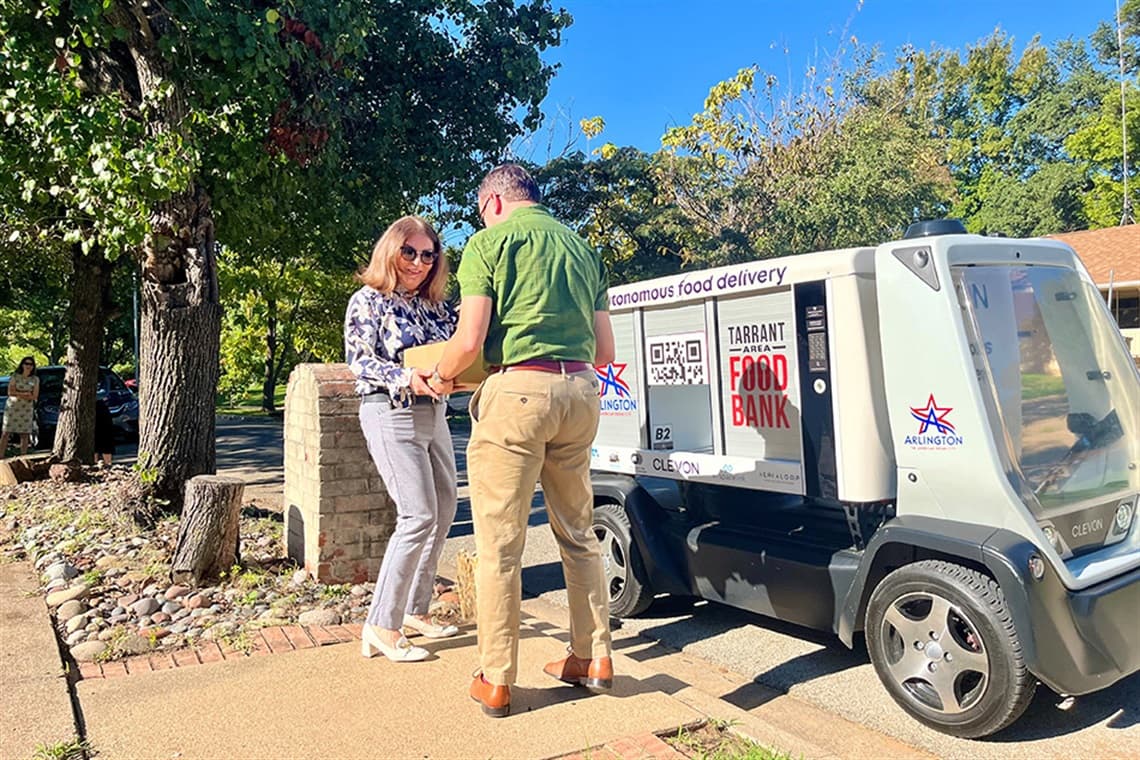
More than 300 grocery boxes moved through an Arlington pilot that paired a 6-foot aerial drone with a ground robot, testing whether autonomous delivery could serve last-mile food needs while trimming emissions. The boxes contained rice, beans and canned goods, and recipients got text messages before curbside pickup.
The Multimodal Delivery Project ran from October 2023 through 2025 with a $780,182 U.S. Department of Energy grant. The City of Arlington worked with Tarrant Area Food Bank, the University of Texas at Arlington, the North Central Texas Council of Governments, the Dallas-Fort Worth Clean Cities Coalition, Airspace Link, Aerialoop, Clevon and Mozee. City materials said the first demonstration in September 2024 reached nearly 150 homes and packages in East Arlington and near UT Arlington, within an area bounded by Abram Street, State Highway 360, Pioneer Parkway and Collins Street. The final demonstration week, May 12-16, 2025, added another 150 boxes.
The air leg used Aerialoop’s ALT6-4 VTOL aircraft, a battery-powered drone described as 6 feet long and able to carry nearly 9 pounds. The ground leg used autonomous electric vehicles to handle the last mile, with Clevon appearing in earlier project descriptions and Mozee used in the 2025 phase. Boxes were assembled at the food bank’s distribution center, moved to a second staging area and then dispatched to households by the autonomous delivery system.
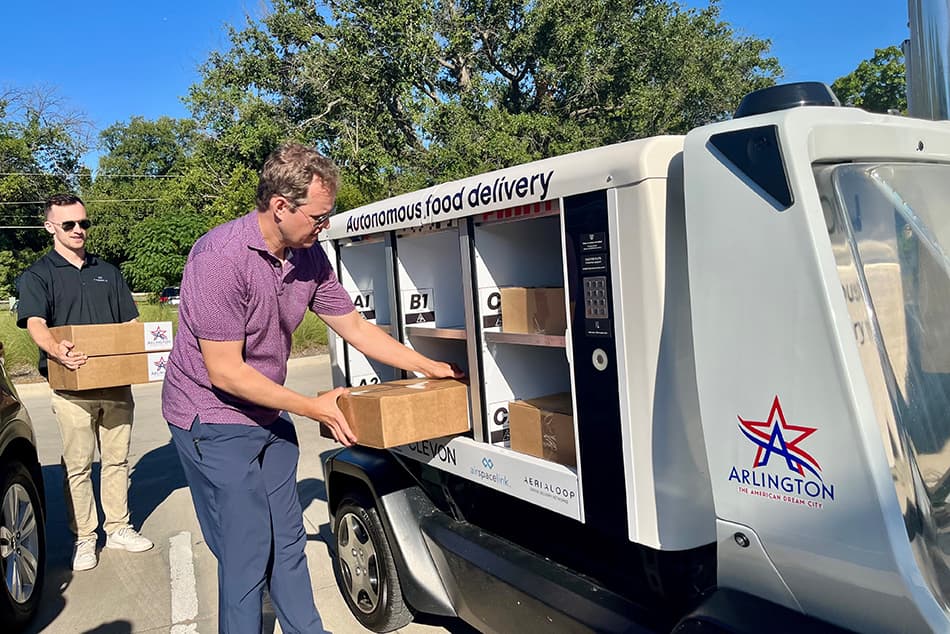
Arlington framed the pilot as more than a technology demo. Officials said they wanted to study air quality, energy efficiency and public attitudes toward electric and autonomous vehicles, while also serving residents who were mobility challenged, low income, historically disadvantaged or lacked reliable transportation. Ann Foss, the city’s planning and program manager, said the city was evaluating energy usage, cost-benefit and participant feedback, and most participants said they liked receiving groceries that way. Stephen Raeside, Tarrant Area Food Bank’s chief external affairs officer, said the organization moves one million nutritious meals every week and needed to explore tools that could ease that burden without sacrificing environmental goals.
For doorstep food recovery groups, the Arlington test case is less about drones than about the mechanics underneath them: packaging, handoffs, notifications, route control and the ability to serve households that cannot easily travel to a pantry. That is the same operational question facing any neighborhood distribution network that depends on volunteers, fixed pickup windows and strong pantry partnerships. Arlington’s answer was a measured one: when the system is designed around access and data, even a short pilot can show where new delivery tools fit, and where the hard work still belongs to people.
Know something we missed? Have a correction or additional information?
Submit a Tip