As leaders retire, food banks face succession and scaling challenges
Habash’s retirement is a test of whether Mid-Ohio Food Collective can keep its partner knowledge, funding, and service model intact as it scales Eastland and beyond.
What a 42-year departure really changes
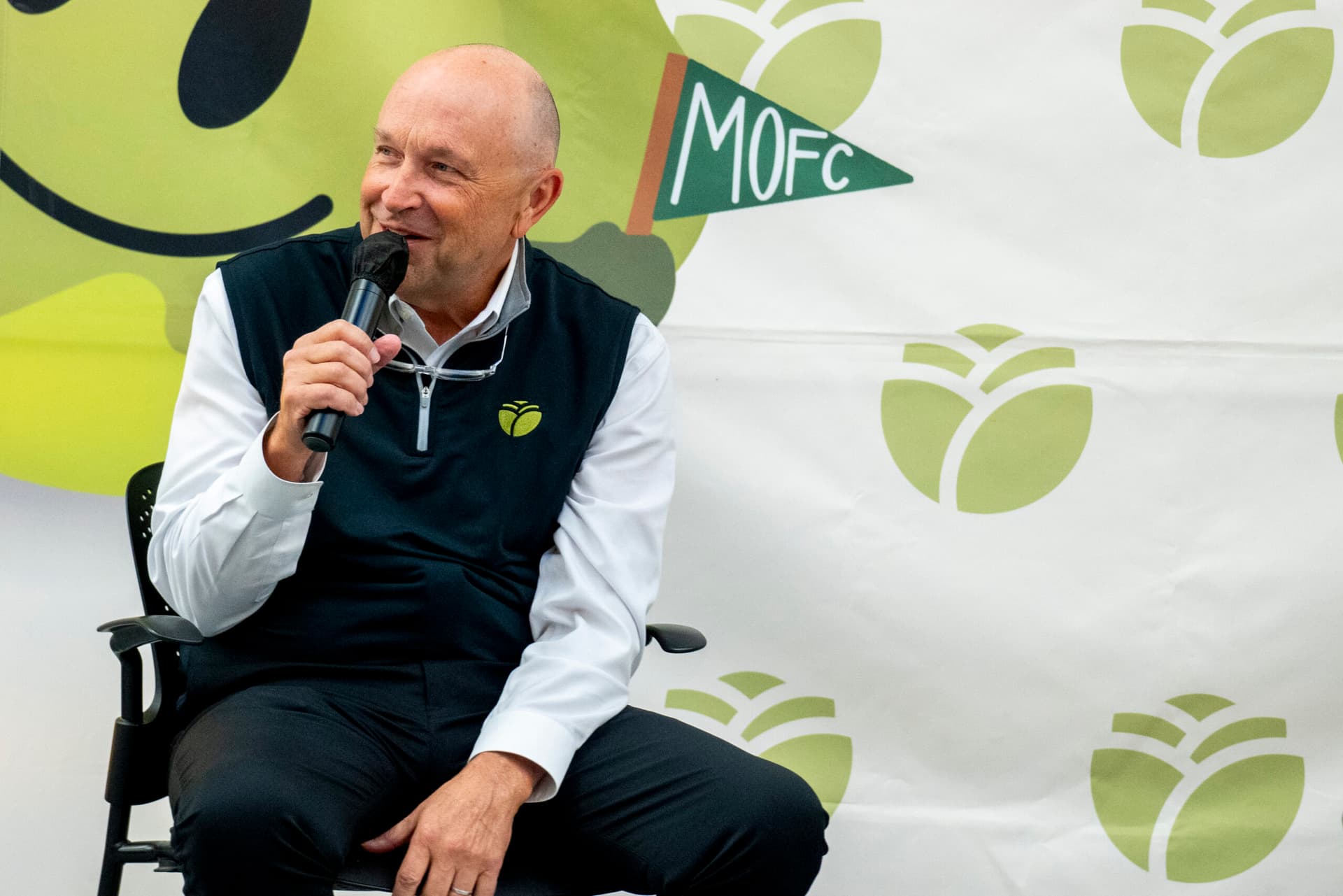
A retirement announcement can look like a milestone. Inside a food bank, it is often a systems check. Matt Habash’s plan to step down after 42 years at Mid-Ohio Food Collective is less a farewell than a reminder that hunger relief organizations depend on people who carry the hidden wiring of the operation: partner relationships, route logic, contingency plans, and the judgment that only comes from years of moving food through a complicated network.
That matters now because Mid-Ohio Food Collective is not shrinking into an orderly succession. It is still scaling. The organization says it serves more than 500,000 food-insecure Ohioans every year, and its 2024 impact report says central and eastern Ohioans came to the group for help more than 1.8 million times last year, a 57% jump from 2020. When demand is rising that quickly, losing a longtime leader is not just a personnel change. It is a test of whether the institution can keep operating at full speed without the person who has known every major partner, pivot, and pressure point.
Why Eastland makes the handoff more important
The clearest symbol of that test is the Eastland Prosperity Center, the 67,000-square-foot project planned for 4485 Refugee Road in southeast Columbus. The facility is meant to combine a free food market, a community health center, city services, and other supports under one roof. That design is more than a new building. It is an attempt to make food assistance feel less like a last resort and more like a normal part of a broader service system.
The timing is telling. Mid-Ohio Food Collective and the City of Columbus announced the Eastland partnership on October 23, 2024, and in May 2025 the organization said The Ohio State University College of Nursing would operate a health-care hub inside the facility. That hub is expected to occupy nearly one-fifth of the building. The project also secured $8.5 million in public funding with bipartisan support, which shows how much of the future model depends on public institutions staying aligned with the food bank’s ambitions.
For food-recovery groups, this is the real succession question: not whether one leader leaves, but whether a new leader can carry forward a strategy that now spans food distribution, community health, and civic partnership without losing operational discipline.
The hidden asset a veteran leader takes with them
Habash’s retirement is also a reminder that food banks run on institutional memory as much as inventory. In a network like Mid-Ohio’s, the most valuable knowledge is often the least visible: which partner pantry needs a delivery adjusted on short notice, which route can absorb a volunteer cancellation, which community site needs more time to build trust, and which contingency plan worked the last time fuel costs, weather, or staffing threw the schedule off.
That is exactly the kind of knowledge that matters to A Simple Gesture and other doorstep-donation programs. Green bag pickup programs look simple from the outside, but they only stay simple if someone is mapping volunteer recruitment, pickup timing, route coverage, pantry preferences, and backup plans in a way that survives staff turnover. If those details live only in one coordinator’s head, growth becomes fragile fast.
The lesson from Habash’s exit is not sentimental. It is operational. The more a nonprofit relies on a small number of people who know the system end to end, the more vulnerable it becomes when those people move on. The organizations that handle succession well are the ones that turn personal judgment into process before the handoff arrives.
Scale is now a staffing issue, not just a fundraising one
The pressure behind all this is structural. Feeding America estimates Ohio’s 2023 food insecurity rate at 15.3%, affecting about 1.8 million people. That is the environment in which Mid-Ohio Food Collective is trying to expand its reach while also building a more integrated service model. In that setting, scale is not just about moving more boxes. It is about maintaining quality, trust, and speed as the network gets more complex.
Habash’s career began more than four decades ago when he chose hunger-relief work instead of law school, and that origin story helps explain why he has long pushed the sector toward a more human model. He has argued for years that food banks should move closer to the people they serve rather than keep pantries isolated. Eastland is the physical expression of that idea, a model meant to de-stigmatize the experience of getting food assistance by putting services together in a more ordinary, less isolating setting.
For A Simple Gesture, the parallel is clear. Growth is useful only if it makes the work easier for families and more dependable for volunteers. A larger operation can still fail if routes become too brittle, volunteer retention slips, or partner expectations are not documented clearly enough to outlast staff changes.
The next leadership test is not symbolic
Mid-Ohio Food Collective says Habash’s retirement will follow a board-led leadership transition and a national search for a successor. That framing matters because it shows the organization understands the stakes. The next leader is not simply inheriting a title. The next leader has to protect momentum while managing the practical realities of funding, facility launch, operations, and cross-sector partnerships.
Food is Medicine may be the biggest strategic question hanging over the transition. If food banks are moving into adjacent services, they need different skills and stronger partnerships with health systems, city government, and other institutions. They also need a clear view of what can realistically be scaled in a volunteer-heavy nonprofit environment. A service model can sound visionary in a press release and still fail if the staffing, logistics, and partner coordination underneath it are not resilient.
That is why Habash’s retirement is best understood as an institutional moment, not a tribute. The real measure of success will be whether Mid-Ohio Food Collective can keep Eastland moving, keep its partner network stable, and keep its long-running service engine from depending too heavily on one person’s memory. If it can do that, the organization will have preserved something more valuable than a legacy. It will have preserved its ability to keep changing without losing its center.
Know something we missed? Have a correction or additional information?
Submit a Tip