Budgeting guidance helps A Simple Gesture plan for growth
A Simple Gesture's low-cost food recovery model still depends on tight budgets, because route logistics, volunteer support and pantry partnerships all cost money.
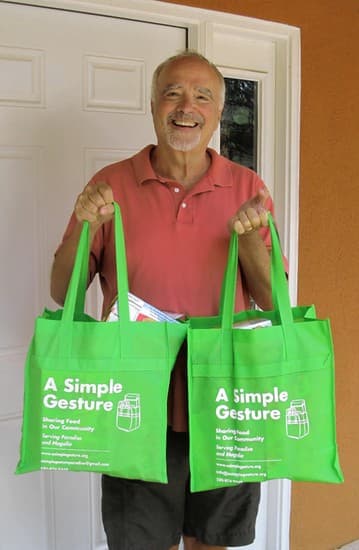
A Simple Gesture’s green bag model is built to keep overhead low, but chapter leaders still have to budget like operators, not bookkeepers. The real test is whether a chapter can pay for the route materials, volunteer support, storage, software, insurance, and pantry communications that keep collections moving every Saturday or Sunday.
Budgeting is a management tool, not a back-office task
Budgeting is part of financial sustainability. The National Council of Nonprofits points nonprofit leaders to a 10-step budgeting checklist, forecasting resources, and the Wallace Foundation’s nonprofit budgeting toolkit. Propel Nonprofits says a budget should reflect an organization’s programs, mission, and strategic plan, and that budgeting should begin at least three months before the end of the fiscal year.
For chapter coordinators, a budget is not just a line-by-line estimate. It is where route counts, volunteer recruitment plans, pantry commitments, and fundraising assumptions are tested.
Why multiple budgets matter in a food recovery model
Candid breaks nonprofit budgeting into more than one budget type. Nonprofits may need project proposal budgets, organization-wide operating budgets, capital budgets, cash-flow budgets, and opportunity budgets. That matters for A Simple Gesture because a chapter may be tracking a seasonal school drive, a regular green bag pickup operation, and a larger growth plan at the same time.
An operating budget helps a chapter cover routine costs tied to collection and delivery. A cash-flow budget matters when donations come in at one pace and bills come due at another. A project budget can help a chapter compare the cost of a donor recruitment push against the extra pantry deliveries it might create. When the numbers are separated cleanly, leaders can see whether a new idea is affordable before it becomes a strain on volunteers or partner agencies.
A low-cost model still has real costs
A Simple Gesture calls itself a near zero-cost program, and it says a one-dollar donation converts to more than $30 of food going to food banks and pantries. Even a lean food recovery system has to cover route planning, donor communications, and the coordination required to match donations with the right pantry partners.
The Guilford County chapter has been making donating food easy since 2015 and was established as a 501(c)(3) nonprofit that year. The overall model has been in use since 2011.
What local chapters need to plan for
A Simple Gesture says a chapter can be as large as a county or as small as a neighborhood, club, or business. It also says donor/driver events can involve “a few or tens of thousands” of donors. That range means a chapter budget has to be tied to operations, not just fundraising totals. A small neighborhood chapter might need basic flyer printing, route coordination, and pantry drop-off fuel support. A countywide chapter may need more software, more volunteer onboarding, and more formal communications with multiple food pantries.
The organization says pickup events are typically scheduled for two hours on a Saturday or Sunday and use route optimization tools. The budget has to account for the labor and logistics behind that short collection window. The real expense is the preparation, scheduling, route design, and follow-through behind the pickup.
Food insecurity makes the budgeting case stronger
Feeding America’s Guilford County data show persistent need. In 2023, the county had a 15.2% overall food insecurity rate, equal to 82,510 food-insecure people. The child food insecurity rate was 22.5%, equal to 27,110 children.
For A Simple Gesture leaders, that means budgets should not only cover existing routes and pantry handoffs, but also leave room to respond when participation rises or when partners need more consistent deliveries.
How partnerships change the budget picture
A Simple Gesture partners with dozens of local food pantries in Guilford County. That network is one of the organization’s biggest strengths, but it also creates budget obligations that are easy to underestimate. Partner communications, delivery coordination, and the work of keeping pantry relationships stable all take time, and time is a budget item even when no invoice arrives.
The organization’s food recovery program also matches food industry businesses with vetted nonprofits, and its SHARE School Program lets students donate unopened, unwrapped food to school refrigerators. Both programs broaden reach, but both add operational demands. School-based collections may need different pickup timing and communication than a neighborhood green bag route, while business-to-nonprofit recovery can require different handling expectations, storage planning, and partner follow-up.
What chapter leaders can do with the numbers
A Simple Gesture’s budgeting challenge is the same one many nonprofits face: deciding where to expand, where to pause, and where to ask for help before a small gap becomes an operational problem. A strong chapter budget makes those decisions visible. It shows how much it costs to recruit and retain volunteers, how much route coordination really takes, and how much support pantry partners need to keep food moving efficiently.
- the cost of volunteer training against the number of reliable pickup routes it produces
- the cost of software and route tools against the time saved in scheduling
- the cost of storage bins, transportation support, and insurance against service interruptions
- the cost of outreach against the donor growth needed to sustain pantry deliveries
A useful chapter budget should help leaders compare:
What the chapter model shows in practice
The reach of A Simple Gesture is broader than Guilford County. The Reston chapter in Northern Virginia runs a bi-monthly food collection program and does not store or distribute food itself, instead taking donations directly to pantries.
A Simple Gesture can look like a countywide collection system in Greensboro and High Point, a neighborhood-level donor network, or a direct-to-pantry operation in Reston.
This article was produced by Prism’s automated news system from verified source data, official records, and press releases, then run through automated quality and moderation checks before publishing. The system is built and supervised by the people who set the standards it runs under. Read our full AI policy.
Did this article answer your question?