EPA urges businesses to donate unspoiled food instead of landfilling it
EPA’s new food-waste guidance gives workplaces a faster path: sort out edible surplus, line up pickups, and keep good food moving to pantries instead of landfills.

A donation program moves fastest when the decision is simple: if the food is unspoiled and still usable, it should be routed to people, not the dumpster. The U.S. Environmental Protection Agency is pushing that logic harder with new guidance and a refreshed Wasted Food Scale, and A Simple Gesture’s pickup-based model shows how that turns into daily operations for offices, cafeterias, event teams, and pantry partners.
What qualifies for donation
EPA’s donating-food guidance starts with the basics: unspoiled food can be redirected from landfill to neighbors in need. That includes non-perishable items, unspoiled perishable food, leftovers from events, and surplus inventory. For a workplace, the practical test is not whether food is excess, but whether it is still wholesome, safe, and ready to move quickly into human use.
That means office managers and food-service teams need a clear sorting rule before a tray, case, or shelf ever reaches disposal. Edible food should be separated from spoiled items right away, because delay is often what turns a donation opportunity into waste. The faster the decision, the more likely it is that a pantry, food bank, or food rescue program can take it.
Who to call before the food sits
EPA says donors should contact local food pantries, food banks, or food rescue operations to find out what items they accept. That call matters because accepted items can vary, and the last thing a workplace wants is a load of food waiting in a break room because no one confirmed the destination. EPA also notes that many food banks will pick up donations free of charge, which removes one of the biggest barriers for busy staff teams.
For workplaces, this is where the system either speeds up or stalls. A conference center, cafeteria, or office kitchen should know ahead of time which local partner handles transport, what kinds of food they want, and what condition the food must be in. When that information is set in advance, staff can move from cleanup to pickup without a long handoff in between.
Why recurring pickups matter more than one-off saves
EPA encourages donors to create recurring pickup schedules and build relationships with grocers, restaurants, venues, and schools that have steady surplus. That guidance fits what food recovery operators already know: predictable volume is easier to route than a single emergency donation. A scheduled pickup from a grocer or venue can be more valuable than a one-time drop because it reduces friction, protects food quality, and gives pantry partners a reliable flow.
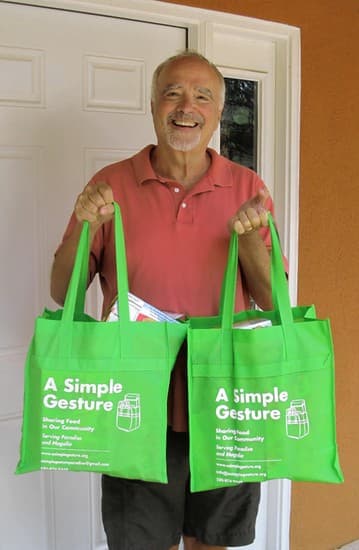
A Simple Gesture’s Guilford County chapter is built around that kind of predictability. The organization says it offers door-to-door pickups, corporate pickups, and timely food-recovery pickups, and that it partners with dozens of local food pantries. Its food-recovery program rescues edible food from businesses, including restaurants, event venues, grocery stores, and other businesses with surplus food, then delivers it to local nonprofits.

That model matters for volunteers and coordinators because route planning is not just logistics, it is retention. A recurring schedule gives drivers, pantry partners, and donor sites a routine they can trust, which makes it easier to keep people engaged and keep food moving.
How the Wasted Food Scale changes the decision tree
EPA says the new Wasted Food Scale updates the older Food Recovery Hierarchy and reflects current science and operational practice. The agency says the scale prioritizes actions that prevent and divert wasted food from disposal, and it is based on research into the environmental impacts of different food-waste management pathways. The core message is straightforward: preventing food from going to waste in the first place is the best option for reducing environmental impacts.
For a workplace team, that framing is useful because it pushes donation upstream. Instead of waiting until the end of an event, managers can build donation into the plan from the start, with the right containers, the right contact list, and the right pickup window. In practice, that means the donation stream is treated like any other operational task, not like a leftover afterthought.
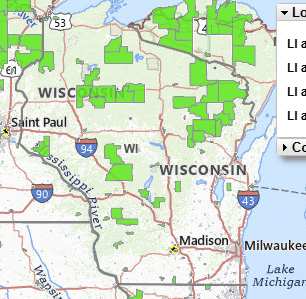
EPA’s broader food-donation materials also note that most donations come from higher up the food supply chain, from farmers, manufacturers, distributors, and retailers, but schools, community organizations, and individuals can make a difference too. EPA’s 2025 materials go even further: its Excess Food Opportunities Map version 3.1 shows over 960,000 potential excess food generators and just under 15,000 potential recipients in the industrial, commercial, and institutional sectors. The scale of the mismatch is the point. There is plenty of food to recover, but only if workplaces make the handoff fast enough.
How A Simple Gesture turns guidance into routes, fridges, and pantry supply
A Simple Gesture’s Guilford County chapter gives the EPA guidance a local operating shape. The group says it was established as a 501(c)(3) nonprofit in 2015, while its history dates to 2011, and that it follows a template for food collection established by Jonathan. That history helps explain why the organization’s work is so logistics-heavy: it is built on repeated movement, not one-off appeals.
Its impact numbers show the reach of that system. As of December 2025, A Simple Gesture says it had helped donate more than 8,000,000 child-size meals and $13,000,000 worth of food, with 75+ pantry partners, 3,900+ recurring food donors, and 200 monthly volunteers. Those figures are more than a milestone list. They are evidence that recurring pickups, reliable partners, and clear donor instructions can turn surplus into a steady pantry pipeline.
The chapter also runs a SHARE school program, where students donate unopened, unwrapped food from school nutrition programs to school SHARE fridges that any student can use during the day. That kind of program shows how food recovery can operate across settings, not just in commercial kitchens. It also reinforces the EPA point that food belongs in human-use channels whenever possible.

What workplaces can do today
For nonprofit teams, office managers, cafeterias, and event organizers, the immediate playbook is simple:
- Decide what gets donated before service starts, with unspoiled food separated from waste.
- Call the local food pantry, food bank, or food rescue operation to confirm accepted items and pickup rules.
- Set recurring pickup times when there is regular surplus, especially at groceries, venues, cafeterias, and schools.
- Make sure the person handling food knows who transports it, so edible food does not sit too long.
- Use the Bill Emerson Good Samaritan Act as part of donor conversations when liability worries slow action.
EPA’s food guidance and A Simple Gesture’s route-based model point to the same operational truth: the fastest donation system is the one that removes uncertainty early. In a year when 44.2 million people lived in food-insecure households, the cost of delay is not abstract. It is good food lost, and neighbors left waiting.
This article was produced by Prism’s automated news system from verified source data, official records, and press releases, then run through automated quality and moderation checks before publishing. The system is built and supervised by the people who set the standards it runs under. Read our full AI policy.
Did this article answer your question?