Federal grant boosts Stockton food recovery hub, offers lessons for A Simple Gesture
A $1.15 million federal grant will help Stockton build a 17,400-square-foot food recovery hub with a loading dock, easing pressure on a pantry serving more than 21,000 people a month.

A new 17,400-square-foot food recovery warehouse in Stockton is being pitched as more than a construction project. The $1.15 million federal award will help the Emergency Food Bank of Stockton and San Joaquin County add a dedicated loading dock, expand storage, and move fresh and shelf-stable food through the system with less friction.
Rep. Josh Harder announced the funding on May 7 for what the office called the San Joaquin County Food Recovery Hub. Harder said the building will more than double capacity and help the food bank handle the kind of daily volume that already strains its current setup, including an average of 500 vehicles per distribution and more than 21,000 people served each month. The existing warehouse is nearly 50 years old and has no dedicated loading dock, a problem that shows up in the most basic parts of the job: where trucks stop, where volunteers sort, and how quickly food can move from rescue to redistribution.

That matters in Stockton because the Emergency Food Bank is not a small neighborhood pantry. Founded in 1968, it is the largest provider of packaged emergency food in San Joaquin County, according to United Way of San Joaquin County. Its Main Pantry at 7 W. Scotts Ave. serves about 257 households a day and is open Monday through Friday from 9 a.m. to noon. Other local listings say the organization also supports additional pantries and mobile farmers market sites, underscoring how much demand it is already carrying.
The federal money comes through Community Project Funding, and it fits into a wider local push to treat hunger response as infrastructure. Harder’s FY26 disclosure also lists a separate $4 million request for a San Joaquin County Food Security Hub aimed at design, engineering, and construction of a new food warehouse with more storage and cold capacity, better workforce development space, and room for programs. Feeding America has estimated that 90,820 people in San Joaquin County were food insecure in 2020, with a 12.1% food insecurity rate and a $51.57 million annual food budget shortfall.

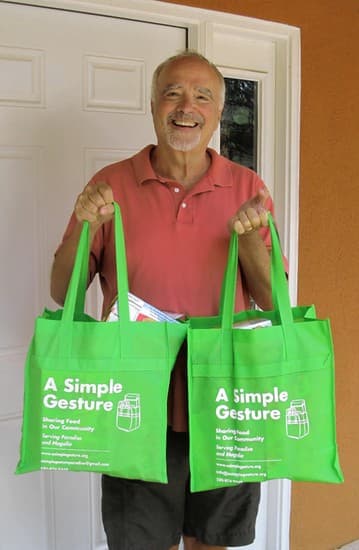
For A Simple Gesture, the lesson is clear. Neighborhood food recovery does not scale on goodwill alone. Doorstep donation programs depend on the same pieces Stockton is trying to build: staging space, sorting capacity, predictable routes, and volunteer flow that does not break down when donations spike. A warehouse with room to receive, sort, and move food faster is the operational equivalent of a pickup program that keeps routes tight and handoffs clean. The public money is not just buying square footage in Stockton. It is buying the logistics that turn excess food into a reliable supply line for hunger relief.
This article was produced by Prism’s automated news system from verified source data, official records, and press releases, then run through automated quality and moderation checks before publishing. The system is built and supervised by the people who set the standards it runs under. Read our full AI policy.
Did this article answer your question?