Feeding America explains how food rescue turns waste into meals
The biggest lift in food rescue is the handoff: identify, pick up, sort, distribute. A Simple Gesture lives in that chain, where route timing and pantry trust decide impact.

Food rescue works only when the chain holds
Feeding America’s map of the rescue pipeline makes one thing plain: the work is not just about saving food, it is about keeping a system moving. The process starts by identifying edible surplus before it goes to waste, then picking it up, sorting it, and distributing it to people facing food insecurity. That sequence sounds simple on paper. In practice, it is where workplace habits, volunteer reliability, and partner coordination determine whether good food becomes meals or becomes another discarded statistic.
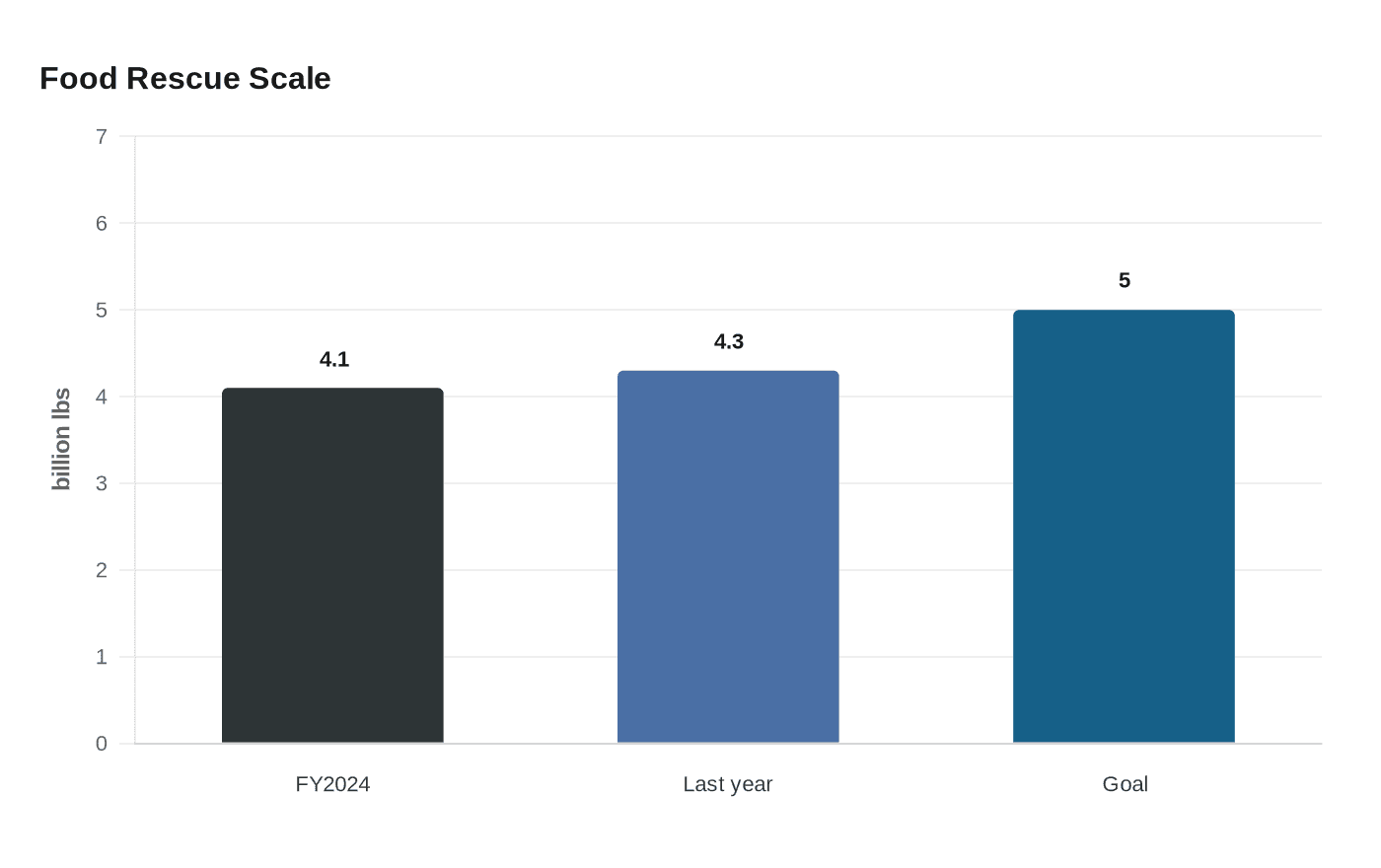
The scale gives the system its urgency. Feeding America says billions of pounds of edible food are thrown away each year, and it treats food waste as both an environmental problem and a hunger problem. Its network rescued 4.1 billion pounds of food in fiscal year 2024, and its broader site says the network rescued 4.3 billion pounds of food last year and distributed 5.9 billion meals. At the same time, 47 million people in the United States, including 14 million children, are facing food insecurity. Feeding America has set a public goal of reaching 5 billion pounds of rescued food annually, which shows how much room still exists between the need and the current capacity.
Where A Simple Gesture fits in the rescue pipeline
A Simple Gesture lives in the part of the chain that turns household generosity into a predictable supply line. Its model sits squarely in the identify-and-move stage of food rescue: donors place food in green bags, volunteers collect it, and the organization pushes usable food toward the local safety net. That means the nonprofit’s value is not only the food it gathers, but the consistency it creates for pantry partners who need dependable volume.
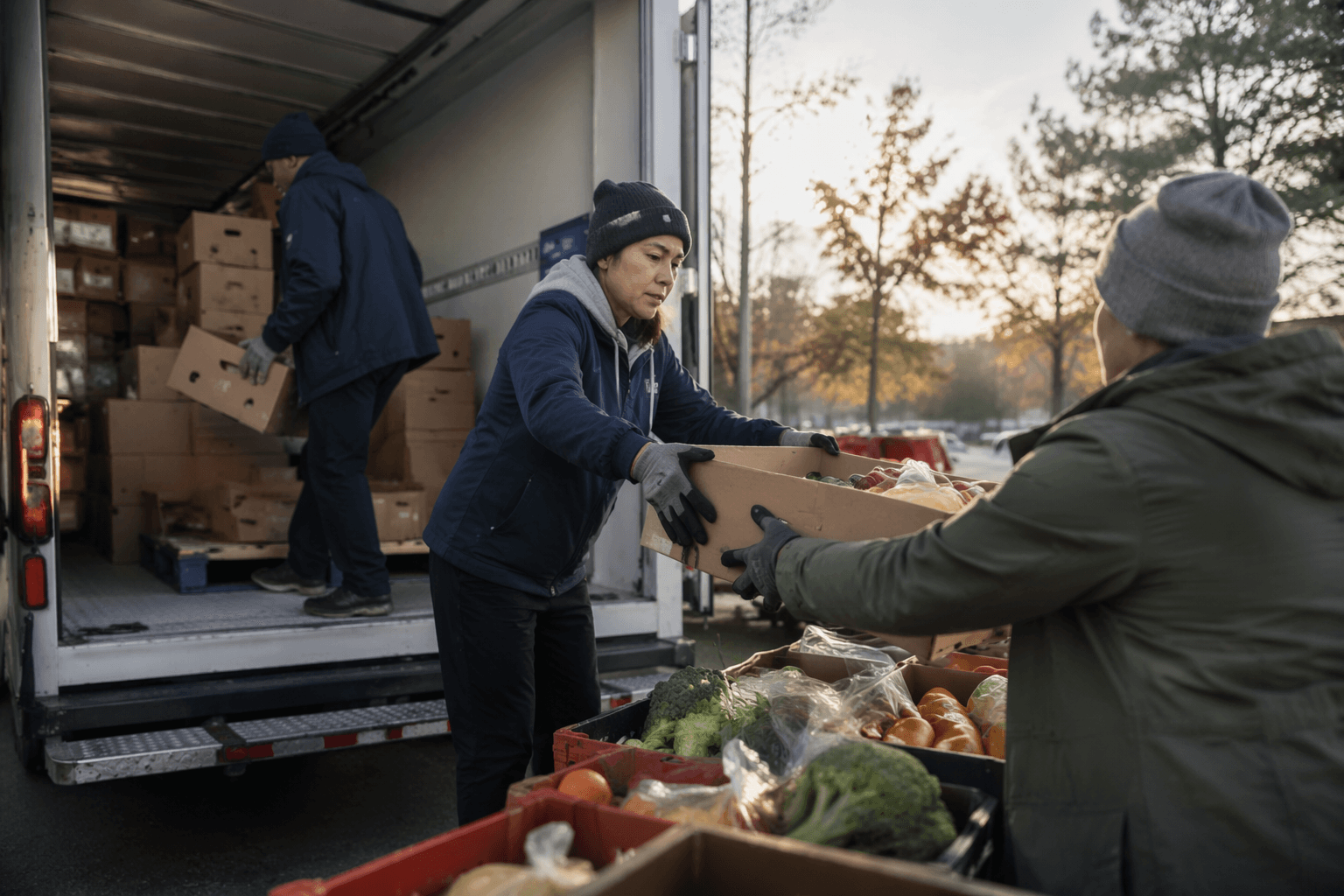
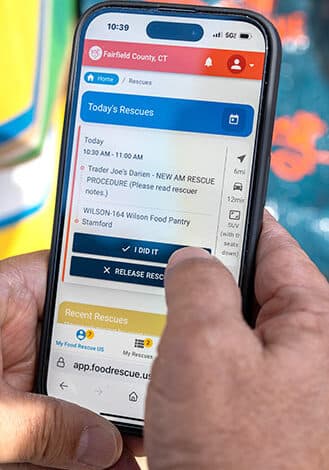
That consistency matters because food rescue is as much an operations problem as a mission statement. A missed pickup can disrupt a route, delay sorting, and leave a pantry short on inventory for the day. For staff and volunteers, the practical questions matter most: which routes are active, which households are participating, when the next pickup happens, and whether pantry partners can absorb the donations on the other end. In this model, quality control and communication are not background tasks. They are the difference between a functioning rescue chain and a one-time donation drop.
Feeding America’s breakdown is useful inside A Simple Gesture because it gives new volunteers a clear picture of the work. The route is not errand-running for its own sake. It is the first move in a chain that protects food quality, preserves dignity for recipients, and connects neighborhood giving to an organized distribution network. That framing can help retain volunteers too, because the work feels less abstract when people understand how a missed bag or a late pickup reverberates down the line.
A volunteer program built on logistics, not just goodwill
A Simple Gesture’s own history shows how much of this model depends on process. The organization says its history goes back to 2011, and that A Simple Gesture-Guilford County was established as a 501(c)(3) nonprofit in 2015. Founder Jonathan hopes hundreds of towns and communities will adopt the model, which is a clue to how the organization sees its own future: not as a single charity, but as a repeatable local system.
The green-bag program is the operational core. A Simple Gesture says donors can sign up for monthly or bi-monthly pickups, while the Reston affiliate says its version runs bi-monthly and delivers nonperishable food directly to pantries. The important detail for staff is not just frequency, but reliability. Monthly and bi-monthly schedules let volunteers plan routes, help coordinators forecast volume, and give pantry partners a steadier flow of food than a random drop-off model can provide.
The leverage is also real. A Simple Gesture says a one-dollar donation converts to more than $30 of food for food banks and pantries. That ratio gives staff a concrete way to explain why the program matters, especially when recruiting volunteers or asking households to stay engaged. It is easier to keep a route full when people understand that a small gift in money or time is multiplying into much larger value for the local emergency food system.
Why pantry partnerships matter as much as pickups
The biggest operational consequence in this model is not the bag itself. It is the handoff to partners who can sort, store, and distribute. A Simple Gesture-Michigan says the model has spread to more than 65 communities across the country, with more than 1,700 food donors and over 132,000 pounds of food collected each year. That kind of spread tells you the system is only as strong as the relationships behind it. More households can join, but if pantry partners are not ready to receive, sort, and move the food, the model stalls.
A local example shows how small beginnings can become durable infrastructure. Arlington Community Food Bank says its A Simple Gesture effort began in 2015 with just six families. That matters because it shows the work does not require immediate scale to start producing value. It requires a reliable pickup rhythm, a community that trusts the process, and partner agencies that can absorb donations without friction. Once those pieces are in place, growth becomes a matter of extending routes and deepening participation, not reinventing the model.
For volunteers, that makes retention a management issue, not just a morale issue. If routes are clear, pickup timing is dependable, and partner expectations are communicated well, the work feels organized and meaningful. If not, the most dedicated volunteers can burn out on avoidable confusion. The same is true for coordinators, who need a system that balances outreach with execution. A strong pantry network gives the volunteer side of the operation a destination that feels concrete and useful.
The waste numbers show why the work still matters
The USDA’s broader food-loss data reinforces why food rescue keeps expanding. The agency estimates that U.S. food waste makes up 30% to 40% of the food supply. It says roughly 133 billion pounds of food worth about $161 billion was lost in 2010 at the retail and consumer levels, and that an average family of four loses $1,500 a year to uneaten food. Those figures place food rescue in a wider economic frame. This is not only about charity. It is about recovering value that households, stores, farms, and restaurants are already letting slip away.
That is why Feeding America’s 5 billion pound goal matters. The target is ambitious, but the underlying need is larger still. With 47 million people facing food insecurity, the rescue pipeline has to do more than collect leftovers. It has to move food quickly, protect quality, and keep partner organizations supplied without wasting volunteer effort. For A Simple Gesture, that means the green-bag model works best when every piece of the chain is treated as part of the same operation.
The lesson for staff is straightforward: success comes from stronger pantry partners, not just more food. The lesson for volunteers is just as clear: route discipline and communication are part of the mission. In food rescue, the meal is the end result, but the real work happens in the handoff.
Know something we missed? Have a correction or additional information?
Submit a Tip