Feeding America guide helps agencies recruit and retain volunteers
Feeding America’s volunteer guide points to a simple fix for food recovery operations: make shifts easy to learn, easy to schedule, and worth returning to.
Volunteer retention is the operational issue
Feeding America’s agency volunteer guide treats volunteer engagement as a working system, not a feel-good add-on. That matters for food recovery groups because the main problem is rarely only finding help once. The harder job is keeping people coming back often enough to prevent no-shows, retraining, and broken schedules that leave food undelivered or a pantry short-handed.
The guide says volunteers make a huge difference across the network, but many agency partners struggle with both recruitment and retention. It points to a simple test for every program decision: the work should benefit both the organization and the volunteer. For agencies that depend on volunteers to stay open and expand access to food, that means the volunteer experience has to be built around reliability, not just goodwill.
Why the Feeding America backdrop raises the stakes
Feeding America describes itself as a network of 200 food banks, serving a country where 48 million people face hunger, including 14 million children. In that setting, volunteer labor is part of the operating infrastructure for sorting, packing, distributing food, and running food drives. When those systems wobble, the consequences show up quickly in fewer meals moved and less food reaching neighbors who need it.
The scale of volunteer dependence became even clearer in Feeding America’s 2021 annual report. The network said it welcomed nearly 2 million volunteers each month before the pandemic, but between May 2020 and March 2021 only about 55% of food banks, on average, were accepting and in need of volunteer support. That gap underscores the central point of the guide: agencies need volunteer systems that can withstand disruption and still keep food moving.
What actually helps keep volunteers coming back
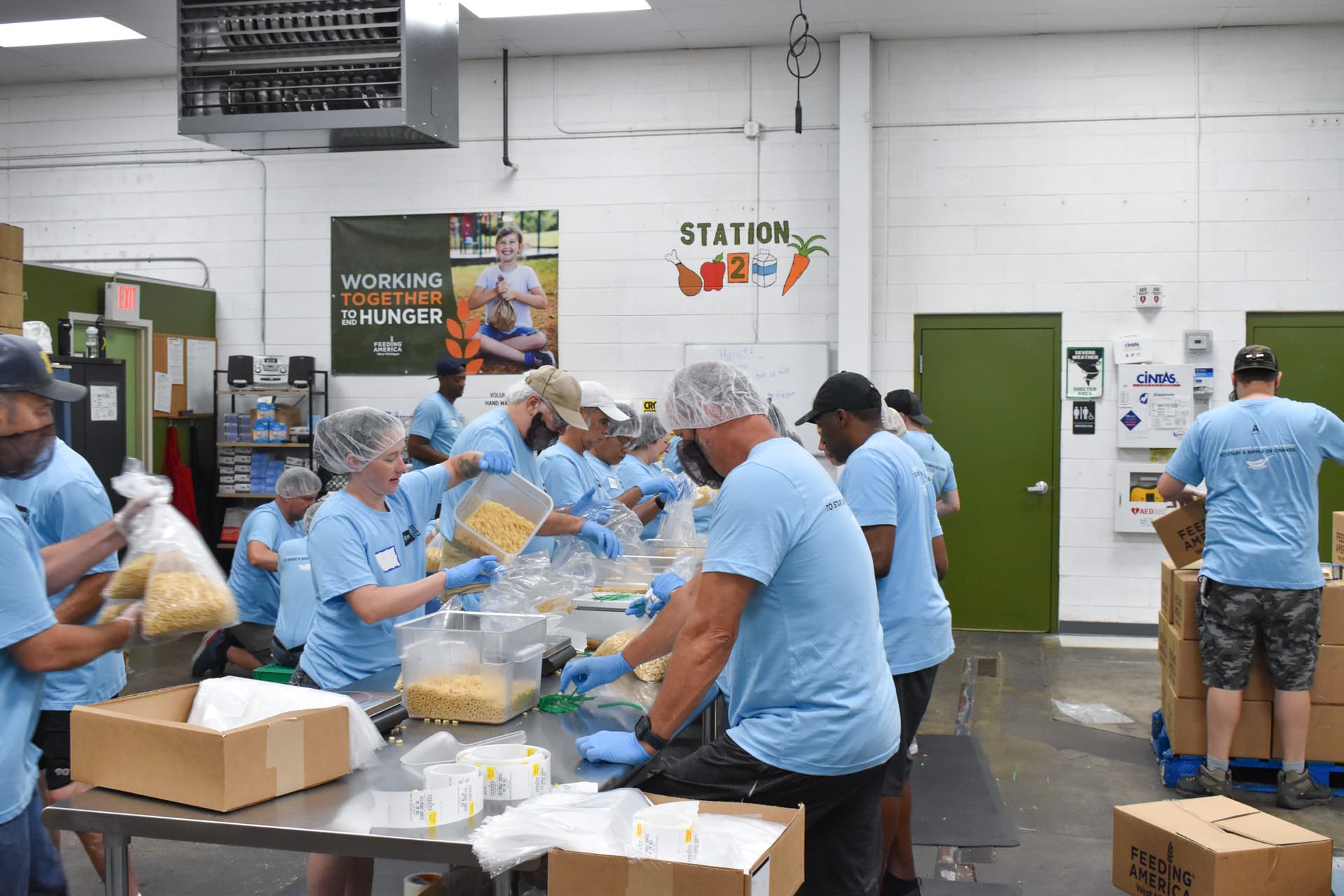
The guide breaks volunteer work into approachable categories so agencies can match the job to the person and reduce friction at the start. Food sorting and packing are singled out as accessible tasks, especially for groups with fluctuating numbers. That matters because a flexible task structure makes it easier to absorb a last-minute absence without upending the whole day.
Food drives are presented as a useful entry point for schools, churches, service clubs, and larger workplaces. In practice, that gives agencies a way to recruit people through a lower-commitment role first, then convert the most dependable participants into regular helpers. The underlying lesson is operational: when the first assignment is easy to understand and easy to complete, volunteers are more likely to return for the second and third shift.
A strong volunteer program, the guide says, should work for both sides. For agencies, that means fewer coordination headaches, less repeated training, and a steadier bench of people who know the process. For volunteers, it means a clear task, a predictable schedule, and a sense that their time is being used well.
Why the guide fits A Simple Gesture especially well
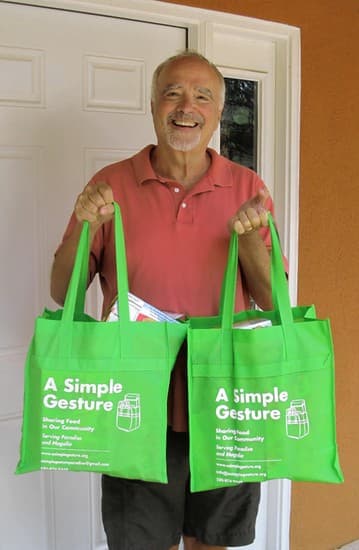
A Simple Gesture is built around recurring, neighborhood-based participation, so retention matters as much as recruitment. The Guilford County organization says it has operated since 2015 and uses a model built on door-to-door pickups, corporate pickups, and food recovery pickups. Its Green Bag program lets donors give monthly or bi-monthly, while volunteers collect the bag at the doorstep.
That recurring rhythm creates a very specific staffing challenge. Route coverage, reminder messages, training, and follow-up all have to be consistent if the system is going to stay dependable. Inference: the Feeding America guide points toward a volunteer design that treats each step, from sign-up to route assignment to thank-you follow-up, as part of the retention plan, not as separate administrative chores.
For A Simple Gesture, the practical takeaway is a volunteer ladder that keeps people engaged without overwhelming them. A first-time helper might start with a small pickup route or a simple food-drive assignment. From there, reliable volunteers can move into neighborhood route leads, volunteer ambassadors, or community organizing roles. That progression reduces repeat training, creates a clearer path to deeper involvement, and keeps staff from having to rebuild relationships every season.
The local numbers show why consistency matters
A Simple Gesture says that as of December 2025 its Guilford County work had delivered more than 8,000,000 child-size meals and $13,000,000 in donated food value. It also reports 75-plus pantry partners, 3,900-plus recurring food donors, and 200 monthly volunteers. Those numbers show a network that depends on repetition, not occasional bursts of help.
The organization also says the U.S. wastes 30% to 40% of the food it produces, which gives its food recovery work a second purpose beyond hunger relief. Volunteers are not only moving donations to pantry partners. They are also keeping edible surplus from going to landfills, turning logistics into a practical community service that touches waste reduction, food access, and local distribution all at once.
A volunteer program built on ownership, not just labor
The staffing side of the model matters too. A Simple Gesture identifies Jean Rochelle as its SHARE & Volunteer Coordinator, and says she has volunteered since 2017 as a Green Bag donor driver while also helping prepare and organize the thousands of green bags used monthly. That kind of embedded leadership suggests the organization benefits when volunteers are not treated as temporary extras but as part of the system that keeps pickups and supplies moving.
A Simple Gesture says volunteers can help with Green Bag pickups, food recovery driving, SHARE, refugee feeding network work, community events, and food drives. That range gives the organization room to place people where they are most likely to stay useful and stay involved. It also mirrors the guide’s core message: the best volunteer program is one that makes the work easy to enter, easy to sustain, and easy to scale.
For an operation like A Simple Gesture, that means the real question is not simply how many volunteers can be recruited. It is how many can be retained long enough to make every route more dependable, every pantry partner more supported, and every pickup day less vulnerable to a gap in the schedule.
This article was produced by Prism’s automated news system from verified source data, official records, and press releases, then run through automated quality and moderation checks before publishing. The system is built and supervised by the people who set the standards it runs under. Read our full AI policy.
Did this article answer your question?