Food banks grew from surplus food hubs into nationwide logistics networks
Food banks now run like logistics systems, and A Simple Gesture works best when volunteers treat pickup routes, pantry partners, and timing as core operations.
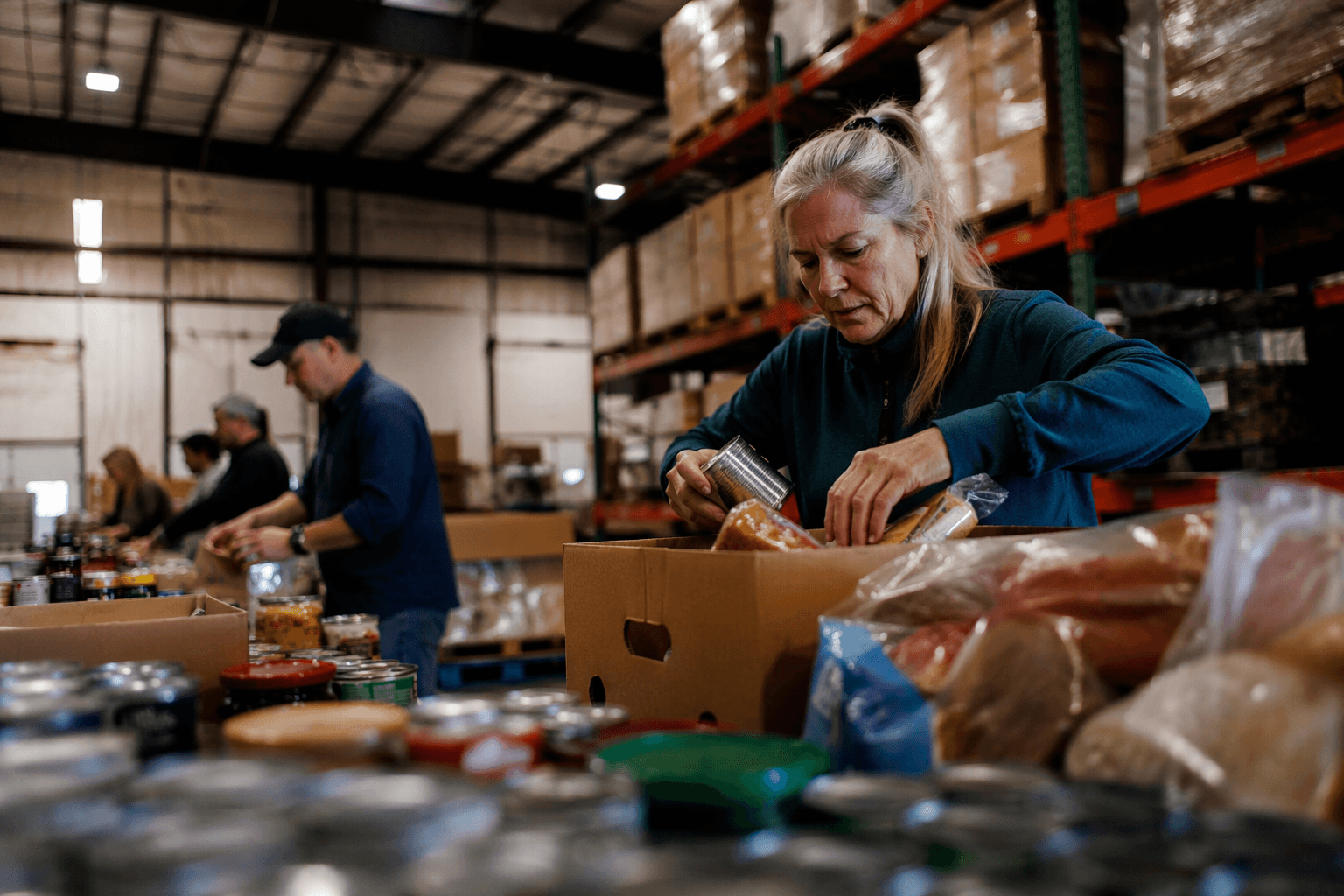
Food banks are not simple handoff sites. The modern model was built to move food through a chain of storage, routing, and partnerships, and that is exactly how A Simple Gesture works when it is operating well.
From surplus to system
The first food bank emerged from a practical problem: grocery stores were throwing away edible food while nearby families still needed it. St. Mary’s Food Bank says it was founded in 1967 in Phoenix, Arizona, and was the world’s first food bank. The Arizona Historical Society says John van Hengel’s early model relied on salvaging surplus citrus and using an abandoned bakery to launch the first operation.
That origin matters because it explains the sector’s logic. Food banks did not grow out of a retail or charity mindset. They grew out of a distribution problem, which is why the most successful ones still behave like warehouses, dispatch centers, and network coordinators all at once.
Why food banks behave like logistics companies
The sector expanded rapidly in the 1980s as the federal safety net shrank, and today Feeding America describes a nationwide network of 250+ food banks, 20+ statewide food bank associations, 10+ regional co-ops, and 60,000+ agency partners, food pantries, and meal programs. That is a hub-and-spoke system, not a donation table. Food has to be acquired, sorted, stored, inspected, tracked, and routed before it reaches a pantry shelf or a meal line.
A Richmond Fed explainer makes the operational reality plain: food banks need partnerships, staff, operational funds, a clear read on community needs, and logistical creativity to make food move to the right places. That is the part new volunteers often miss. The mission is human, but the work depends on schedules, inventory discipline, transportation, and enough flexibility to absorb supply swings and demand spikes.
What changed as food banks became community hubs
The job of a food bank has also widened beyond calories. Food Bank News reports that more pantries are adding non-food services such as employment help, medical support, and financial literacy to their food offerings. Chicago’s food bank says some networks now combine hub-and-spoke food rescue with capacity-building grants and community partnership support.
That shift changes how partners should think about a food bank relationship. It is not just about dropping off goods. The strongest partners understand that a food bank may also be coordinating referrals, helping neighbors connect to services, and building enough operational capacity to keep the whole network stable. In practice, that means the food bank is closer to a community logistics platform than a single-service charity.
How A Simple Gesture fits into that model
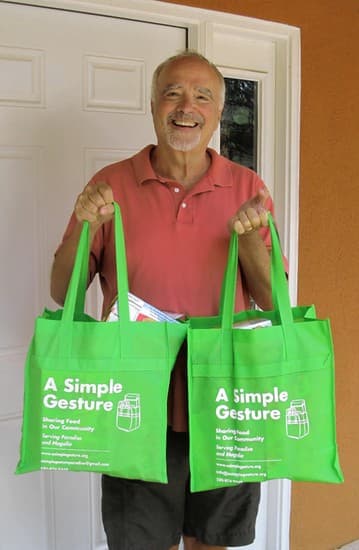
A Simple Gesture sits squarely inside that logistics reality. Its own materials say the organization began in 2011 in Paradise, California, and its Guilford County chapter became a 501(c)(3) in 2015. The Guilford County site says it partners with dozens of local food pantries, while the Reston chapter says it is a bi-monthly collection program that takes donations directly to pantries and does not store or distribute food.
That distinction matters for everyone on the inside. The value of a green bag collection is not the bag itself. It is the chain behind it: the route plan, the pickup timing, the sorting handoff, the pantry relationship, and the certainty that the food will arrive when the partner can use it. If any one of those pieces breaks, the model becomes slower, costlier, and less reliable.
A Simple Gesture also points to the scale of what coordinated local collection can do. One chapter page says more than 60 chapters nationwide have provided over 7 million meals. The organization’s model page says a $1 donation can convert into more than $30 of food for food banks and pantries. For staff and volunteers, that is a reminder that the work is not just sentimental neighborhood giving. It is a distribution system designed to multiply small contributions into usable inventory.
The operational details that matter most
For a workplace volunteer, the most important question is not “How do I help?” It is “Where does this piece fit in the flow?” A Simple Gesture’s model depends on route coordination and repeatable handoffs, which is why pickup schedules, pantry deadlines, and volunteer coverage matter as much as recruitment drives.
The recent Guilford County volunteer calendar is a good example of what makes the system work. It coordinates Saturday pickups, five color-coded tag routes, and food-recovery shifts. That is the kind of operational tooling that turns goodwill into predictable service. It also shows why volunteer retention matters: a route-based model only works if people keep showing up for the same neighborhoods, at the same times, with the same expectations.
For staff, donors, and new partners, the practical rules are straightforward:
- Treat pickup timing as a service commitment, not a loose volunteer preference.
- Match donations to pantry capacity, because storage space and distribution days are real constraints.
- Keep route information clean and consistent, since color-coded tags and route assignments reduce confusion.
- Build relationships with pantry partners, because downstream needs determine whether donations move quickly or sit too long.
- Plan for volunteer turnover, since route continuity is part of the operating model.
Those are logistics decisions, but they are also trust decisions. Pantry partners need to know what is arriving, when it will arrive, and how much labor they will need to receive it. Volunteers need to know that their time is supporting an existing system, not improvising one from scratch.
The demand behind the network is still growing
The urgency remains high. Feeding America said food insecurity increased 6% in 2023. USDA-related reporting said 47.4 million people lived in food-insecure households in 2023, and USDA’s 2024 key statistics page says 18.4% of U.S. households with children experienced food insecurity in 2024.
That scale explains why food banks keep evolving from surplus collectors into network managers. The sector is no longer just about rescuing extra food. It is about moving food through a system reliable enough to meet need that keeps rising, often in the same neighborhoods where the needs for jobs, health care, and stable access to groceries overlap.
For A Simple Gesture, the lesson is clear. The green bag program works best when everyone involved thinks like an operator: respect the route, protect the partner relationship, and treat every pickup as part of a larger logistics chain. That is how a neighborhood donation program becomes a dependable piece of the hunger-relief infrastructure.
This article was produced by Prism’s automated news system from verified source data, official records, and press releases, then run through automated quality and moderation checks before publishing. The system is built and supervised by the people who set the standards it runs under. Read our full AI policy.
Did this article answer your question?