Food Banks Need Structured Volunteer Management to Sustain Operations
Structured volunteer systems keep green bags moving and pantries stocked. A Simple Gesture shows why recruitment, onboarding, and scheduling matter more than goodwill alone.
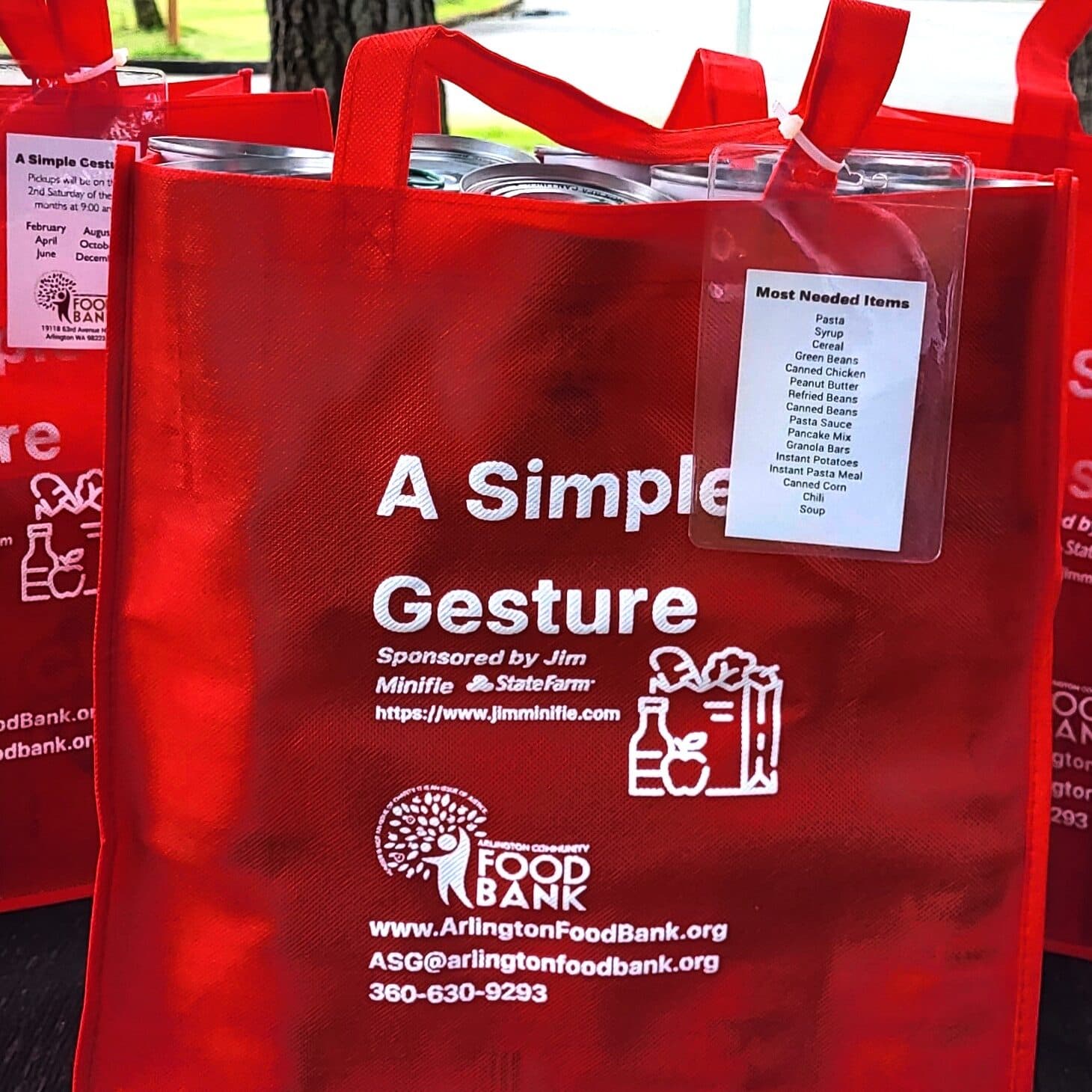
More than 1,700 food donors and numerous volunteer drivers keep A Simple Gesture moving, and that scale only works because the volunteer system is built to repeat. The lesson from food bank management research is blunt: enthusiasm helps, but reliability is what keeps food flowing from doorsteps to pantries.
Volunteer management is the operating system
Giveffect’s guide makes the core point clearly: volunteers are the lifeblood of food bank operations, but good intentions do not create a sustainable program on their own. The organizations that last are the ones that treat recruitment, training, scheduling, and retention as one connected workflow, not as a scramble for help when a route opens up.
That matters because volunteer engagement is not just a staffing issue. It is a relationship function. People stay when they understand their role, feel that their time is respected, and can see how their effort connects to the mission. They leave when sign-up is confusing, expectations are fuzzy, or no one follows up after the first shift.
What structure looks like in practice
The best volunteer programs do not simply ask for more help. They shape roles that feel meaningful, target the right demographics, and use partnerships with schools and businesses to create a steadier pipeline of recruits. Giveffect also points to referral programs and events like tours or open houses, which help volunteers see the operation in action instead of treating it like an abstract cause.
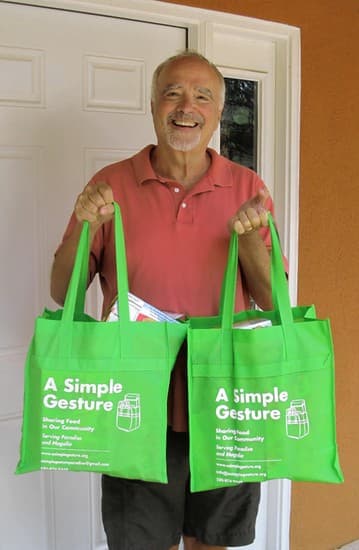
For A Simple Gesture, that advice maps cleanly onto the green bag model. Doorstep collection depends on neighbors who can commit to a regular rhythm, volunteer drivers who know their routes, and coordinators who can match people to tasks without confusion. A volunteer who understands exactly how pickup day works is far more likely to come back than someone who was handed a bag and hoped for the best.
The simplest improvements are often the most powerful. Clear outreach brings in the right people. Easy sign-up reduces friction. Good onboarding explains how doorstep donations become pantry supply. Predictable schedules reduce missed pickups and protect the trust that the whole model depends on.
Why the A Simple Gesture model raises the stakes
A Simple Gesture has operated in Guilford County since 2015 with a model built around recurring donations and doorstep pickup. Individuals sign up to donate food on a regular basis, and volunteer drivers collect it right from their doorstep. The organization also customizes surplus-food recovery from grocery stores, restaurants, caterers, corporate cafeterias, and schools, which means the volunteer network sits inside a larger local food-rescue system.
That system has real weight. A Simple Gesture says it has more than 1,700 food donors and numerous volunteer drivers, and that those volunteers collect over 132,000 pounds of food each year in its home market. At that level, a missed route is not a minor inconvenience. It is a break in a chain that depends on consistency.
The model also works because it solves a practical problem that traditional pantry volunteering often cannot. Bob Schnapp, who helped start a Reston chapter, said the idea addressed the mismatch between donors’ work hours and pantry donation hours. In other words, the system fits real life instead of asking volunteers and donors to rearrange everything around a single drop-off window.
A repeatable system is why the idea spread
A Simple Gesture began in Paradise, California, in 2010, when Jonathan Trivers and his wife Karen adapted the concept after being inspired by the Ashland Food Project in Oregon. One chapter account says the original Paradise effort started with just six families. That small beginning matters because it shows how much of the model’s success comes from repeatable structure rather than one-time momentum.
The growth that followed reinforces the point. A Wall Street Journal profile reported that A Simple Gesture had supplied 500,000 pounds of groceries to food pantries in 35 towns over three years. Another local chapter story said the program grew from six families in 2015 to 650 donors and 100 volunteers by 2022. A Reston chapter story described a start in June 2015 with about 20 congregation members, then growth by word of mouth.
That kind of expansion does not happen if every pickup depends on improvisation. It happens when the system is simple enough for people to repeat and disciplined enough for coordinators to trust. The more chapters grow, the more volunteer management becomes less about charisma and more about process.
The research says engagement saves money and keeps people
The operational case for structure is not just common sense. An arXiv paper using data from a large food bank found that strategically deployed volunteer engagement activities can reduce annual operating costs while preserving nearly the same social impact. That is a big deal for nonprofits working with tight margins, because it suggests that engagement is a cost-control lever, not an extra service.
A separate scholarly article on volunteer experience adds another layer: volunteer experiences influence both retention and volunteer promotion. That helps explain why onboarding, role clarity, and recognition matter so much. A volunteer who has a good first season is not just more likely to stay; that person is also more likely to recruit others, take on more responsibility, or become a reliable fill-in when a route opens unexpectedly.
For A Simple Gesture, this is the hidden math of volunteer management. Fewer no-shows mean fewer re-routed pickups. Better reminders mean fewer empty bags sitting on porches. Stronger onboarding means fewer people dropping after one shift because they never understood the pace or purpose of the work.
The hidden costs of improvisation
When volunteer systems are loose, the organization pays in places that do not always show up on a budget line. Coordinators spend more time chasing confirmations. Routes become uneven. Pantry partners get less predictable deliveries. Volunteers who wanted to help can end up frustrated because the experience felt disorganized or thankless.
That is why the most effective programs build feedback loops into the job itself. They track who shows up, who returns, where routes break, and which messages actually keep people engaged. Recognition matters too, but not as a stand-alone gesture. It works best when it is tied to a system that already respects volunteers’ time.
A Simple Gesture’s model makes that especially clear. The green bag only works when neighbors trust the pickup, drivers trust the schedule, and staff trust that the volunteer base can hold up under routine pressure. In that sense, structured volunteer management is not a back-office detail. It is the infrastructure that keeps food moving, week after week, from front steps to pantry shelves.
This article was produced by Prism’s automated news system from verified source data, official records, and press releases, then run through automated quality and moderation checks before publishing. The system is built and supervised by the people who set the standards it runs under. Read our full AI policy.
Did this article answer your question?