Food banks rethink success as costs rise and old model fades
Food banks are moving from volume to resilience, and A Simple Gesture's real test is whether routes, volunteers, and pantry ties hold when old assumptions don't.
The reset no one can wait out
The old food bank playbook no longer fits the work on the ground. In interviews with eight seasoned leaders, each with an average of 14 years in the field, the message was blunt: the traditional model of food banking is not coming back, and the next version will be built around tighter sourcing, higher costs, and more complicated measures of success.
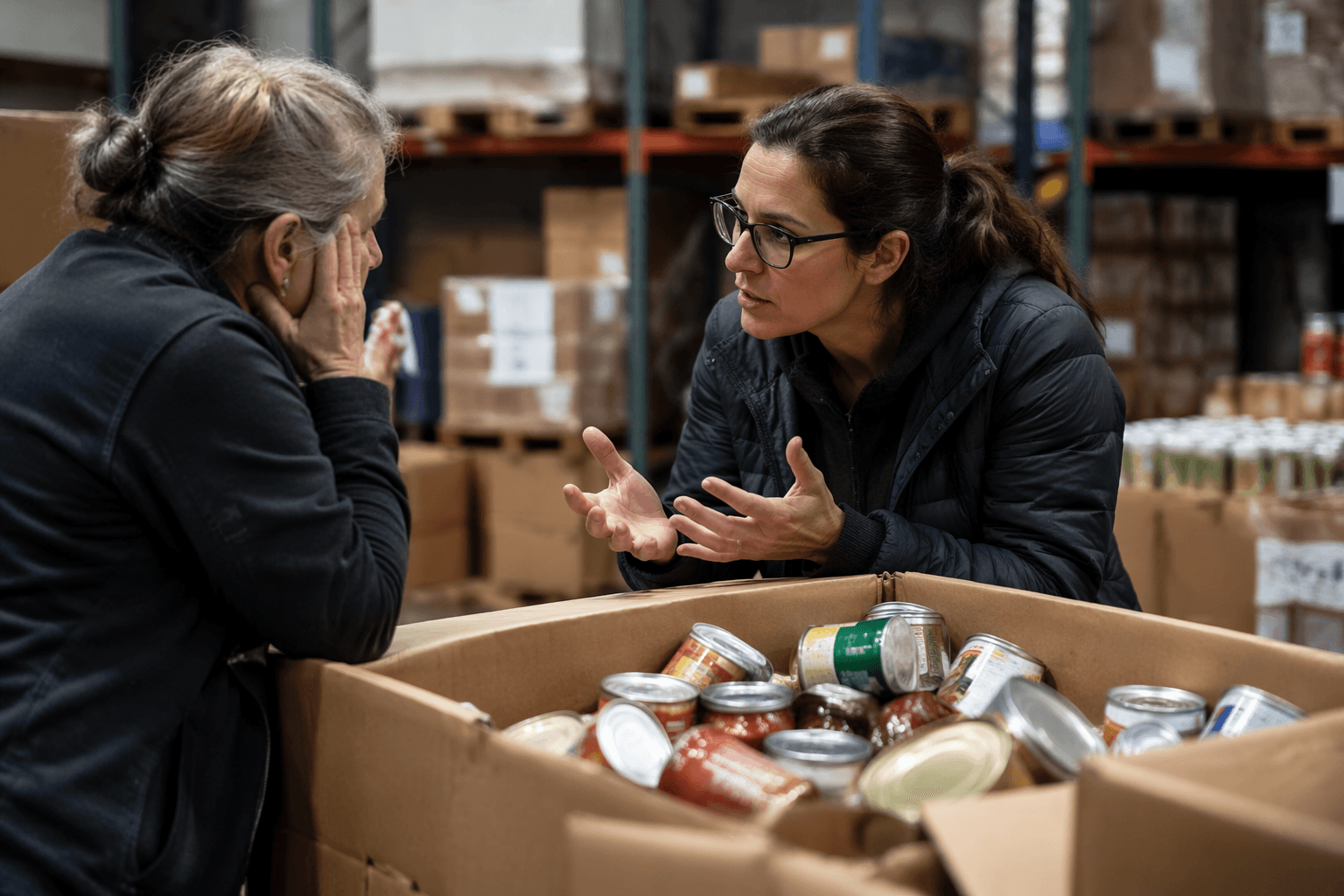
For A Simple Gesture, that is not an abstract industry shift. It changes the daily mechanics of doorstep pickups, route planning, pantry deliveries, volunteer coordination, and the way staff explain what the organization actually does for Guilford County families.
What changed for good
Three assumptions that once held the field together are breaking down at the same time. First, food sourcing is less stable, so organizations cannot count on the same mix of donated product showing up when they expect it. Second, inflation has pushed costs higher, which makes every pickup, delivery, and staff hour more expensive to support. Third, post-Covid funding is less predictable, so food banks cannot plan as if emergency-era support will automatically refill the pipeline.
That combination has a practical consequence: leaders are no longer managing only food flow, they are managing reliability. The work now requires stronger partner relationships, quicker information sharing, and more careful choices about where to place time and labor. The old assumption that a food bank can simply “get back to normal” no longer holds, because normal was built on conditions that have already changed.
The story also points to a fourth shift that matters just as much: impact can no longer be measured only by pounds distributed. Leaders are pushing for a more holistic, equity-centered language that includes choice, dignity, relationships, and information exchange. In other words, a full truckload still matters, but it does not tell the whole story anymore.
Why this lands differently at A Simple Gesture
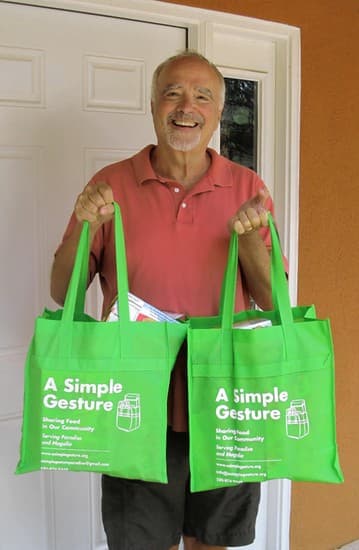
A Simple Gesture is built around a model where volunteer drivers pick up donations from donors’ doorsteps, which means the organization lives and dies on execution. Since 2015, it has relied on regular collection programs that make donating easy, plus corporate pickups and surplus-food recovery. That structure sounds simple on paper, but in practice it depends on route reliability, volunteer follow-through, and the confidence of pantry partners who need food to arrive on time and in usable form.
The organization says that as of December 2025 it had helped provide more than 8,000,000 child-size meals and $13,000,000 in donated food value. It also reported 75-plus pantry partners, 3,900-plus recurring food donors, and 200 monthly volunteers. Those numbers show scale, but they also show how much of the operation rests on repeat behavior. If a pickup route slips, or volunteer retention weakens, the problem is not just internal scheduling. It can ripple through neighborhood trust and pantry inventory.
That is why the new food bank logic puts so much weight on coordination. For A Simple Gesture, the real product is not just food recovered. It is a dependable system that keeps donors engaged, volunteers returning, and pantry partners able to plan around incoming supply.
Demand is still high, and the cushion is gone
The pressure on that system has not eased. USDA says 13.7% of U.S. households were food insecure in 2024, while FRAC reported that 14.1 million children lived in food-insecure households. Feeding America’s 2025 Map the Meal Gap release put child food insecurity at nearly 20% nationally, with some rural counties estimated as high as 50%.
That matters because the field is still operating in a sustained need environment, not a temporary surge. USDA says the extra SNAP emergency allotments that began in the pandemic ended after the February 2023 issuance, and a Federal Reserve paper found those benefits added an average of $126 per month in the first year and $166 in later years. Once that support disappeared, many households lost the cushion that had been helping them absorb rising prices.
For local food recovery groups, that means demand is not cycling back to some pre-pandemic baseline. The need remains deep, and the operating model has to assume that families, pantry partners, and volunteers are all under more strain than they were before.
Food recovery is also a waste problem now
The sourcing side adds another layer. USDA and EPA both say roughly 30% to 40% of the U.S. food supply is wasted, and ReFED says total surplus food in 2024 reached 70 million tons, about 29% of the U.S. food supply. That puts A Simple Gesture’s food-recovery work in a larger national context: it is not only hunger response, it is waste reduction and resource recovery.
That framing matters operationally. When edible food is rescued from businesses and delivered to local nonprofits, the organization is helping shift food from a discard stream into a distribution stream. In a world where waste remains high and food access remains uneven, that kind of logistics work becomes part of the local safety net.
What leaders should measure now
If the old model was built around pounds, the new one has to be built around performance. For A Simple Gesture, that means looking at whether the system is steady enough to hold donor habits and pantry trust over time.
- route completion and on-time pickups
- volunteer retention, not just sign-up volume
- pantry partner satisfaction and delivery reliability
- recurring donor engagement, not just one-time donations
- the quality of neighborhood relationships and follow-through
A stronger scorecard would track:
That is the practical meaning of the shift toward choice, dignity, relationships, and information sharing. A Simple Gesture already has the scale to matter in Guilford County. The next challenge is proving that its operating model can stay resilient even as sourcing gets harder, costs stay high, and the old idea of “normal” keeps slipping farther away.
The bigger lesson for the field
The most useful takeaway from the broader food bank conversation is not that food banks should do more with less. It is that they are being asked to do different work entirely. The Global FoodBanking Network’s focus on information, connection, and lasting food-system change fits that reality: food banks are becoming infrastructure for food access, health, and community resilience, not just distribution points.
For A Simple Gesture, that means the future will belong to organizations that can run reliable routes, keep volunteers engaged, strengthen pantry partnerships, and tell a better story about what success looks like. In this new environment, impact is not just what gets delivered. It is whether the system keeps working when the old assumptions no longer do.
This article was produced by Prism’s automated news system from verified source data, official records, and press releases, then run through automated quality and moderation checks before publishing. The system is built and supervised by the people who set the standards it runs under. Read our full AI policy.
Did this article answer your question?