Food banks spend millions on fundraising, transport and staffing
Food banks buy far more than food. For A Simple Gesture, the real mission costs are trucks, staff, software and fundraising systems that keep pickups moving.
The real food bank budget is bigger than food
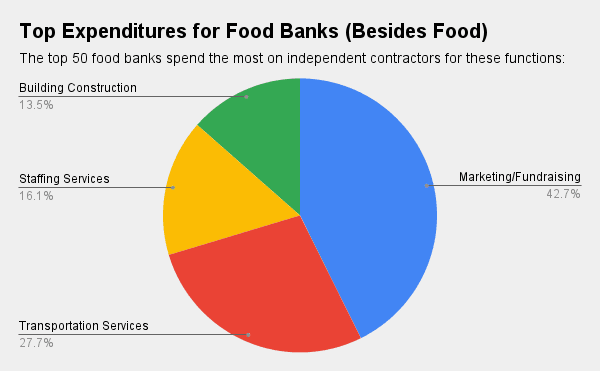
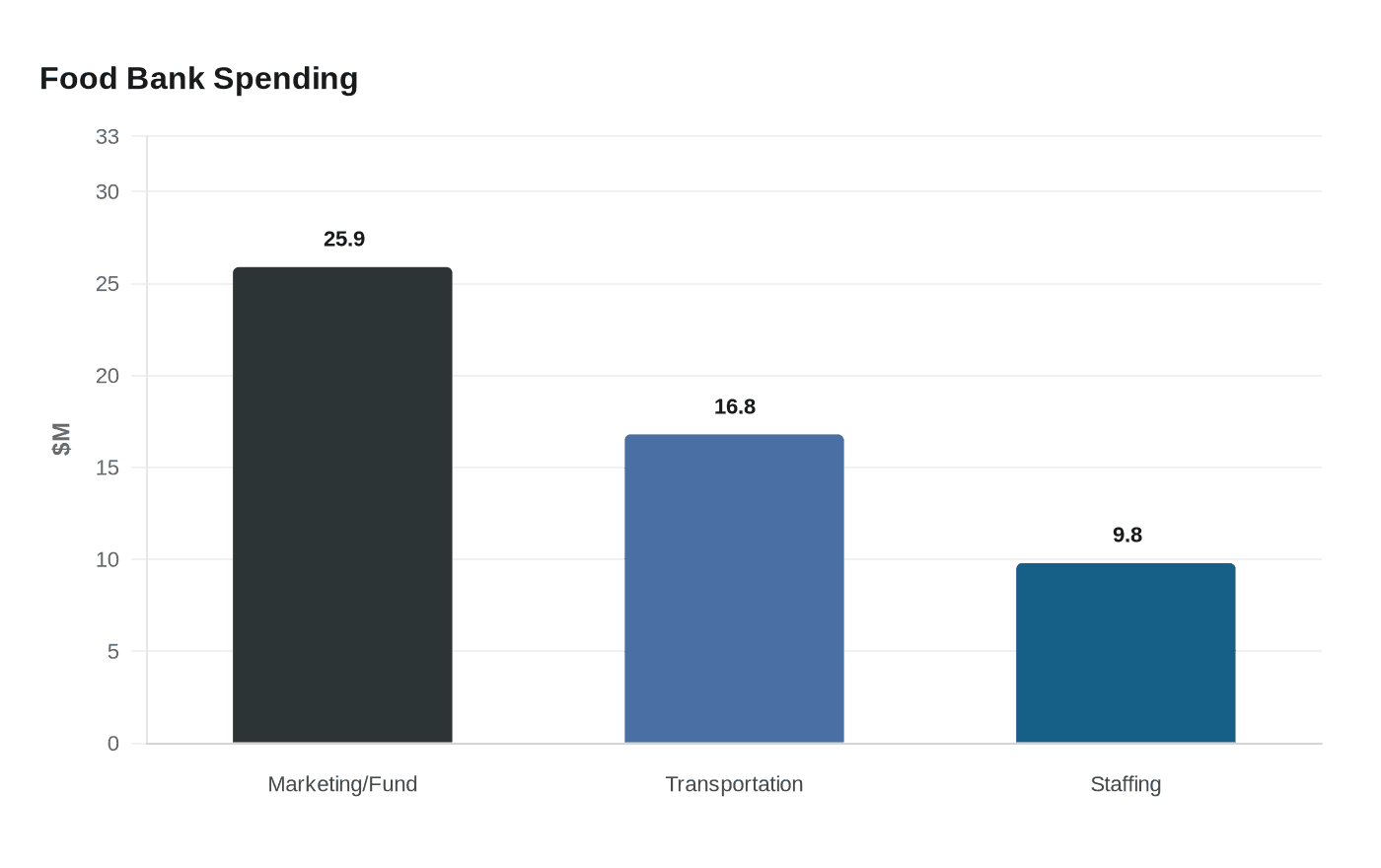
Food banks are often pictured as places that spend most of their money on groceries, but the budget trail points somewhere else. A Food Bank News analysis of the most recently filed Form 990s from the top 50 food banks found more than $25.9 million spent on marketing and fundraising services, $16.8 million on transportation, and $9.8 million on staffing services. Those are the operating muscles of hunger relief, not optional extras.

The spending breakdown also showed why so-called overhead can be the difference between food sitting still and food reaching a pantry shelf. The figures were directional rather than exhaustive because 11 of the top 50 food banks did not fill out the relevant section, and some organizations do not itemize construction costs the same way. Even with those limits, the pattern is unmistakable: hunger relief groups are financing fundraising systems, delivery systems, staffing systems and facilities that keep the whole network moving.
What those costs actually cover
Marketing and fundraising is not just glossy appeals. In the top 50 food banks, that category included direct mail, printing, online giving, database management, analytics and advertising. For a nonprofit that depends on recurring donors, volunteer signups and community trust, those tools are how the organization keeps the pipeline open. Without them, the food may still exist, but the money and people needed to move it are much harder to secure.
Transportation is just as central. The analysis found major spending on trucks, freight and logistics services, vehicle repairs and truck driver staffing. That is a reminder that food recovery is a delivery business as much as a charitable one. If warehouses, routes and vehicles do not function on schedule, food does not reach the people waiting for it.
Staffing services came next in the spending mix. That line can cover the people who manage routes, coordinate volunteers, work with pantry partners, maintain systems and keep compliance in order. It also reflects a simple reality that many donors miss: volunteer labor stretches capacity, but it does not replace the need for trained staff who can hold the operation together day after day.
What the numbers mean for A Simple Gesture
A Simple Gesture was founded in Paradise, California, by Jonathan Trivers and Karen Trivers, and its history dates to 2011. The model was built to make giving easy through door-to-door green bag pickups, corporate pickups and food recovery pickups. That design makes the Food Bank News findings especially relevant, because a doorstep collection network is fundamentally a logistics operation.
The Guilford County chapter says it works with dozens of local food pantries, and by December 2025 it reported more than 3,900 recurring food donors, 75-plus pantry partners and 200 monthly volunteers. It also said it had helped deliver more than 8,000,000 total child-size meals and $13,000,000 in donated food value. Those numbers show community reach, but they also show administrative load: donor retention, pantry coordination, volunteer scheduling and route planning all have to happen behind the scenes.
The organization’s own history underscores how much depends on consistency. Its early model had more than 1,700 food donors, and volunteer drivers collected over 132,000 pounds of food each year. That kind of volume does not happen by accident. Someone has to recruit households, confirm pickups, keep the calendar straight and make sure the bags get from porches to pantries on time.
Door-to-door pickups still need a real transportation system
A Simple Gesture’s food recovery program makes the labor requirements plain. Volunteers need a clean personal car, a smartphone and the ability to lift 20-pound boxes. That is not a passive volunteer role. It is a transportation assignment that depends on reliable people, reliable vehicles and fast communication.
The food recovery side of the mission is also a reminder that transportation costs are inseparable from the work itself. A Simple Gesture says the United States wastes 30% to 40% of the food it produces, and the program’s job is to rescue edible food from businesses and deliver it to vetted nonprofits. That means scheduling pickups, matching supply to pantry demand and moving food before it spoils. It is exactly the kind of operation where fuel, maintenance and route coordination show up as real costs, not back-office noise.
Why this budget story matters inside the organization
For staff and coordinators, the clearest lesson is that visible food distribution should be paired with visible infrastructure spending. Donors and board members may see bags, trucks and pantry shelves, then assume the work is cheap. The budget data says otherwise. Transportation and staffing are not side expenses in a doorstep collection model; they are the core of the model.
That makes fundraising language more important, not less. Leaders can explain that donated food is only one input. Cash pays for fuel, software maintenance, staff time, volunteer recruitment and retention, pantry partnerships and facility upkeep. It also helps make sharper calls about what to fund, what to automate, what to outsource and where volunteer labor really saves money without hiding the need for stable cash.
For A Simple Gesture, that framing is practical. Clearer route planning reduces waste. Better systems keep volunteers engaged. Stronger fundraising supports the trucks, software and people that keep the green bag program reliable. In a food recovery nonprofit, overhead is not what stands between donors and impact. It is what makes the impact possible.
This article was produced by Prism’s automated news system from verified source data, official records, and press releases, then run through automated quality and moderation checks before publishing. The system is built and supervised by the people who set the standards it runs under. Read our full AI policy.
Did this article answer your question?