Food banks tackle transportation barriers with home delivery and mobile distribution
Food can be available on paper and still out of reach. A Simple Gesture shows how doorstep logistics, home delivery, and mobile distribution turn access into action.
Transportation, not just supply, is the real access gap
Food insecurity often looks like a shortage problem, but the harder failure is getting food to the people who need it. Older adults, people with disabilities, rural households, and working families may live within driving distance of a pantry or distribution site and still be effectively shut out by lack of transportation, limited mobility, or work schedules that do not match pickup windows.

That is why home delivery and mobile distribution matter so much. They shrink the last-mile gap, the part of the system where food exists somewhere in the network but never reaches the table because the trip itself is too hard. For food banks, the operational question is not only how much food is available, but how many barriers stand between that food and the neighbor trying to access it.
A Simple Gesture already operates with that logic
A Simple Gesture-Guilford County was established as a 501(c)(3) nonprofit in 2015, and its growth shows what a logistics-minded hunger response can look like in practice. As of December 2025, the organization reported more than 8,000,000 total child-size meals donated, $13,000,000 in donated food value, 75+ pantry partners, 3,900+ recurring food donors, and 200 monthly volunteers.
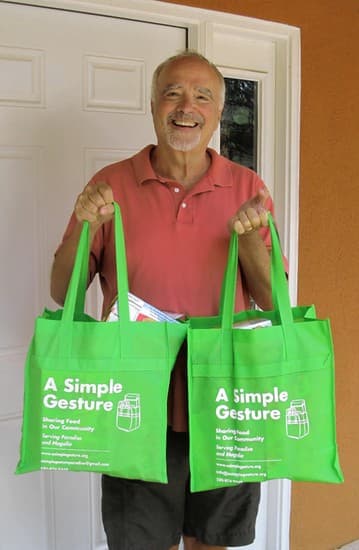
Its green bag program is built around convenience on the donor side: people donate from their doorstep on a monthly or bi-monthly basis. Its food recovery program works the other end of the chain, rescuing edible food from businesses and delivering it to local nonprofits. Together, those two systems show the same core principle: when the process fits real lives, participation rises and the network becomes stronger.
For staff and volunteers, that means route design is not a side task. Reliable pickup routes, clear scheduling, and neighborhood-level coordination are the difference between a program that looks good in theory and one that actually keeps food moving.
Why transportation changes the equation for hungry neighbors
Feeding America says grocery delivery programs help people access food safely by breaking down transportation and mobility barriers, and many food banks expanded delivery during the pandemic and kept using it for neighbors who cannot get out of their homes. That matters because the people most affected by mobility barriers are often the least visible in a pantry line.
Meals on Wheels America says nearly 14 million seniors, or 1 in 6, worry about where their next meal will come from. Feeding America also notes that older adults with disabilities experience food insecurity rates more than three times as high as older adults without disabilities. Those figures make the case for delivery and mobile distribution as essential infrastructure, not optional extras.
The lesson for hunger programs is straightforward: if someone cannot reliably travel, the system has to move differently. That is why transportation support should be treated as part of food access, alongside inventory, storage, and pantry hours.
What the data says about distance, disability, and access
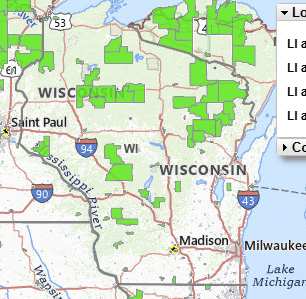
The USDA Economic Research Service Food Access Research Atlas helps map low-income and low-access census tracts, using distance measures such as more than one-half mile or one mile from a supermarket. That kind of mapping makes one point impossible to miss: access is not just about whether food exists in a county, but how far people are from the place that sells or distributes it.
USDA ERS also reports that households including adults with disabilities have substantially higher rates of very low food insecurity than households without disabilities. That does not just describe a social problem. It explains why transportation barriers hit some households much harder than others, especially when the nearest food source assumes car ownership, strong mobility, and flexible time.
For organizations like A Simple Gesture, these data reinforce the value of doorstep models and mobile systems. A program can have plenty of supply on paper and still fail if it forces people to cross the wrong distance at the wrong time.
Guilford County’s planning tools point in the same direction
Local food-security planning in Guilford County already reflects this logistics-first approach. The county says its Food Security Assessment and Grocery Gap Dashboard are designed to guide equitable policy and community-focused solutions. A recent Guilford County roadmap profile listed food insecurity at 22.5% for the county, a reminder that need remains substantial even in a place with active nonprofit and public-sector coordination.
That local context matters for A Simple Gesture because the organization does not operate in isolation. Its pantry partnerships, donor network, and volunteer base sit inside a countywide effort to identify gaps and close them with practical solutions. When pantry partners can count on consistent deliveries, and when food can be routed to where it is needed, the whole system works better.
The payoff is not abstract. Better logistics can mean stronger pantry partners, faster deliveries, more reliable volunteer shifts, and more food reaching the neighborhoods that are hardest to serve.
The clearest operational fixes are the ones that reduce friction
For workplace teams across the food-recovery sector, the transportation lesson translates into a short list of high-value fixes:
- Build pickup and delivery routes around actual travel barriers, not idealized convenience.
- Keep scheduling simple enough that volunteers, donors, and pantry partners can plan around it.
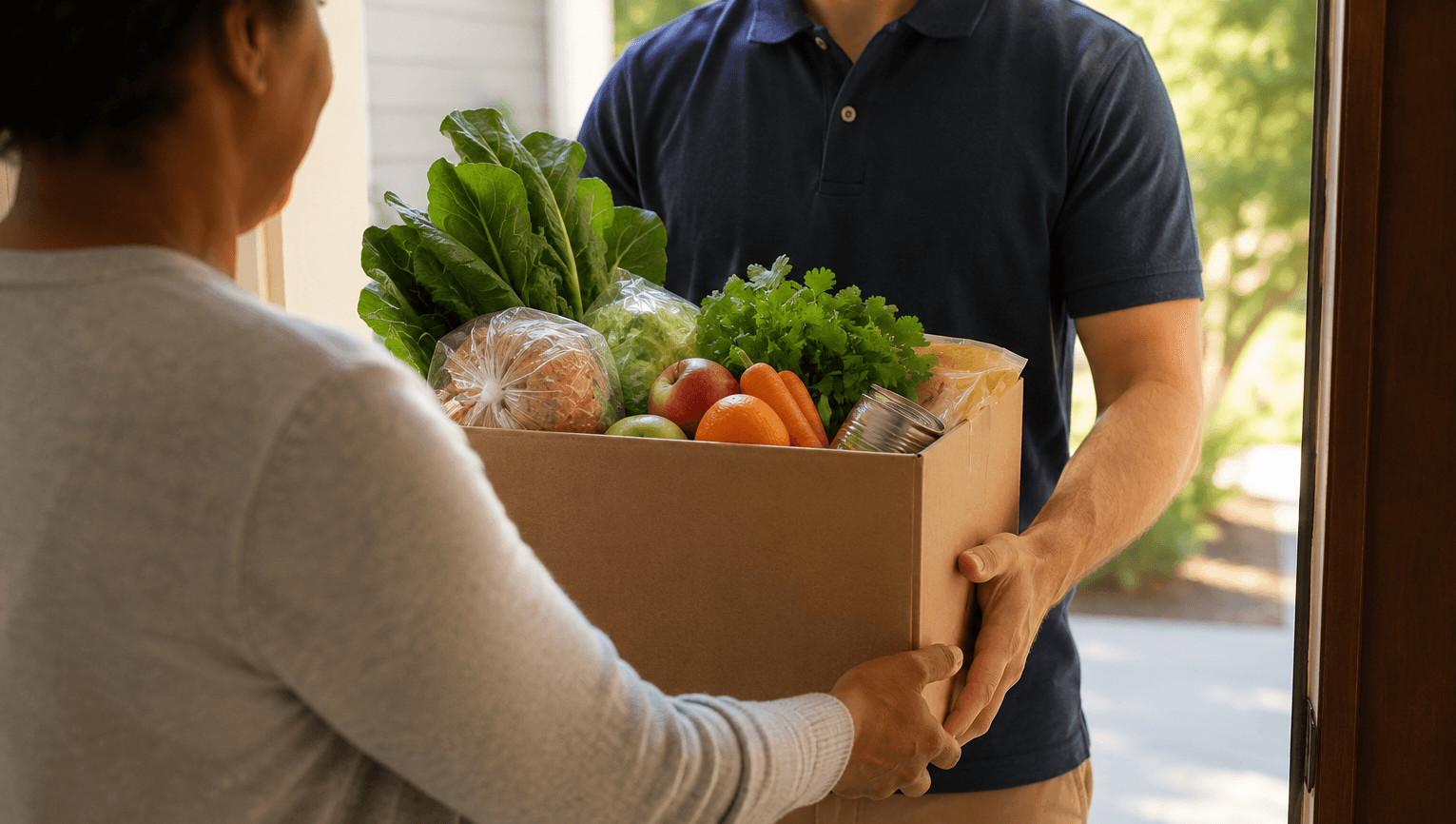
- Use home delivery for neighbors who cannot safely or reliably travel.
- Use mobile distribution where fixed-site access breaks down because of distance, transit limits, or rural geography.
- Strengthen handoffs between food recovery, storage, and pantry partners so perishable food does not stall in the middle of the chain.
- Work with local logistics providers when shared freight or other transportation support can extend reach without adding burden to neighbors.
Each of these changes improves more than efficiency. It improves dignity. A food program that asks less of the person seeking help is a food program that is more likely to be used, more likely to be trusted, and more likely to create repeat access instead of one-time relief.
What this means for A Simple Gesture’s next stage
A Simple Gesture’s doorstep donation model already solves part of the last-mile problem on the donor side. The broader challenge, and the opportunity, is to keep applying that same operational thinking on the recipient side, where transportation, mobility, and geography still determine who gets served and who gets left waiting.
That is why the strongest hunger response now looks less like a warehouse model and more like a logistics network. In Guilford County, where food insecurity remains high and local planning tools are already pointing to access gaps, the organizations that win will be the ones that move food with less friction, not just more volume.
This article was produced by Prism’s automated news system from verified source data, official records, and press releases, then run through automated quality and moderation checks before publishing. The system is built and supervised by the people who set the standards it runs under. Read our full AI policy.
Did this article answer your question?